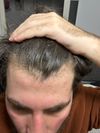
The conversation is about compounding topical cyclosporine for hair loss, suggesting it needs an oil base like castor oil. The user seeks tips or tricks for the process.
The conversation is about using tretinoin to improve the response to Minoxidil for hair loss treatment. No specific protocol for tretinoin application is provided.
The user is using finasteride, RU58841, and various natural supplements and treatments like seamoss, fish oil, and black rice water spray to combat hair loss, avoiding minoxidil due to dependency concerns. They report thicker hair and regained confidence, while discussing the potential risks and benefits of RU58841 with others.
The user experienced significant hair growth over three months using topical Minoxidil, microdosing Finasteride, microneedling, and ketoconazole shampoo. They also use Toppik hair fibers and Aveda hair thickening tonic for styling.
The user has been using Essengen 6+ (a mix of low-dose topical finasteride and minoxidil) for three months, seeing positive results, especially on the crown area. They also use Nizoral for dandruff and dermaroll weekly.
Using a routine of 5% minoxidil, microneedling, and tretinoin for hair loss. The user seeks advice on the ideal weekly schedule for applying these treatments.
The conversation discusses a user's progress after 4 months of using 1.25mg finasteride daily, minoxidil, and dermarolling to treat hair thinning, particularly on the sides and crown. The user believes finasteride made the most difference, and they share tips on managing hair loss and tracking progress.
The user is currently using oral finasteride for hair loss and considering adding Eucapil, dutasteride mesotherapy, and microneedling to their treatment regimen. They are seeking alternatives to minoxidil, such as Stemoxydine, due to concerns about minoxidil's side effects.
The user is using a topical solution with finasteride, minoxidil, and other ingredients, along with a red light laser cap and dermapen, to address hair thinning. They are considering a hair transplant but are advised to try dutasteride and oral minoxidil for 12 to 18 months before deciding.
The conversation discusses using oral Minoxidil, topical Minoxidil with RU58841, Finasteride, and serioxyl for hair loss. It also asks for opinions on the effectiveness of other treatments like Setipiprant, Dutasteride, and Spironolactone, and thoughts on HMI-115 and GT20029 trials.
The conversation discusses hair loss treatments, focusing on insulin resistance, microneedling with topical melatonin, and stress reduction. Users express skepticism about the advice, preferring proven treatments like minoxidil and finasteride, while some mention alternative methods like dermal incisions and verteporfin for reducing fibrosis.
A 22-year-old male is using Dutasteride, Minoxidil, RU58841, and Microneedling to treat hair loss and is wondering if he can regrow hair at his temples. Commenters suggest that he should continue the treatment as it takes time, with full results expected in 2-2.5 years.
A 26-year-old male shared his 3-month progress using Minoxidil and finasteride daily, microneedling weekly, and occasional vitamin D3. A commenter praised his impressive results.
The user is experiencing continued hair loss despite using dutasteride and oral minoxidil, and is considering adding finasteride or adjusting their current treatment. They are seeking advice on whether to change their approach due to lack of improvement, especially at the temples and crown.
Non-steroidal ways to reduce scalp inflammation include using topical melatonin, urea shampoo, Zyrtec, turmeric with black pepper, omega-3 supplements, a self-made topical solution with cetirizine, melatonin, and piroctone olamine, ketoconazole shampoo, witch hazel shampoo, tacrolimus, and lifestyle changes like a healthy diet and regular exercise. Some users also mentioned unconventional methods like infrared light therapy and a carnivore diet.
Hair loss treatments, specifically trying Minoxidil and finasteride combined with other methods such as microneedling and diet changes. Suggestions for coping strategies have also been offered.
Finasteride and Dutasteride used in combination with RU58841 and microneedling, as a treatment for hair loss. There was discussion on progress of the treatment and potential other methods to consider.
Tretinoin alone has led to hair regrowth in the temples and hairline. The user is considering oral minoxidil or dutasteride but prioritizes health first.
The conversation is about a person using minoxidil, finasteride, estrogen, and bicalutamide to combat hair loss, expressing frustration and desperation over their situation. They are advised against using female hormones and encouraged to focus on finasteride and minoxidil, with suggestions to seek therapy for mental health support.
The conversation is about someone who initially had positive results with Minoxidil for hair loss, lost those gains due to a hospital stay, and is now not seeing the same results upon resuming treatment. They plan to add microneedling and/or tretinoin to their regimen and are seeking success stories from others who did not respond to Minoxidil alone.
The conversation is about different treatments for hair loss, including minoxidil, finasteride, RU58841, and dermarolling. The conclusion is that RU58841 and dermarolling have shown efficacy in treating hair loss through different pathways.
The user shared progress in hair regrowth using a Minoxidil/finasteride topical compound and Olly Biotin. A suggestion to add microneedling was made, but a dermatologist said it's beneficial but not necessary.
The user experiences irritation from alcohols in minoxidil and is considering alternatives like trichosol mixed with polyethylene glycol or DMSO. They seek advice on the best nonirritating option.
The user switched from oral minoxidil to topical minoxidil and added JXL-069/PP405-3HP, along with topical dutasteride, melatonin, and tretinoin. They also use low-level laser therapy (LLLT) but doubt its effectiveness.
A user's progress using minoxidil and dutasteride mesotherapy to treat hair loss, with advice from other users on whether or not to continue the treatment. Suggestions included trying oral treatments such as finasteride and RU58841, and considering a hair transplant for more significant results.
Longitudinal partial follicular unit transplantation involves extracting part of the donor follicular unit, allowing the donor area to be overharvested without noticeable hair loss. The conversation questions if this method is practiced in clinics or if it's theoretical, and whether it relates to hair cloning or multiplication.
The user is treating diffuse thinning with finasteride, dutasteride, and oral minoxidil but hasn't seen significant improvement. Others suggest that results vary, with some maintaining hair and others considering transplants or future treatments.
The conversation discusses the lack of promising results from the 23rd Annual Meeting of Japan Society of Clinical Hair Restoration, with no significant advancements expected in the next five years. Treatments mentioned include setipiprant, with skepticism about its effectiveness.