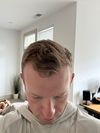
42-year-old used finasteride, minoxidil, dermapen, and nizoral for 12 months, achieving significant hair growth. Consistency and patience are important for success.
Microneedling depth should be customized based on hair type and scalp area, with many users finding 0.5-0.6mm effective for miniaturized hairs to avoid damage. Users report varying pain levels and results, with some preferring shorter needle lengths and others using longer ones like 1.75mm for scalp health and density improvement.
User shares 8-month progress using Fin/Min/Niz and microneedling for hair loss, with positive results and no side effects. Discusses routine, including Fin 1mg daily, Minox 2x daily, Niz 2x weekly, and derma pen 1.5mm weekly.
Diffuse thinners find shopping challenging due to harsh overhead lighting, but H&M's side lighting in fitting rooms is more flattering. Many users humorously suggest banning overhead lighting to improve the shopping experience.
User TH1RT33N_DR34M shares that MinoxidilMax plans to make topical Procyanidin B2 within a month. Users discuss the legitimacy of the product, quality control, and potential results from using it for hair loss.
The emotional impact of hair loss and the risks associated with common treatments such as finasteride, dutasteride, minoxidil, RU58841, and Fluridil. People discussed their personal experiences with these treatments, including potential side effects and lowered fertility. Hair transplants were also mentioned as a possible solution.
Clascoterone (CB) shows an excellent safety profile with no serious side effects, but its effectiveness may decline after six months, making it more suitable as an adjunct treatment with finasteride and minoxidil rather than a standalone solution. Some argue it could be better than finasteride due to its protection against testosterone, but its long-term efficacy remains debated.
The user successfully overcame finasteride side effects by lowering the dosage and adding zinc and vitamin B6 supplements. They also micro-dosed dutasteride and resumed weight lifting.
Hair loss treatments discussed include Minoxidil, Finasteride, RU58841, Alfatradiol, and Eucapil. Topical treatments must penetrate skin and may go systemic, with effectiveness varying.
A user's 2-year experience with Minoxidil and Finasteride as a treatment for hair loss, including the costs involved and potential side effects. Other users shared their experiences and asked questions about their own use of these treatments.
A user shared their natural hair regrowth routine that includes using a peppermint oil and coffee shampoo, applying liquid silica, taking vitamin D and magnesium supplements, exercising regularly, and maintaining a healthy diet. They believe this routine has stopped their hair loss and improved hair thickness without using pharmaceuticals.
Microneedling may enhance hair regrowth by transferring stem cells to dormant follicles, improving the effects of minoxidil. Users discuss using microneedling with needle lengths around 1.5mm to stimulate hair growth.
Topical finasteride combined with minoxidil is used for hair loss treatment, with some users experiencing fewer side effects compared to oral finasteride. Morr-F, a topical solution, shows better results than minoxidil alone, with minimal adverse effects reported.
Psoriasis shampoo with salicylic acid can improve scalp health and hair quality better than Nizoral. It helps create a cleaner environment for hair growth, especially when using treatments like finasteride.
The conversation discusses a medical service that provides prescriptions for a compounded hair loss treatment containing high concentrations of Minoxidil, Finasteride, and other ingredients. The user is seeking feedback on the service and inquiring about the cost and uniqueness of the compound cream.
The conversation discusses using Botox to treat male pattern baldness, suggesting it may promote hair growth by increasing scalp blood flow and oxygen, reducing dihydrotestosterone levels. The user wonders why this treatment is not widely discussed or if it has been discredited.
Dutasteride is associated with increased blood glucose, HbA1c, LDL cholesterol, and liver enzyme activity, potentially leading to diabetes, NAFLD, and liver metabolism changes. The conversation highlights concerns about these adverse effects and calls for more studies, including on finasteride.
A user ordered H&W's 1.25% Topical Finasteride and is curious about others' experiences and side effects. Another user asked about availability in the US.
A person experienced severe sexual side effects, including loss of libido and erectile dysfunction, after using finasteride and dutasteride for hair loss. They stopped the medications and sought advice, but recovery was slow and uncertain.
User experienced hair kinking after starting minoxidil, despite being on finasteride for two years. Another user confirmed similar issues and suggested switching brands due to propylene glycol in minoxidil.
The conversation discusses the effectiveness of Azelaic acid for hair loss, suggesting it may make Finasteride an outdated treatment for male pattern baldness. Specific treatments mentioned include Minoxidil, Finasteride, and RU58841.
A 31-year-old experiencing male pattern hair loss is considering options to manage it before their wedding, including continuing oral finasteride despite dizziness, switching to topical finasteride, adding minoxidil, or getting a hair transplant. They are advised that switching to topical treatments might reduce dizziness and that a hair transplant should be considered once hair loss stabilizes.
The user shared their hair loss treatment progress using topical minoxidil, oral finasteride, derma stamping, and ketoconazole shampoo, noting improvements after switching back to a previous minoxidil brand. They are satisfied with the results and considering a hair transplant in the future.
A user shared their positive experience with oral finasteride (1.2mg daily) and minoxidil (3mg daily) for hair regrowth, noting no side effects and significant improvement in hair density. Other users discussed their experiences with these treatments, including side effects and different application methods, with some expressing skepticism about side effects and others sharing their own challenges.
The user experienced significant hair regrowth using 1mg finasteride and 2mg minoxidil daily, along with Nizoral shampoo and rosemary oil. They are curious about further improving hair density and whether increasing the minoxidil dose would help.
Taking 5mg oral minoxidil at night instead of splitting 2.5mg doses, with the rationale that a single larger dose may provide a stronger activation for hair follicles and reduce peak-related side effects. Some users report sleep issues with nighttime dosing, while others find it beneficial; opinions on effectiveness and side effects vary.
A user shared their positive experience with a hair transplant at Diamond Hair Clinic in Istanbul, performed by Dr. Mehmet Demircioglu, using the Sapphire FUE technique with 4500 grafts. They previously used minoxidil and finasteride, which helped slightly, and plan a follow-up surgery for further improvements.
A 41-year-old male has been using a combination of treatments for hair regrowth, including finasteride, minoxidil, a laser cap, ketoconazole shampoo, and rosemary oil, with some progress noted. He is maintaining his current regimen in hopes of a future miracle drug while considering hair transplants and other treatments like dutasteride and copper peptides.
GT20029 shows promise as a topical treatment for hair loss, potentially replacing finasteride for some due to its low systemic exposure and ability to degrade androgen receptors. However, skepticism remains about its long-term efficacy and availability, with some users expressing doubt about new treatments consistently failing to reach the market.
Using topical tretinoin may enhance the effectiveness of minoxidil for hair growth, with some users reporting improved results. A premixed formula of minoxidil and tretinoin is available and has shown better outcomes for some individuals.