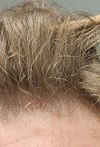
Noticeable hair regrowth occurred after two months of using minoxidil and starting finasteride. Users suggested continuing the treatment and considering microneedling for better results.
The user is losing a lot of hair after using Mielle Rosemary Mint oil for two weeks and is concerned whether it's a good or bad sign. They are not using Minoxidil or Finasteride due to past side effects.
An 18-year-old shares progress in hair regrowth after 1.5 months using a topical treatment with finasteride, ketoconazole, minoxidil, and biotin. They report significant hairline improvement and a decrease in sex drive as a side effect.
Switching from topical to oral minoxidil can cause initial hair shedding but may lead to thicker hair growth. Many users combine it with finasteride, experiencing varying side effects.
The user shared their experience with oral minoxidil for hair loss, noting initial shedding but some improvement in hair thickness and coloration. They also use dutasteride, RU58841, topical minoxidil, a laser hat, dermapen, Nizoral, caffeine shampoo, castor oil, vitamins, and MSM tablets.
A 28-year-old shared surprising hair regrowth progress after 20 days using topical minoxidil, micro needling, GHK-cu, and BPC-157 injections. The user noted a significant reduction in their bald spot and overall hair improvement.
A 28-year-old experiencing worsening hair loss despite using Dutasteride and oral Minoxidil is considering exosome therapy and possibly switching treatments due to side effects. They seek advice on whether to continue with Dutasteride or try alternatives like Pyrilutamide or topical supplements.
A 32-year-old man started oral minoxidil at 0.625mg daily, alongside topical minoxidil, to address hair thinning after experiencing side effects from other treatments. He plans to monitor his health closely and adjust the dosage after two months.
A satirical post where someone claims to have developed a radioactive isotope scalp serum using Polonium-210 that outperforms Minoxidil and finasteride for hair regrowth. The serum reportedly stimulates DNA repair in hair follicles, leading to significant hair density increase, but the post is met with skepticism and concerns about safety.
The conversation discusses alternative hair growth treatments to minoxidil, including Stemoxydine, Tretinoin, adenosine, Baicalin, castor oil, Latanoprost/bimatoprost, and Redensyl. Users share their experiences and opinions on the efficacy of these treatments.
Hims chewable oral minoxidil may be less effective due to its form and dosage of 2.5 mg. The effectiveness is questioned because the source criticizing it sells a competing product.
The user has been taking oral minoxidil (5 mg) and finasteride (1.1 mg) for 10 months, experiencing significant hair regrowth followed by a recent shedding phase, which has now slowed. The user remains optimistic about future regrowth and attributes some hair health to the inclusion of biotin in their treatment.
A user has been using topical minoxidil and finasteride for hair loss but is considering switching to oral minoxidil due to the inconvenience of topical application. Another user cautions that switching forms may cause shedding and that oral minoxidil may have different side effects and results.
The user is using dutasteride, oral minoxidil, and a topical compound with minoxidil, latanoprost, finasteride, and biotin. They are considering stopping the topical minoxidil due to lack of noticeable results on the head but are concerned about potential hair loss or shedding.
The user is experiencing diffuse thinning despite using oral minoxidil (3mg), dutasteride (0.5mg), microneedling, scalp massaging, and vitamins. Suggestions include increasing the minoxidil dose, checking for scalp conditions, and continuing current treatments.
A 20-year-old shared progress pictures after 2 years of using oral finasteride and oral minoxidil for hair loss. Responses included admiration and requests for more details and updates.
A 24-year-old male shares his two-month progress on hair regrowth using 0.5mg Dutasteride, 2.5mg Minoxidil, 10mg Biotin, and Ketoconazole shampoo, noting significant crown improvement. Users discuss the effectiveness of oral Minoxidil, with some expressing skepticism about photo angles and the necessity of Biotin unless deficient.
Switching from topical to oral minoxidil caused heavy shedding and thinner, brighter hair. The user is seeking advice on whether hair can recover to its previous state.
Delayed release oral minoxidil is seen as a promising advancement for hair loss treatment, offering safer, higher doses and more consistent hair follicle stimulation compared to current options. However, it is not expected to replace finasteride or dutasteride, as it does not prevent androgenetic alopecia.
The conversation discusses two methods for making topical finasteride: using ethanol and propylene glycol or mixing it with topical minoxidil. The focus is on solubility and absorption, with a suggestion to crush pills finely and possibly mix with minoxidil at a slightly elevated temperature.
Topical dutasteride 0.05% is more effective for hair growth than oral finasteride 1mg, with minimal DHT reduction. The formulation uses castor oil and MCTs for better absorption but is not widely available until 2028.
Combining Minoxidil with Peppermint or Rosemary Oil may enhance hair growth. Users discuss the potential benefits of this combination for treating hair loss.
The user experiences side effects from minoxidil and is considering alternatives like stemoxydine and adenosine for hair regrowth and density, but finds options like caffeine and various oils unreliable. They are also using a 5AR inhibitor (finasteride).
P-1075 is a more potent hair growth agent than Minoxidil, but it poses significant heart risks, making it unsafe for use. Despite promising results in macaques, concerns about its cardiotoxicity in rats have halted its development.
A user shared their 3.5-4 month progress using Topical Minoxidil, Oral Finasteride, Keto 1%, and Dermastamp, reporting positive results despite some shedding and flaking. Replies praised the progress and inquired about the treatment routine and temple condition.
Minoxidil may cause wrinkles and dark circles, which some users report can be mitigated by adjusting dosage. Reactions vary, and while some dismiss these side effects, others experience significant changes.
The user has been using minoxidil and finasteride for hair loss without positive results and switched to dutasteride 1.5 months ago. They suspect seborrheic dermatitis might be affecting the effectiveness of these treatments.
The user experienced significant hair regrowth using 5% topical minoxidil and 1mg finasteride daily, despite multiple shedding phases, and emphasizes the importance of starting treatment early and maintaining consistency. They advise against obsessing over online forums during shedding periods and recommend checking for scalp conditions like seborrheic dermatitis and ensuring proper nutrition.