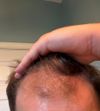
Minoxidil sulfate is considered for those unresponsive to regular minoxidil, with some trying a 10% formulation from Folligenz. Concerns exist about the product's stability and transparency, but some users report positive initial results.
People discussed using peppermint, lavender, rosemary, and pumpkin seed oils for hair regrowth or thickening. They shared personal experiences and recommendations on using these oils alone or in combination.
Oral minoxidil is considered more convenient and effective than topical or sublingual forms, with users reporting positive results and minimal side effects. Some users experience side effects with oral minoxidil and opt for sublingual or topical methods instead.
The conversation is about finding the correct proportions of topical oils for hair loss treatment. The proposed mixture includes 10ml castor oil, 2ml rosemary essential oil, 1ml peppermint essential oil, and 1ml tea tree essential oil, applied three times weekly.
The conversation discusses the potential effects of spearmint on acne and male pattern baldness (MPB). Concerns are raised about spearmint's androgen-suppressing effects and its suitability for men.
Minoxidil should be applied first, allowed to dry, then emu oil can be applied. Emu oil is recommended for daily use, but it may not need to be washed off daily.
Counterfeit minoxidil can be identified by inconsistencies in bottle fill levels, label details, and smell compared to genuine products. Genuine minoxidil has a specific alcohol-based smell and consistency, while counterfeit versions may smell musky and feel greasy.
A user experienced severe side effects from using topical minoxidil sublingually, including muscle cramps, dizziness, and high potassium levels. They were advised to stop and seek medical help, emphasizing that topical minoxidil is not safe for ingestion due to its alcohol content.
A user is experimenting with applying undiluted peppermint oil to their scalp daily to stimulate hair growth, based on a rat study where peppermint oil outperformed minoxidil. The user reports immediate hair thickening and increased scalp blood flow, while others in the conversation express skepticism, humor, and concern about the undiluted application.
P-1075 is a more potent hair growth agent than Minoxidil, but it poses significant heart risks, making it unsafe for use. Despite promising results in macaques, concerns about its cardiotoxicity in rats have halted its development.
The conversation discusses a claim that peppermint oil is more effective than minoxidil for hair loss, with one user mentioning using a mix of peppermint and rosemary oils as a treatment. Some users are skeptical, while others show interest in the potential of peppermint oil.
Oral minoxidil may cause heart palpitations, especially in those sensitive to caffeine. It's advised to consult a doctor and consider starting at a low dose or using topical minoxidil.
The user has been using minoxidil for 5 months, and added peppermint oil and dermarolling with a 0.5mm roller to their routine 2 months ago. They are happy with the hair regrowth observed since starting the new treatments.
Spearmint tea and inositol are discussed as potential treatments for hair regrowth, but their effectiveness is questioned. Alternatives like green tea, MSM, and evening primrose oil are suggested for hair health.
The conversation is about finding a reliable source for oral minoxidil in Turkey, preferably in original packaging, and concerns about the safety and effectiveness of local products. The user is seeking recommendations for trustworthy suppliers and is wary of counterfeit products and scams.
Applying rosemary oil on non-derma rolling days is acceptable and can be part of a regular hair care routine. It's important to monitor for any irritation.
Kirkland Minoxidil from Amazon may be fake, and it's safer to buy directly from Costco. Users suggest alternatives like Walmart's Equate or buying from Costco's website.
A user discusses using safflower oil as a carrier for rosemary oil to enhance hair growth while using finasteride. They reference studies showing rosemary oil's effectiveness compared to minoxidil and the potential benefits of safflower and amla extracts for hair loss.
The conversation discusses hair regrowth using saw palmetto (800 mg daily), a derma roller (0.5 mm twice a week), rosemary oil, and a multivitamin. The user mentions using Bliss Pharma's saw palmetto supplement.
The conversation is about using a blend of coconut oil, peppermint oil, and rosemary oil with minoxidil for hair loss, and whether it's safe to apply this blend after microneedling.
The conversation discusses using Morr F Aqua, an alcohol-free version of Minoxidil, for hair loss, particularly for someone with dandruff issues. The user is considering if this product is suitable for their condition.
The user has been taking oral minoxidil and finasteride for 10 months with no hair growth but no further hair loss. They are considering adding rosemary oil and possibly returning to a topical solution.
Topical minoxidil from Kirkland led to noticeable hair growth for the user, unlike oral minoxidil, which showed no results after a year. Other users shared similar experiences, suggesting topical minoxidil might be more effective than oral for some individuals.
A user from France is seeking ways to obtain oral minoxidil in the EU without a prescription, as local doctors are hesitant to prescribe it. Suggestions include visiting Spain for a prescription, ordering online, or consulting doctors in other EU countries like Portugal.
The user switched from oral minoxidil to topical minoxidil and added JXL-069/PP405-3HP, along with topical dutasteride, melatonin, and tretinoin. They also use low-level laser therapy (LLLT) but doubt its effectiveness.
A user shared their experience using the Olympia hair growth formula for a month and asked for others' opinions on its composition. The conversation focuses on the effectiveness of the formula, which includes Minoxidil, finasteride, and RU58841.
Oral minoxidil is discussed, highlighting potential cardiovascular risks at high doses, but users note that lower doses commonly used for hair loss are generally considered safe. Monitoring by doctors is advised, and some users report taking it without issues, comparing its risks to those of common medications like ibuprofen.
Oral minoxidil was ineffective for OP, causing hair loss and unwanted body hair, while topical minoxidil showed significant regrowth. OP is switching to topical minoxidil with glycerin due to scalp issues with propylene glycol.