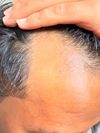
User had minor hair transplant in 2020, used Fin since 2008, Min since 2014, and added microneedling in 2022. Routine was irregular with no severe effects.
A user shared progress pictures showing successful hair retention using a low-dose topical finasteride (0.008%) combined with minoxidil. Users discussed the effectiveness of the treatment, minimal effective dosing, and avoiding systemic side effects.
Oral minoxidil can significantly increase eyelash length and thickness. Users report mixed results on hair growth, with some experiencing increased body hair.
A Stevia patch with Minoxidil showed positive results for hair growth in mice. A user experienced increased hair shedding after using finasteride for 12 months and briefly using minoxidil.
A user shared their 90-day progress using chewable finasteride, minoxidil, biotin, and vitamins for hair loss. They experienced initial shedding, followed by regrowth of baby hairs, and now have more hair than before starting treatment.
The user achieved significant hair regrowth using topical Minoxidil and Finasteride over 2.5 years, with results plateauing after a year. They experienced minimal side effects and used microneedling to enhance results.
The user has been taking oral tablets of 1.1mg finasteride and 2.5mg minoxidil since February 2025, resulting in slightly denser hair, though some areas remain thin. They are planning a hair transplant in February 2026.
The conversation is about using Verteporfin with microneedling as a potential hair loss treatment that may regenerate hairfollicles with minimal scarring. There are concerns about the optimal dosage and the DHT sensitivity of the new follicles.
The user experienced significant hair growth and density improvement over nine months using 1 mg finasteride daily, initially 5% topical minoxidil, then transitioning to 2.5 mg and later 5 mg oral minoxidil, along with weekly microneedling. Noticeable changes were observed after three months, with the most significant progress by month nine.
Microneedling alone is not effective in maintaining minoxidil results for hair growth. Combining microneedling with minoxidil and finasteride may enhance results, but microneedling by itself is not a reliable treatment.
The conversation discusses hair loss treatments, specifically the use of topical and oral finasteride combined with minoxidil. The user experienced a second shedding phase but hopes for regrowth in the coming months.
The user experienced significant hair regrowth using a regimen of topical Minoxidil and Finasteride, oral Finasteride, weekly microneedling, and supplements over a year. They noted improvements in the crown and temples, with minimal side effects, and plan to continue the regimen.
Microneedling can aid hair regrowth but poses risks like permanent hair loss if not done properly. Combining it with minoxidil, finasteride, and tretinoin, while ensuring proper sterilization and technique, is crucial for safety and effectiveness.
The user is using a solution of 5% minoxidil and 0.1% finasteride with micro-needling and is considering adding 1mg oral finasteride. They notice small hairs on their forehead and are questioning if these indicate potential regrowth.
The user experienced significant hair regrowth using topical Minoxidil and Finasteride, along with Saw Palmetto and volumizing shampoo. They are considering a hair transplant in the future if needed.
A private clinic suggests starting with topical Minoxidil only, raising concerns about DHT blocking and potential side effects of Finasteride. The user is considering whether to follow this plan or use a combination of Minoxidil and Finasteride for hair thinning.
Significant hair regrowth was achieved using 1mg of finasteride daily, 3ml of topical minoxidil, ketoconazole shampoo, vitamin D, and castor oil, with no side effects. Results appeared after two months, leading to discussions on treatment effectiveness and commitment.
A user shared their positive experience with oral finasteride (1.2mg daily) and minoxidil (3mg daily) for hair regrowth, noting no side effects and significant improvement in hair density. Other users discussed their experiences with these treatments, including side effects and different application methods, with some expressing skepticism about side effects and others sharing their own challenges.
A 40+ year old is regrowing their hairline using microneedling, minoxidil, tretinoin, low-level laser therapy, massages, and Nizoral, without using finasteride or dutasteride. They noted progress in hair growth below a birthmark, an area that hadn't seen growth since their teenage years.
User has been using topical finasteride and minoxidil for a year, seeing regrowth only on the hairline, not the crown. They also use keto shampoo, rosemary oil, and microneedle weekly, and are considering switching to oral treatments.
Topical minoxidil with finasteride can help focus treatment on the scalp, with shedding being normal initially. Foam minoxidil is easier to apply, PRP's effectiveness varies, and anti-dandruff shampoos like ketoconazole are beneficial for scalp health.
Hair regrowth from treatments like minoxidil, RU58841, and finasteride is not permanent; stopping these treatments typically results in hair loss resuming. Beard hair can become permanent with minoxidil use, unlike scalp hair, which requires ongoing treatment to maintain gains.
Microneedling with 5% minoxidil improves hair growth for hair loss patients. Best protocol: 1.5mm dermaroller weekly for 12 weeks or 0.6mm dermapen every 2 weeks for 12 weeks, skipping topicals for 24 hours.
A 24-year-old reported new hair growth on temples after 3.5 months of using topical minoxidil without shedding. They plan to add finasteride to maintain progress, as minoxidil alone may not be enough long-term.
A user is anxious about shedding after starting oral finasteride and topical minoxidil, noting about 250 hairs lost after washing. Responses suggest that shedding is common with these treatments, especially with curly hair, and that it often peaks around 8-10 weeks before improving.
Hair loss is influenced by genetics and sensitivity to hormones like DHT. Treatments like Minoxidil and finasteride are commonly used, and baldness persists as it doesn't affect reproductive success.
This conversation is about a user who has been using Minoxidil to treat hair loss for two weeks, and experienced an intense shed. The replies offer advice on how to manage their shedding, such as shaving their head or using Finasteride, and encouragement that the results will be worth it in the end.
The user is using Minoxidil, Finasteride, microneedling, and plans to add low-level laser therapy (LLLT) to treat hair thinning. They shared progress pictures showing results from May 8th to June 7th.