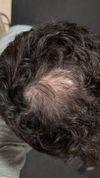
The conversation discusses hair regrowth using oral minoxidil and RU58841, with visible baby hairs appearing after two months. One user questions the choice of RU58841 over finasteride.
Stemoxydine is more expensive than minoxidil and finasteride, costing $50-$150 per month. The discussion questions why the cost is higher despite efficacy.
The dermatologist diagnosed androgenic alopecia and prescribed minoxidil and a shampoo for dandruff, avoiding finasteride due to side effects. The user questions the dermatologist's approach and considers seeking a second opinion due to concerns about the lack of a physical scalp check initially.
The user discusses hair transplant results and questions the necessity of pairing microneedling with a special liquid, aside from minoxidil, for better hair thickening. They are skeptical about the doctor's recommendation and seek advice on whether the liquid is essential or a sales tactic.
A user successfully improved their hairline after 15 months using topical minoxidil and dutasteride. Some commenters question the necessity of treatment given the user's original hair condition, while others support early intervention.
A user's 2-year experience with Minoxidil and Finasteride as a treatment for hair loss, including the costs involved and potential side effects. Other users shared their experiences and asked questions about their own use of these treatments.
The user experienced hair regrowth with oral minoxidil and finasteride but faced aggressive hair loss after developing IBS, questioning if the condition affects medication absorption. They are considering switching to topical treatments.
The user has been using Minoxidil, finasteride, and a dermaroller for a year with little effect on hair loss. They are considering a hair transplant and are questioning the number of grafts needed and the feasibility of transplanting onto a partially bald scalp.
An 18-year-old is using topical minoxidil 5% and derma rolling weekly for hair regrowth after shaving their head, while also addressing vitamin D deficiency and thyroid imbalance. They are questioning if the changes observed are signs of regrowth.
The user is using a topical solution containing 1% finasteride and 5% minoxidil for hair loss, with water, glycerin, and PEG-40 hydrogenated castor oil as carrier agents. They are questioning if these ingredients are effective carriers after using the solution for three months.
The user has been using Minoxidil and finasteride for a year with good progress but is now experiencing increased hair shedding. They are concerned and questioning if this is normal or a cause for worry.
The user has been using Minoxidil for 2 months and Finasteride for 1 month to address hair loss, particularly at the temples. They are questioning whether the new small hairs are facial hairs or new scalp hair.
The user has been using Minoxidil, Ketoconazole shampoo, and a dermastamp for 7 months and experienced a period with no shedding, but is now shedding about 100 hairs a day and is questioning if this is a result of the treatment or their normal hair loss. They are unable to start finasteride and are considering stopping the treatment due to the shedding.
The conversation is about someone using minoxidil, finasteride, RU58841, and microneedling for hair loss treatment for nearly two years with ongoing improvement. They are questioning the likelihood of continued hair regrowth over a four-year period.
The user started finasteride and oral minoxidil for early-stage hair loss around the crown and underwent a session of exosome treatment 3.5 months ago. They are seeing some improvements and are questioning the effectiveness of exosomes for hair regrowth.
Hair loss discussion includes treatments Minoxidil, Finasteride, and RU58841. Users question effectiveness of HMI-115 and consider waiting longer for results.
Hair loss discussion includes treatments like Minoxidil, Finasteride, and RU58841. Eucapil (fluridil) is approved as a cosmetic hair-care agent in Europe, but users question the level of testing required for approval.
Hair loss discussion includes treatments like Minoxidil, Finasteride, and RU58841. L'Oreal's study on Stemoxydine 5% claims a 4% increase in hair density after 3 months, but some users question potential bias.
Hair loss discussion includes treatments like Minoxidil, Finasteride, and RU58841. User asks about Redensyl's effectiveness, questioning if it's another ineffective remedy.
Hair loss discussion includes treatments like Minoxidil, Finasteride, and RU58841. Eucapil's effectiveness is questioned due to unconvincing clinical trial and lack of FDA approval.
The user has been using Minoxidil, finasteride, and microneedling for over a year but recently experienced more hair thinning and receding. They started taking magnesium supplements a month ago and are questioning if it is related to the worsening hair condition.
A dermatologist prescribed 0.5mg dutasteride every two days and 5mg Minoxidil daily for hair loss, suggesting dutasteride mesotherapy as an alternative. The discussion questions the effectiveness and cost of mesotherapy compared to oral treatments, with concerns about side effects and the dermatologist's approach.
A 21-year-old male is using a Minoxidil (10%) and Finasteride (0.1%) topical solution with a Keraglo Men tablet for hair loss, experiencing positive results without side effects. He advises another user to prepare questions for a dermatologist visit and discusses potential treatment adjustments.
A user experienced persistent headaches after a stressful week and questioned if 0.25mg finasteride could be the cause, despite using minoxidil for two years. Another user suggested stress is likely the main factor, not the medication, and advised consulting a healthcare provider if headaches persist.
A 22-year-old male is concerned about hair loss and questions the effectiveness of prescribed "Merz special" and "Revalid" products, which lack finasteride or minoxidil. Users suggest seeking a different doctor for finasteride and minoxidil treatments.