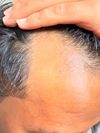
User uses dermaroller and minox for hair loss without success, considers adding Stemoxydine and mixing tretinoin with minox. Another user suggests a DHT inhibitor for sustainability.
Minoxidil sulfate is considered for those unresponsive to regular minoxidil, with some trying a 10% formulation from Folligenz. Concerns exist about the product's stability and transparency, but some users report positive initial results.
A 39-year-old has been using topical 5% minoxidil for 11 years, added microneedling, and recently started using a topical combination of minoxidil and 0.3% finasteride, noticing some hair regrowth after three months. They experienced minor side effects when switching finasteride concentrations and plan to continue the treatment, possibly adding oral finasteride or dutasteride if significant progress is seen after a year.
The user experienced initial hair regrowth with topical dutasteride and minoxidil but later faced significant hair shedding, leading to doubts about the effectiveness of topical dutasteride. They plan to continue the treatment for a year and may switch to oral finasteride if no improvement is seen.
The conversation discusses creating a topical finasteride solution by crushing finasteride pills and mixing them with minoxidil to reduce side effects. Users share experiences and methods for making the solution, with some suggesting using a premade topical finasteride if available.
The conversation discusses switching from topical to oral minoxidil, using oral minoxidil daily and topical minoxidil only on microneedling days. The user also mentions using finasteride and tretinoin but has not seen results after two months.
Kintor's KX826 (pyrilutamide) is ineffective at 0.5% and overpriced at 1%, leading to user frustration and calls for fair pricing. Users suggest sticking with proven treatments like Minoxidil and Finasteride.
A 27-year-old man is using a daily routine of 5% Minoxidil spray in the morning and a topical mix of 5% Minoxidil/0.1% Finasteride at night, along with microneedling. He reports significant hair improvement despite ongoing shedding.
The user is using a hair loss treatment with finasteride 0.1%, minoxidil 5%, and tretinoin 0.01%, applied once daily at 1ml. They are questioning if a 60ml bottle used twice daily implies a higher recommended dose despite the same 5% minoxidil concentration.
A user shared their positive experience with topical Minoxidil for hair regrowth, noting thicker and fuller hair without using Finasteride due to concerns about side effects. Many commenters advised adding Finasteride to maintain gains, warning that Minoxidil alone might not prevent future hair loss.
The conversation discusses using minoxidil 5% and finasteride 1.25mg daily for hair loss, with the user experiencing monthly shedding and a slight decrease in sex drive as a side effect. The user also mentions using a shampoo with piroctone olamine for seborrheic dermatitis and considers oral minoxidil to reduce scalp irritation.
The user is using a solution of 5% minoxidil and 0.1% finasteride with micro-needling and is considering adding 1mg oral finasteride. They notice small hairs on their forehead and are questioning if these indicate potential regrowth.
The user experienced side effects like shallow breathing, loss of libido, and erectile issues after using topical finasteride with minoxidil for hair loss. They are considering whether to continue the treatment despite these side effects.
The user experiences irritation from alcohols in minoxidil and is considering alternatives like trichosol mixed with polyethylene glycol or DMSO. They seek advice on the best nonirritating option.
Using a microdose of finasteride on the scalp with minoxidil as a carrier may have positive effects with minimal side effects. The user is also considering the effects of sulforaphane or broccoli sprouts on hair loss.
The conversation is about using topical tazarotene with minoxidil for hair loss treatment. A user suggests using a lower strength than 0.025% for daily application.
The user is considering switching between topical minoxidil (10%) and oral minoxidil (2.5mg) to manage hair shedding around the temples, while also using a dermaroller and biotin. They are concerned about the potential side effects of oral minoxidil, such as hypertrichosis, and the impact on hair shedding if they stop using it.
A user shared their positive experience with hair regrowth using 1mg finasteride and 5% topical minoxidil daily, showing significant improvement in hair density over six months. The conversation includes supportive comments and questions about the treatment details, such as whether finasteride was taken orally or topically and if microneedling was used.
A 25-year-old is using a nightly routine of topical finasteride 0.3% and minoxidil 6%, along with a derma roller and Nizoral shampoo, to address crown hair loss. The user reports no side effects and noticeable improvement over 2.5 months.
This conversation is about a user's progress with using oral minoxidil 5mg to treat their hair loss, in combination with finasteride. The replies discuss the effectiveness of this treatment and provide additional information on potential methods for obtaining it.
The user is considering starting a topical treatment for hair loss, using a spray containing 0.3% finasteride, 5% minoxidil, and 0.01% tretinoin. They are questioning the dosage and considering reducing the application to achieve 0.15% finasteride and 5% minoxidil.
The user is trying a new hair loss treatment combining 1.25 mg oral minoxidil with a daily topical solution containing hydrocortisone, tretinoin, 8% minoxidil, and 0.025% finasteride. They aim to maintain their current hair before considering a hair transplant in Istanbul.
Melatonin at a 0.0033% concentration shows results for hair loss when used topically. A user is discussing how to replicate this by adding 2mg of Melatonin to 60ml of Minoxidil solution.
The user is using 2.5mg oral minoxidil and Nizoral shampoo for hair regrowth, noticing some improvement. They are considering increasing the dosage and exploring alternatives to topical minoxidil/finasteride due to concerns about toxicity to cats.
A user is considering using 2.5mg oral minoxidil for hair loss, having already seen some results with 5% topical minoxidil and 1mg finasteride. Others suggest starting with a lower dose to monitor tolerance and adjust as needed.
Using roll-on bottles for applying minoxidil and RU58841 improves application efficiency and reduces product waste. Topical treatments are used continuously, except on microneedling days.
A user is using a compounded hair loss treatment with 5% minoxidil, 0.005% finasteride, and 0.01% tretinoin but is experiencing issues with residue and greasiness. They are inquiring if using the treatment five times a week instead of daily will still be effective.
Kintor 0.9% is not effective for hair regrowth or thickening and may cause testicle sensitivity. The conversation criticizes the hype around Kintor and discusses the ineffectiveness of pyrilutamide compared to other treatments like RU58841, finasteride, and minoxidil.
The user has been using 1mg Finasteride and 5% topical Minoxidil for 9 months with little improvement and is now switching to 5mg oral Minoxidil, continuing microneedling, and adding Anagenil Complex. They are seeking advice on whether to stop topical Minoxidil and the effectiveness of Anagenil Complex.