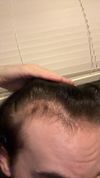
The conversation is about the effectiveness of topical melatonin for hair loss. No specific treatments were discussed, only a sarcastic suggestion to go to tropical places and eat coconuts.
Exploring hair loss treatments, with a focus on Finasteride and RU58841 as well as other topical solutions like stemoxydine 5%. The user found that they were sensitive to both oral and topical finasteride, but remain optimistic about finding the right treatment.
The conversation discusses a natural alternative to Minoxidil for hair loss, with users suggesting peppermint oil and rosemary oil as potential weaker substitutes.
The conversation is about recommendations for hair loss treatments, including minoxidil, nizoral shampoo, castor oil, a dermapen, and tocotrienols. Users discuss different minoxidil brands, with some preferring Kirkland despite concerns about irritation and dilution.
The conversation is about using Sandalore for hair loss and whether to mix it with Morr-F, alcohol, or a scalp oil. Users discuss the effectiveness of different carriers like propylene glycol and hemp oil for better absorption.
Finasteride maintains existing hair, but Minoxidil is less effective on hairlines. Walton Goggins is admired for his receding hairline, possibly using Finasteride and Minoxidil without a hair transplant.
Yokohama University and Dr. Fukuda plan human hair multiplication trials in 2023. Users express hope for future hair cloning treatments over current hair transplants.
An 18-year-old is considering testosterone replacement therapy with finasteride or dutasteride for hair loss but worries about side effects. Users recommend alternatives like minoxidil, RU58841, and consulting a doctor.
Switching from finasteride and topical minoxidil to oral dutasteride and oral minoxidil can cause initial hair shedding, but many users report improvement after a few months. Opinions vary on whether to taper off or switch directly, with some suggesting gradual changes to monitor side effects.
The conversation discusses making DIY topical finasteride using a hair tonic with various ingredients and suggests alternatives like Jatamansi powder, Sandalore, and products like Bare Anatomy Expert Advanced Hair Growth Serum and RevivHair Max Hair Stimulating Serum. It also mentions using topical dutasteride and minoxidil for hair growth.
The user has been taking 3.75mg of finasteride weekly for 8 months, which has improved their hairline and hair texture. They shared a humorous encounter with a bald mechanic who complimented their hair, unaware of the finasteride use.
Using the "big three" hair loss treatments (Minoxidil, Finasteride, and Ketoconazole) can initially make hair look worse, often causing dryness and a "straw" texture. Adjusting the routine with gentler shampoos and conditioners can improve hair appearance while waiting for the treatments to show results.
L. reuteri, a probiotic, is being explored for its potential benefits in treating androgenic alopecia, possibly enhancing finasteride's effects and reducing inflammation. The user combines this with finasteride, oral minoxidil, and other supplements, noting some improvement in hair loss.
A 33-year-old attempted hair regrowth after 10 years of baldness using topical finasteride, minoxidil, micro-needling, a laser cap, and later oral dutasteride. They noticed some regrowth, especially vellus hairs, and are considering a hair transplant or other treatments despite side effects.
The user is experiencing continued hair loss despite using finasteride, dutasteride, and minoxidil, and is advised to improve diet, check for deficiencies, and consider other treatments like microneedling. Suggestions include sticking with the current regimen, considering a hair transplant, or accepting hair loss and shaving.
The user experienced significant hair regrowth using topical finasteride and minoxidil but faced a prolonged shedding phase, leading them to increase the finasteride dose and add oral dutasteride. Despite concerns about shedding, they remain hopeful for regrowth and are supplementing with Vitamin D.
A user shared their successful hair regrowth experience using 1.25mg finasteride daily, alternating oral and topical minoxidil, and weekly dermarolling. They reported significant improvement in their hairline and crown coverage over a year, with minimal side effects.
A user shared a DIY recipe for a NutraKos-style amino acid mix as a cost-effective alternative to the expensive product, suggesting it as a complementary supplement for hair loss. Another user argued that proven treatments like finasteride and minoxidil are more reliable, questioning the efficacy of the amino acid mix.
The user feels hopeless about hair loss despite using finasteride, dutasteride, minoxidil, and RU58841, and having a hair transplant. They are advised to maintain consistency in treatment, consider increasing dutasteride dosage, and explore topical solutions for better results.
RU58841 is more effective when mixed with isopropyl alcohol instead of minoxidil, as water in minoxidil degrades RU58841. Applying RU58841 separately from minoxidil, with an hour gap, enhances hair growth results.
The conversation discusses using azelaic acid to reduce scalp inflammation while using RU58841 for hair loss. It suggests applying azelaic acid in the morning and RU58841 at night to avoid degradation, while also using dutasteride and minoxidil.
A 21-year-old male experienced negative side effects from oral finasteride and is considering switching to topical finasteride or RU58841 after using oral minoxidil. He seeks advice on a standard hair loss routine, mentioning peptides, RU58841, and dermarolling.
Avoid home-compounding topical minoxidil due to potential risks and complications. Use proper equipment and techniques to prevent aerosolization and ensure effective dissolution.
Tretinoin can increase hair follicles and is used alongside minoxidil and finasteride for hair growth, though it may cause skin peeling. Users report varying results, with some experiencing regrowth and others questioning its efficacy for hair.
RU58841 had mixed results for hair regrowth, with some users experiencing no change and others noting regrowth but also side effects like libido issues and chest pain. Some users combined it with other treatments like finasteride and dutasteride, with varying effectiveness.
The user is considering stopping finasteride due to depression, anxiety, and difficulty building muscle, despite its effectiveness in stopping hair loss. Suggestions include reducing the dose, switching to topical solutions, or consulting a doctor for alternatives like dutasteride or RU58841.
A serum with oleic and palmitoleic acids shows promise for hair regrowth in mice, but its effectiveness in humans is unproven. Minoxidil and finasteride remain the recommended treatments.
The user is experiencing diffuse hair loss despite using finasteride and dutasteride and is considering adding minoxidil, microneedling, or RU58841. They are also thinking about increasing the dutasteride dose or opting for a hair transplant, while being cautious about side effects.
The user is experiencing rapid hair loss despite using dutasteride, finasteride, and minoxidil, and is concerned about high estradiol and testosterone levels. They are advised to consult an endocrinologist for potential hormonal imbalances.
A 26-year-old male has been using minoxidil and finasteride for two years, with added microneedling, but is concerned about worsening hairline and seeks advice on whether to continue treatment. A user suggests patience, as results can take 6-12 months, and the appearance of baby hairs might indicate regrowth.