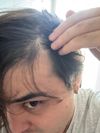
The user is treating hair loss with dermarolling, a laser helmet, scalp massages, and Nizoral. They stopped using minoxidil and finasteride and are considering pumpkin seed oil and sulforaphane.
A 28-year-old male shared his 46-day hair growth progress using finasteride, topical and oral minoxidil, derma stamping, keto shampoo, vitamins, and protein. He experienced initial shedding but saw improvement after adding oral minoxidil, with plans to continue for better results.
The conversation humorously discusses hair loss treatments, mentioning Minoxidil, finasteride, and RU58841. It jokingly credits a person for the potential success of a treatment called GT20029.
The user started a hair loss treatment with oral finasteride, minoxidil, and microneedling but hasn't seen improvement after six months, experiencing increased shedding instead. Suggestions include continuing the treatment for a year, considering topical minoxidil, and possibly adding dutasteride if needed.
The user has been using topical minoxidil for 4 months and finasteride for 3 months, along with supplements and micro-needling, and is considering red light therapy for hair growth. They are seeking advice and support, discussing the potential switch to oral minoxidil due to convenience and concerns about side effects.
The conversation is about someone's 13-month hair regrowth progress using 0.5 mg Dutasteride daily, 5% Minoxidil twice daily, Biotin tablets, and Sebizole shampoo. They are happy with the results.
The conversation is about the best concentration of Tretinoin to use with Minoxidil for hair growth, with suggestions ranging from 0.025% to 0.05%. Users discuss personal experiences and plans to adjust Tretinoin concentration for better results.
A 21-year-old is experiencing hair thinning and is using oral finasteride and topical minoxidil, considering adding oral minoxidil. They are unsure if the condition is androgenetic alopecia (AGA) or telogen effluvium (TE) and are advised to continue treatments and get a blood test.
A 23-year-old male has been using finasteride and topical minoxidil for 14 months with slight improvement, but recent shedding led him to switch to a new minoxidil formulation without success. He is considering using topical RU58841 or dutasteride to better address scalp DHT, as his bloodwork shows high total testosterone and mid-range DHT levels.
The conversation discusses switching from topical to oral minoxidil, using oral minoxidil daily and topical minoxidil only on microneedling days. The user also mentions using finasteride and tretinoin but has not seen results after two months.
A 25-year-old MtF individual has been using oral finasteride, oral minoxidil, and MtF HRT to treat androgenic alopecia, resulting in significant hair regrowth. However, the regrown hairs remain thin and short, and they seek advice on how to make these hairs longer and thicker.
A user's 2-year experience with Minoxidil and Finasteride as a treatment for hair loss, including the costs involved and potential side effects. Other users shared their experiences and asked questions about their own use of these treatments.
A 31-year-old man, between Norwood 4 and 5, is considering hair loss treatments like finasteride and minoxidil but is concerned about side effects. He is exploring options with doctors and considering a hair transplant, noting that some clinics require medication before and after the procedure.
The conversation is about a person's two-year hair regrowth progress using finasteride, minoxidil, ketoconazole, and microneedling. They are comparing their hair from April 21, 2022, to April 13, 2024.
A user shared their positive experience with hair regrowth using minoxidil, hormone replacement therapy, and cyproterone acetate during their male-to-female transition. Another user discussed their successful hair transplant after transitioning and using finasteride, highlighting the challenges of hair loss and regrowth during transition.
A user is considering adjusting their hair loss treatment, currently using 1.0mg finasteride, 2.5mg minoxidil, 5% minoxidil foam, and Nizoral 1%. They are seeking advice on whether to increase dosages or switch treatments, and if reducing dosages later would affect their progress.
The conversation discusses using Minoxidil, finasteride, RU58841, and pyrilutamide for hair loss treatment. The user is considering adding a topical treatment and has not experienced side effects from current treatments.
The conversation discusses hair loss treatment using daily topical minoxidil and finasteride, daily 0.5mm dermarolling before application, and 2% ketoconazole shampoo three times a week. Users believe dermarolling enhances the absorption of the treatments and expect significant improvements over time.
After six months of using topical minoxidil once daily and oral finasteride every three days, the user saw improvement in hair thickness, particularly at the crown, and some new hair growth at the hairline. They also used a 1.5mm dermaroller weekly, which they believe contributed to their progress.
Mixing minoxidil and alfatradiol in one bottle may affect their effectiveness due to potential stability issues. It's recommended to apply them separately for full benefits.
Using tretinoin with minoxidil may improve absorption but results vary; some users see improved follicle growth while others notice no significant difference. Applying tretinoin before minoxidil is suggested by some users.
A user switched from finasteride to dutasteride, experiencing significant shedding initially but noticing improved hair health and thickness over time. They also use minoxidil, both oral and topical, and report no significant side effects from the treatments.
A user's experience with microneedling monotherapy and potential treatments such as finasteride, minoxidil, Stemoxydine, rosemary oil, peppermint oil, and RU58841 for reversing hair loss.
HMI-115, a potential treatment for hair loss that can reverse miniaturization and make individual hairs thicker, as evidenced by data from macaques given the treatment and one subject in the phase I trial.
A user shared their 3.5-4 month progress using Topical Minoxidil, Oral Finasteride, Keto 1%, and Dermastamp, reporting positive results despite some shedding and flaking. Replies praised the progress and inquired about the treatment routine and temple condition.
The user's 42 month experience using finasteride for hair loss, their opinion on minoxidil use and the potential of pyrilutamide and another Chinese drug as treatments.
The user experienced hair regrowth using 2.5mg finasteride daily and by drinking topical minoxidil mixed with water. Commenters advised against this method, suggesting oral minoxidil for safety.
A 27-year-old male shared his hair regrowth progress after 100 days using 5% Minoxidil twice daily, 1.25mg Finasteride daily, and weekly microneedling. He noticed improvements and hopes to avoid a future hair transplant.
A user who was losing their hair and found an effective solution; they asked for opinions on it and discussed treatments such as Minoxidil, Finasteride, and RU58841, as well as SMP.
The user has been experiencing hair loss since age 18 and has tried topical Minoxidil and oral finasteride, which slowed thinning but did not promote regrowth. They are considering switching to Dutasteride with topical Minoxidil after limited success with a Minoxidil and finasteride spray.