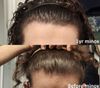
Dutasteride can drastically reduce sebum production, leading to dryer hair and shedding. Alternating shampoos and periodic silica supplementation can improve hair quality and thickness.
User discusses hair loss treatments, including fluridil, minoxidil, tretinoin, melatonin, stemoxydine, ketoconazole, and piroctone olamine. They suggest that shedding healthy terminal hairs may be bad, while shedding weaker hairs could indicate a beneficial treatment effect.
The conversation discusses microneedling for hair regrowth, emphasizing the importance of disinfecting the scalp to avoid infections. It also mentions using minoxidil and castor oil in the treatment routine.
A 32-year-old male with hair loss cannot use finasteride due to erectile dysfunction and minoxidil due to scalp psoriasis. He seeks alternative treatments for his condition.
A user experienced worsened hair condition after a PRP session and is considering stopping further sessions. They are using a Dermapen, electric massage, iron, saw palmetto, and plan to start minoxidil, but have had side effects with finasteride and are advised to consider dutasteride under medical supervision.
The conversation discusses hair regrowth using finasteride, minoxidil, ketoconazole shampoo (Nizoral), and microneedling as treatments. Users are sharing their experiences and results with these specific hair loss treatments.
A 25-year-old woman is experiencing hair loss and has started microneedling with a 0.5mm roller, applying a mix of essential oils overnight. She questions whether to switch to a 1.5mm roller and the best order for her routine, while a reply suggests using Minoxidil for better results.
The user experienced a panic attack after adding 5% topical minoxidil to their routine, which already included oral finasteride and minoxidil, and microneedling. They are seeking advice on whether microneedling increased absorption and if the anxiety attacks will subside.
A user with kidney disease and high blood pressure experienced hair thinning, especially around the vertex. They are currently using finasteride and oral minoxidil but are considering whether to resume blood pressure medication despite managing symptoms with diet and exercise.
The user added microneedling to their routine of minoxidil and finasteride, resulting in noticeable hair regrowth after three months. They shared photos showing significant improvement.
The user noticed miniaturized hair at the front of their hairline and is not on any medication. They are concerned if this is a sign of a receding hairline or something normal.
The discussion is about a hair loss drug called pyrilutamide. Users discuss its efficacy, safety, and expected market release around 2025-2026, with some expressing concerns about the authenticity of current market offerings.
The user shared their hair loss progress over a few months using minoxidil, finasteride, RU58841, and microneedling. They reported reduced hair loss and plan to continue their routine, possibly increasing dosages gradually.
A user's experience with Dutasteride causing rapid hair loss and temple recession over 3 weeks, with other users offering advice about the potential causes of this.
The conversation is about the potential of SCUBE3 to regrow a juvenile hairline. Specific treatments mentioned include Minoxidil, Finasteride, and RU58841.
Hair loss can be treated by correcting glucose metabolism in hair follicles and using equol as a safer DHT blocker. Production of these treatments is starting soon, and a Discord channel is available for more information.
The user has been on a hair loss treatment for 14 months using dutasteride and oral minoxidil without seeing regrowth and is considering adding more drugs due to the psychological impact of hair loss. However, replies suggest the user may not actually be experiencing noticeable hair loss.
The conversation discusses the safety study of PP405, emphasizing that early trials focus on safety rather than efficacy, and that any efficacy data from such a short study should be viewed skeptically. It also highlights that the information released is primarily for securing funding, and that meaningful efficacy results are expected in later phases.
A user applied the 8T3 product for hair loss, targeting LPP and AGA, and plans to update on its effectiveness. The product uses a saline buffered phosphate vehicle, suitable for those intolerant to ethanolic vehicles.
Creatine may increase hair loss in those with male pattern baldness (MPB) due to increased DHT, but whey protein generally does not affect hair loss. Finasteride and minoxidil are used to manage hair loss, and some users report increased shedding with creatine but not with whey protein.
A male with early-stage hair loss experienced severe side effects, including sexual dysfunction from finasteride and increased heart rate and fatigue from high-dose minoxidil, leading to discontinuation of both treatments. He is now relying on DHT-blocking shampoos and awaiting new treatments.
The conversation discusses the comparison of Pyrilutamide Phase II US trial results with 1 mg finasteride for hair loss treatment. It mentions that the total hair count increase in the US trial was not as good as the China trial.
A 25-year-old is experiencing mild hair loss and is using a regimen including scalp brushing, dermarolling, topical minoxidil, caffeine, melatonin, and a DHT-blocking shampoo. Another person shares their struggle with hair loss due to drug use and plans to start finasteride while trying to quit drugs.
A 19-year-old is experiencing hair thinning and recession above the temples, causing stress and consideration of starting finasteride despite financial constraints. They are unsure whether to begin treatment immediately or wait to assess the situation further.
The conversation discusses avoiding caffeine after Platelet-Rich Plasma (PRP) treatment for hair loss because caffeine is a vasoconstrictor, which can reduce blood flow and hinder the healing process that PRP aims to promote.
The user is experiencing hairline thinning despite using finasteride, minoxidil (solution and foam), dermastamping, and tretinoin. They suspect minoxidil or tretinoin might be causing the issue but are unsure.
A 21-year-old is concerned about androgenic alopecia and has been using minoxidil for a year, noticing some stabilization in the hairline but fears using it on the whole scalp due to seborrheic dermatitis. Another person suggests considering a psychiatrist for stress management, using Nizoral shampoo, and possibly trying a small dose of finasteride.