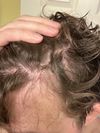
User discovered hair fibers, tried Toppik but concerned about ingredients. Considering Boldify (cotton-based, cheaper) and Surethik (keratin-based) as better options.
The user is experiencing improvement in hair density using a topical lotion containing minoxidil, finasteride, ketoconazole, and other ingredients. They are hopeful for further progress in the coming months.
A dermatologist recommended using topical Dutasteride (15%) once a week, alongside oral Finasteride and Minoxidil, to improve hair strength and response. The user is seeking experiences or evidence on the effectiveness of this high-concentration regimen.
RU58841 is being considered for hair maintenance by someone who can't tolerate finasteride. Alternatives like topical finasteride, dutasteride, and KX826 are also suggested.
Fluridil is hard to obtain and only available in Slovakia and Czechia, with no systemic side effects but possibly limited effectiveness compared to finasteride. The original poster is using finasteride and minoxidil without success and is considering trying fluridil despite its cost.
User switched from finasteride to combination dutasteride and finasteride for hair density improvement. They noticed less hair shedding and more youthful skin, with a reply suggesting less DHT could increase elastin in skin.
Being overweight may increase finasteride side effects due to higher aromatase activity converting testosterone to estradiol. Maintaining a healthy weight could reduce these side effects.
The conversation discusses the lack of in vivo studies on the effects of minoxidil and finasteride on human collagen and elastin after a year of use. It highlights the potential benefits of such research for understanding side effects and improving sales, despite challenges like cost and competition.
The conversation is about a person's 6-week progress using 2.5 mg oral minoxidil, 0.5 mg dutasteride, weekly derma stamping at 1.5 mm, and rosemary oil for hair loss, with some initial shedding but no side effects. They are optimistic about future results.
A user started using topical finasteride, switching from 0.1 g to 0.2 g, and is concerned if this dosage is too high. They are seeking advice on the appropriate amount to apply.
PP405 targets hair follicle stem cells differently than exercise-induced lactate, suggesting exercise alone may not replicate its benefits. Minoxidil and finasteride are recommended alongside exercise for hair regrowth, with additional suggestions like spicy food and infrared exposure.
A 19-year-old is considering whether to continue finasteride at 0.5mg every other day due to concerns about side effects. They are seeking advice on dosage frequency and potential side effects, noting no issues so far.
The conversation discusses how different factors can stimulate type 1 and type 2 isoforms of 5-alpha reductase, which are enzymes linked to hair loss. Specific treatments mentioned include oral Dutasteride and topical Finasteride.
The user is considering taking ashwagandha while on finasteride to manage side effects, noting it reduces stress but may cause hair thinning. They are unsure if the thinning is due to ashwagandha or normal shedding from finasteride.
A 28-year-old male has been using oral finasteride and minoxidil for over a year without seeing significant results in hair thickness, particularly in the front. He is considering adding dermastamping to his routine and is exploring whether topical treatments might be more effective.
Switching from liquid to foam Minoxidil to avoid scalp irritation, with a method to melt the foam for easier application. Users discuss alternatives and personal experiences with Minoxidil, including issues with propylene glycol and different application methods.
A user experiencing diffuse thinning at the hairline after 12 months on finasteride is considering adding minoxidil, dutasteride, or RU58841 to their treatment. Another user suggests adding minoxidil now, holding off on dutasteride, and shares personal side effects from RU58841.
The conversation discusses alternatives to 5AR inhibitors for hair loss treatment, suggesting options like minoxidil, KX-826, pyrilutimide, microneedling, and topical bicalutamide. Concerns about side effects and the effectiveness of these treatments are also highlighted.
User sshamu's progress pictures of 4 months using minoxidil foam and 1MM dermarolling for hair loss, which resulted in impressive results. There is also discussion about how often to use the treatments, as well as potential side effects of finasteride.
The conversation discusses concerns about potential cognitive and emotional effects of finasteride, with the original poster planning to monitor their cognitive performance while using the treatment. A user responds that most people do not experience cognitive shifts, though some report subtle changes.
A 24-year-old with hair thinning is using a regimen including dutasteride, RU58841, HGH, GHK-cu, and other compounds to protect and regrow hair. They are also incorporating a mild cutting cycle with testosterone propionate, anavar, and tirzepatide.
The user experienced hair loss issues after switching from finasteride to dutasteride and back, with stress and seborrheic dermatitis affecting hair quality. They plan to continue finasteride, treat seborrheic dermatitis, and monitor nutrient levels, considering low-dose oral minoxidil if safe.
A user shared their positive experience with hair regrowth using finasteride 1.25 mg daily and dermastamping every two weeks. They reported no side effects and noticed regrowth after about three months.
A 28-year-old male considering hair restoration is deciding between starting with 0.5mg dutasteride or 1mg finasteride, with finasteride being the typical starting point due to fewer and shorter-lasting side effects. The options also include minoxidil and biotin.
Taking dutasteride with a meal containing fat may improve absorption, but consistency in routine is more important than timing. Minor variations in absorption won't significantly affect efficacy due to dutasteride's long half-life.
Hair loss discussion includes alfatradiol (Pantostin/Ell Cranell) as a potential treatment. Users share opinions on its effectiveness in their regimen.
The user has been using finasteride 0.1% and minoxidil 5% for hair loss with some regrowth but seeks improvement. Suggestions include increasing finasteride dosage, using dutasteride, adding dermarolling, or switching to oral medication.
The user "OP" uses a combination of topical minoxidil 5%, finasteride 0.025%, and caffeine to combat hair loss, with noticeable results over 5-6 months. Side effects include unwanted body hair growth and an itchy scalp, but no significant sexual side effects.