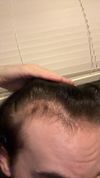
A user is deciding between oral and topicalfinasteride for hair loss, noting oralfinasteride's ease of use but broader effects. Another user simply recommends oralfinasteride.
The user is experiencing increased hair loss and was diagnosed with male pattern baldness. They are considering using oral or topicalfinasteride to manage the condition and are contemplating cutting their hair short.
A user is using a Finoxidil topical spray and is curious if oralFinasteride would be more effective, considering they are already on a DHT blocker called Cyproterone. They are concerned about the potential impact of oralFinasteride on their transition.
The conversation discusses switching from oral to topicalfinasteride due to side effects like nipple soreness. The user seeks advice on diluting and applying topicalfinasteride to minimize adverse effects.
Oral Dutasteride and topicalFinasteride may have similar effects on scalp DHT, but topical Dutasteride might be less effective due to poor absorption. Combining oral Dutasteride with topicalFinasteride could potentially enhance results by blocking DHT in both the scalp and serum.
The user experienced hair regrowth using daily oralfinasteride and topical minoxidil applied about five times a week, with some existing hair becoming thicker and new growth appearing. They also used dermastamping once a month and are considering adding topical GHK-Cu to their regimen.
The user experienced hair regrowth over three months using oralfinasteride daily, topical minoxidil 5-6 times a week, a weekly derma stamp, and tretinoin 2-3 times a week. The regrowth includes small hairs, attributed to the treatments.
The user is using oralfinasteride, topical minoxidil, and tretinoin to treat hair loss. After two months, there is noticeable thickening and maintenance of the hairline.
The user started using oralfinasteride and topical minoxidil, showing promising hair regrowth in a short time. They plan to add microneedling and possibly a hair transplant in the future.
The user followed a hair loss treatment routine using liquid minoxidil, oral minoxidil, and oralfinasteride, with plans to stop topical minoxidil by mid-2026. They experienced significant improvement, especially in the crown area, after starting oral minoxidil.
The conversation is about a 29-year-old man's progress with hair loss treatment over a year using oralfinasteride, topical minoxidil, and dermarolling, which has led to improved hair coverage and increased confidence. Users are encouraging and asking about the timeline of noticeable improvements.
Switching from topicalfinasteride and minoxidil to oral dutasteride and oral minoxidil resulted in thinner hair and loss of vellus hair, with no new growth observed. The user is concerned about the lack of improvement despite using a stronger treatment.
A 21-year-old male experienced negative side effects from oralfinasteride and is considering switching to topicalfinasteride or RU58841 after using oral minoxidil. He seeks advice on a standard hair loss routine, mentioning peptides, RU58841, and dermarolling.
The user experienced significant hair regrowth using topicalfinasteride/minoxidil and oral minoxidil/dutasteride, with some mild side effects that diminished over time. They plan to add microneedling to their regimen and have seen hair shedding cycles every six months, followed by thicker regrowth.
A 23-year-old experienced severe depression and suicidal thoughts from oralfinasteride and is considering trying topicalfinasteride but is worried about similar side effects. They are currently using RU58841 and Minoxidil and are seeking advice on the lowest effective dose of topicalfinasteride.
The user is using a regimen of topical Minoxidil and Finasteride, oral Minoxidil, and a thickening shampoo and conditioner. They report no side effects except increased body hair, which they don't mind.
User shared 6-month progress of hairline recovery using oralfinasteride and topical minoxidil, asking for current Norwood scale rating. Responses praised impressive results, with estimates ranging from Norwood 1.5 to 3.
Using oralfinasteride in combination with topical minoxidil and dermarolling for hair loss. Some users have reported significant regrowth when adding finasteride to their minoxidil routine, suggesting that reducing DHT levels may be a key factor in hair regrowth.
Finasteride is key for hair regrowth, supported by oral/topical minoxidil, Folexin, Nizoral/Head & Shoulders, and vitamin D. No side effects experienced; early intervention and patience are crucial.
The user is considering using topicalfinasteride for hairline recession and thinning, despite having low DHT levels and previous side effects from oralfinasteride. They are also taking 2.5 mg of oral minoxidil, which has not resulted in regrowth or stabilization.
A 20-year-old experienced side effects from oralfinasteride and is considering switching to topical treatments, including minoxidil and tretinoin. Another user shared their experience of switching to topicalfinasteride and minoxidil, then to oral dutasteride and minoxidil, noting no side effects with dutasteride.
Using topicalfinasteride alongside oralfinasteride likely won't provide significant benefits and may increase the risk of side effects. The "4-in-1" spray offers a higher minoxidil concentration but may not be worth switching if oralfinasteride is well-tolerated.
A user is using topicalfinasteride, minoxidil, and oralfinasteride for hair loss but hasn't seen progress yet. They are considering switching to oralfinasteride only due to scalp issues from the topical solution, but are advised to continue the current regimen for at least six months to a year.
The conversation discusses combining topicalfinasteride with oralfinasteride or dutasteride for hair loss treatment. It also mentions using minoxidil, oral dutasteride, and other supplements like biotin and ketoconazole for better hair health.
A user is combining topicalfinasteride with minoxidil and considering adding oralfinasteride to their routine. Others share their experiences with similar treatments, including oral dutasteride and minoxidil, and discuss cost and dosage concerns.
Topicalfinasteride with minoxidil can be effective but may not match oralfinasteride results, with less absorption into the bloodstream. Shedding is common when starting or stopping minoxidil and finasteride, and adding dutasteride and tretinoin can enhance effectiveness by improving absorption and DHT inhibition.
The user is considering switching from topicalfinasteride to oralfinasteride and is seeking advice on whether to transition directly or use both forms temporarily. They express concern about potential side effects.
The user is considering combining 1mg oralfinasteride with 0.1% topicalfinasteride due to reduced effectiveness after 5 years and is also using minoxidil twice daily. They previously tried dutasteride but stopped due to side effects and are hesitant to try RU58841.
Topicalfinasteride is believed to reduce scalp DHT more than oral forms, but its effectiveness is questioned due to inconsistent application and absorption. Oralfinasteride is considered more effective because it consistently reduces systemic DHT, ensuring more reliable results.
The conversation discusses combining topical and oralfinasteride to address hair thinning, with concerns about safety and effectiveness. Users also mention alternatives like dutasteride and minoxidil, and the potential risks of topical treatments during pregnancy.