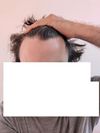
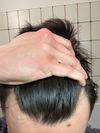
After 2 months of using Minoxidil and finasteride, OP noticed fuller hair, confirmed by their wife's observation. OP is pleased with the progress, though the change isn't drastic.
Doctors are testing verteporfin topically for healing and potential regeneration after transplants. The user is asking how it is formulated for topical use, such as if it's mixed with a carrier gel.
A 26-year-old man shared his positive results after 10 months of treating male pattern baldness using a regimen that includes Estradiol Enanthate, DHPA, Bicalutamide, Dutasteride, oral and topical Minoxidil, and a dermaroller. He experienced mild gynecomastia and reduced body hair as side effects but was satisfied with the outcome.
User xEternex tries hair regrowth with daily broccoli sprouts, apple extract containing procyanidin b2, and microneedling. Others discuss potential issues with the experiment and share their experiences with vegetable consumption and hair growth.
A user shared their experience with a beard-to-scalp hair transplant, noting no visible scars and improved hair density using finasteride and minoxidil. The conversation discusses the differences between beard and scalp hair, potential changes in hair texture, and the use of beard hair for increased scalp coverage.
The user shared a 4-month update on their hair regrowth journey using finasteride, minoxidil, and microneedling, reporting significant progress and styling ability. They emphasized persistence, shared their regimen details, and addressed side effects like weaker erections and blurry vision, which improved with lifestyle changes.
A drug that regrows body parts, but not hair, sparking debate on hair loss treatments. Discussions include the use of finasteride, dutasteride, and the potential for new methods to restore hair.
The conversation discusses the theory that finasteride-induced erectile dysfunction (ED) is related to blood flow rather than hormonal changes. The user suggests that lowering LDL cholesterol aggressively might improve ED symptoms for those on finasteride.
Applying minoxidil and finasteride to the temples won't cause shedding elsewhere. Shedding occurs due to hair follicles resetting their growth cycle, not the application location.
A user shared their hair regrowth progress using oral finasteride, biotin, topical minoxidil, and DS thickening shampoo over five months, reporting significant improvements in hair texture and growth. They experienced minor side effects like a slight headache from switching minoxidil forms but noted no issues with finasteride.
A user experienced androgenic alopecia starting at the vertex without frontal hairline recession and is seeking information on this pattern. Another user noted that vertex or diffuse hair loss is common among men.
The user regrew their hairline using mechanical stimulation, including a 1.5mm derma roller weekly, daily scalp massages, and other treatments like Nizoral, zinc pyrithione, fish oil, and Lipogaine The Big 5. They did not use Minoxidil or finasteride.
The efficacy of various hair loss treatments, including Finasteride and Dutasteride, with personal anecdotal evidence about potential side effects. It also includes advice to get a male hormone blood panel done before starting treatment, and lifestyle changes to minimize side effects.
People are discussing the anticipated release of PP405 phase 2a results, expected by the end of March, with some skepticism about its effectiveness. There is cautious optimism due to past experiences with similar treatments like Breezula, despite concerns about the lack of presentation at the AAD 2026 conference.
PP405 and hair cloning are discussed as potential treatments for reversing hair loss from Norwood 7 to Norwood 1. Hair cloning is seen as a more permanent solution, while PP405's effectiveness and long-term effects remain uncertain.
Placebo hair regrowth might be influenced by propylene glycol in lotions or participants lying about using other treatments like minoxidil, finasteride, or microneedling. Being part of a study can also improve hair health due to lifestyle changes.
Clinical studies by Dr. Barghouthi and Dr. Bloxham indicate that Verteporfin, when used with FUE and FUT hair transplantation methods, shows promise in hair follicle regeneration and minimal scarring due to its ability to inhibit Yes-associated protein (YAP). Microneedling at depths of 3-3.5mm, combined with Verteporfin, could potentially reactivate dormant follicles, although the optimal dosage and application method are still under investigation. Concerns remain about the DHT sensitivity of regenerated follicles, highlighting the need for further research to optimize trauma levels and Verteporfin concentrations to achieve effective and scar-free hair regeneration.
A user is considering a hair transplant in a "mohawk" pattern with scalp micropigmentation (SMP) on the sides and back, questioning its feasibility and appearance. Others discuss donor region quality, potential scarring, and alternative treatments like dutasteride and RU58841.
A 24-year-old shares a 1-month update on his hair regrowth journey using 1mg oral finasteride, 10mg oral minoxidil, dermarolling, and pyrilutamide. Replies suggest it may take a few hair cycles for vellus hairs to mature into normal hairs, with progress varying by individual.
A 21-year-old experienced significant hair regrowth using finasteride, Procapil, and microneedling over 8 months. The barber was amazed by the progress, and the user no longer sees their scalp during haircuts.
The post discusses a theory that hair regrowth after transplant is due to the angiogenesis process (new blood vessels forming), not because the transplanted hair is unaffected by DHT. The responses highlight the established belief in 'donor dominance' (the importance of the hair's origin in transplantation) and skepticism about the new theory.
A user's 6 month hairline results from using dutasteride and microneedling, which resulted in successful regrowth of their thinning temples. Other users commented with similar experiences that were also achieved through the use of finasteride, dutasteride and minoxidil.
User experienced hair loss since 16, used Fin, Minox, and Nizoral with success but stopped due to side effects. Now using Pur D'or shampoo, Rogaine foam, scalp massages, volumizing spray, and dermarolling for hair maintenance.
A discussion on the use of Verteporfin as a hair restoration treatment and whether there are any other doctors or clinics using it currently, aside from Dr. Barghouthi. Treatments such as Minoxidil, Finasteride and RU58841 were also mentioned.
A user is using Minoxidil, finasteride, saw palmetto, and Minimalist RCP serum to address hair thinning, with some success but concerns about the long-term benefits of Minimalist. They plan to continue Minoxidil and finasteride for another year before considering a hair transplant.
The user is addressing hair loss with finasteride, dutasteride, oral and topical minoxidil, dermarolling, and shampoos. They are considering adding essential oils to improve circulation.
The conversation discusses the potential of Verteporfin, an FDA-approved drug, for hair loss treatment, particularly in combination with microneedling or PRP. Users express hope and curiosity about its application, while some remain cautious due to the need for more extensive testing.