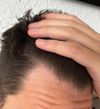
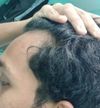
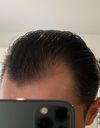
User with diffused thinning hair prefers receding temples, as hair transplant could fix it. Finasteride and minoxidil suggested to improve hair density.
Stefano, a 20-year-old male, experienced significant hairline shedding and thinning after using topical Minoxidil, along with rosemary/jojoba oil, biotin tablets, caffeine shampoo, and a dermaroller. He is uncertain whether to continue the treatment in hopes of regrowth or stop and potentially return to his original hair condition, while a reply suggests using finasteride or dutasteride to address the underlying cause of hair loss.
A user shared their experience with hair loss treatments, including topical minoxidil, finasteride, RU58841, and microneedling, noting significant hair regrowth except at the hairline. They plan to start oral minoxidil and switch to a combination treatment, while another user mentioned that some miniaturized hairs may not fully recover.
A 24-year-old male started using finasteride and minoxidil for hair loss, noticing reduced hair fall but continued temple and frontal recession. He uses both oral and topical minoxidil, biotin, vitamin D, and coal tar shampoo, and experiences rare heart palpitations.
A 20-year-old started using minoxidil, rosemary oil, Alpecin caffeine shampoos, scalp massager, derma rollers, and supplements for hair regrowth, seeing significant improvement initially. However, after 6 months, they noticed increased shedding and thinning, causing concern about whether this is normal or indicative of a problem.
The user noticed hair thinning since age 15, initially attributed to a Vitamin D deficiency. They are currently using Rogaine and considering Propecia but are hesitant about a scalp biopsy; they seek financially practical treatments for male-pattern baldness.
Increased Malassezia and Cutibacterium in the scalp microbiome are linked to higher sebum production and inflammation in androgenetic alopecia (AGA). Treatments include ciclopirox shampoo, benzoyl peroxide shampoo, clobetasol propionate, calcipotriol, minoxidil, finasteride, and dutasteride.
OP is experiencing ongoing hair shedding despite two years on finasteride, with some initial improvement but no long-term success. Users suggest seasonal shedding, checking for vitamin deficiencies, considering minoxidil, and possibly switching to dutasteride.
The conversation is about a user concerned about hair thinning despite using finasteride, minoxidil, RU58841, and recently adding dutasteride. Most responses suggest there is no noticeable difference in hair loss, attributing concerns to paranoia, and recommend continuing the current treatment or adjusting expectations.
The user is experiencing intense hair shedding all over the scalp after applying pyrilutamide to the hairline and taking oral castor oil. They are also using topical finasteride and latanoprost, but are unsure which treatment is causing the shedding.
The user is experiencing continued hair loss despite using minoxidil, finasteride, tretinoin, and microneedling. They are considering a hair transplant due to lack of response to current treatments.
A user's hair regrowth journey using biotin and minoxidil after initial treatments with Nizoral shampoo and Ketoconazole serum didn't work. The comments suggest the hair loss might not be male pattern baldness (MPB), but possibly Alopecia Areata, an autoimmune disorder, and recommend getting a second opinion and considering other treatments like corticosteroids.
Baricitinib, approved for alopecia areata, might be considered for treating receding hairlines. The discussion is about the possibility of an over-the-counter topical version for androgenic alopecia.
A 19-year-old is using keto shampoo, topical Minoxidil 5% for 3 months, and topical finasteride 0.1% for 1.5 months to address hair loss. They are noticing baby hairs and shedding, questioning if the hairs will thicken and if more time is needed for finasteride to work.
A user claims a product can treat alopecia, but others are skeptical, calling it a scam due to lack of evidence and transparency. The product is said to inhibit Type II 5-αr by 22.9%, but is considered weaker than existing DHT blockers.
Small hairs around the hairline may regrow with continued use of minoxidil, finasteride, and ketoconazole. The user is hopeful about hairline improvement.
Dihydrotestosterone (DHT) impacts various skin conditions, including Androgenetic alopecia and seborrheic dermatitis, by causing overactivity in sebaceous glands. Topical medications Tacrolimus and Clobetasol can reduce these inflammatory conditions, and treatments like RU58841, Minoxidil, and Finasteride may also be beneficial.
The user is experiencing significant hair loss and has tried treatments like PRP therapy, topical and oral Minoxidil, Finasteride, and dietary changes, with limited success. They are concerned about losing more hair before a scheduled hair transplant and are advised to postpone the transplant to allow medications more time to work.
A user is discussing their experience with finasteride for diffuse thinning without a receding hairline, noting a massive shedding phase in the fourth month that is now slowing down. Other replies are off-topic and not relevant to the treatment discussion.
The user shared a 6-month update on their hair loss treatment, using finasteride/minoxidil gel, ketoconazole shampoo, thickening shampoo and conditioner, and topical minoxidil. They wash their hair three times a week and switched to a less oily topical foam. Other users commented on their hairstyle, advising against it to prevent traction alopecia.
The user has been using finasteride, ketoconazole shampoo, oral minoxidil, and minoxidil foam for hair loss but feels their hair is not as thick as desired. They have stopped using RU58841 due to lack of results and are concerned about hair miniaturization despite these treatments.
Hair looks thinner in sunlight, and users discuss using hair fibers, minoxidil, finasteride, and considering dutasteride for hair loss. Hair fibers like Toppik help conceal thinning, and some users suggest additional treatments like derma stamping and micro-needling.
The user shared progress after two months of using finasteride, serioxyl, and NOOANCE casque Pro for alopecia. They are documenting their hair loss treatment journey.
A 28 year old male experiencing diffuse thinning, chronic dandruff and scalp crust (seborrheic dermatitis), with replies discussing the use of topical fin for hormone imbalances and Nizoral for seb derm.
A user has been losing hair for two and a half years after a tropical trip and illness. A dermatologist prescribed betamethasone valerate 0.1% lotion, but the user is unsure if it's safe or effective for general hair loss.
The user is experiencing diffuse hair thinning despite using finasteride and oral minoxidil, with no hairline recession or bald spots. Suggestions include checking for telogen effluvium, considering a JAK inhibitor for potential autoimmune issues, and conducting further tests to rule out other causes.
A 29-year-old male shares progress pictures after 4 months using finasteride and 2% ketoconazole shampoo, noting initial shedding but overall improvement. He avoids minoxidil and microneedling, and reports thicker hair in balding areas while maintaining high water intake.
A user with diffuse thinning recommends a root cover-up spray as a temporary, medication-free solution. They plan to consult a dermatologist for treatments like Minoxidil and finasteride while using the spray for special occasions.
How androgens, including testosterone, can cause hair follicles to miniaturize in people with sensitivity to androgens, and treatments such as finasteride, dutasteride, minoxidil, RU58841, or fluridil may be used in combination for long-term treatment.

Finasteride significantly reduced hair shedding within a week for a diffuse thinner, who also uses topical minoxidil and plans to add ketoconazole shampoo and microneedling. The user is hopeful for hair regrowth and is tracking progress with photos.