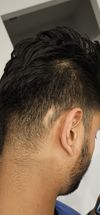
OP is experiencing significant hair loss despite GFC and PRP treatments and has abnormal lab results. They are advised to consult a hair-focused dermatologist for further evaluation.
Delayed release oral minoxidil is seen as a promising advancement for hair loss treatment, offering safer, higher doses and more consistent hair follicle stimulation compared to current options. However, it is not expected to replace finasteride or dutasteride, as it does not prevent androgenetic alopecia.
Trans woman experiences hair thinning despite low testosterone and treatments like finasteride and microneedling. Possible causes discussed include past eating disorder and current stack of medications and supplements.
Oral supplementation of Nicotinamide Mononucleotide (NMN) improves hair quality and appearance in middle-aged women. However, it may reduce total hair density, possibly due to seasonal shedding.
Some users maintained hair gains after stopping microneedling while continuing minoxidil and finasteride, while others saw no improvement or experienced hair breakage. One user switched to oral minoxidil and continued finasteride and dutasteride after seeing no results from microneedling.
The user is experiencing a second hair shedding phase and increased flaking and itching while using minoxidil 5% nightly and microneedling every two weeks, with needle length increasing over time. Other users suggest the hair loss may continue without the use of finasteride.
The user is considering starting pyrilutamide before a scheduled hair transplant, having previously used oral minoxidil and finasteride with worsening results. They also tried dutasteride, which worsened their hair and made their skin oily.
The conversation is about the lack of improvement in hair loss after using Pyrilutamide for 14 weeks, with the original poster unable to use Finasteride due to depression. Replies suggest that Pyrilutamide, like RU58841, may not work for everyone, and a more potent drug is being developed by Kintor.
The conversation discusses the potential of a new hair loss treatment, GT20029, which targets androgen receptors in the scalp and is in phase 1 trials in China. Users express hope that this treatment will be more effective than current options like Minoxidil and Finasteride.
The conversation is about the effectiveness and production of GT20029, a drug being developed as a topical androgen receptor degrader for hair loss, and whether it can fully degrade androgen receptors or only partially. It also discusses the drug's potential unique working mechanism and synthesis by a company called Anagen.
A 22-year-old with advanced diffuse thinning is considering oral dutasteride after stopping finasteride due to side effects like brain fog and testicular pain. They are also contemplating a hair transplant combined with oral dutasteride and topical finasteride, noting a thick donor area.
Concerns about using 0.3% topical finasteride due to potential side effects like decreased libido and gynecomastia. Suggestions include using less than 1ml or considering 1mg oral finasteride.
The user has been using finasteride and dutasteride for hair loss but is experiencing low energy and motivation, possibly due to high prolactin levels. Despite treatment, hairline recession continues, and the user is considering the impact of low DHT levels on overall health and energy.
The user is asking if it's safe to use a glass dropper from a finished RU58841 product with a new RU58841 product and if cleaning it with water is sufficient. They are concerned about the quality of the plastic dropper that came with the new product.
The conversation is about hair loss treatments, specifically asking for updates on verteporfin research following promising results. No specific treatments were discussed in the provided text.
The conversation discusses a clinical trial for Setipiprant in the US, starting June 29th, with eligibility excluding recent users of minoxidil or finasteride. It encourages informed decision-making before signing up.
Creatine may affect hair loss by reducing PGE2 levels, which could influence hair growth. The discussion highlights the need for more research on this potential mechanism.
Treating androgenic alopecia with minoxidil, finasteride, and antiandrogens, alongside exercise, cryotherapy, and natural substances to stimulate cold receptors for better hair growth. The method focuses on enhancing treatment effectiveness by considering environmental and behavioral factors and the role of cold receptors and muscle stress.
The user has been using topical minoxidil, finasteride, microneedling, and laser light therapy for 11 weeks to address hair thinning. They report difficulty applying the treatment due to increased hair thickness and are unsure if the results are significant.
PP405 is humorously suggested as a new hair loss cure with "shocking results." The conversation includes references to Minoxidil, finasteride, and RU58841.
The post and conversation discuss Verteporfin's potential as a hair loss treatment. It's shown promise in regrowing hair after transplants and might be effective with microneedling.
The conversation is about using DIY copper peptide (GHK CU) serum for microneedling to address hair loss, with additional treatments including Nizoral for DHT reduction and red light therapy. The user is considering adding Minoxidil but is concerned due to having cats.
A user is making their own dutasteride solution using MCT oil but is concerned about its effectiveness and bioavailability. They are considering using propylene glycol or adding ethanol for better results, while others suggest the current dosage might be excessive.
The post discusses microneedling for hair regrowth, with the original poster seeking experiences of those who didn't see positive effects. A reply suggests that while microneedling doesn't guarantee hair regrowth, it increases the chances if done correctly.
A user shared their pre-finasteride lab results, including DHT, estradiol, testosterone, SHBG, prolactin, FSH, and LH levels. Another user responded, cautioning against making unsupported claims about side effects and recovery.
The conversation discusses a study comparing microneedling combined with minoxidil versus biotin/panthenol for hair loss. Results suggest biotin/panthenol may be superior to minoxidil, though the sample size was small.
The user suspects scarring alopecia and is exploring NSAIDs and turmeric/pepper for inflammation-related hair loss, having experienced burning and thinning with finasteride and testosterone reduction. They are seeking feedback while unable to afford a dermatologist.
Pelage PP405 is a new hair loss treatment in trials, potentially reactivating dormant hair follicles without affecting hormones. Results are expected in February 2025, offering an alternative to minoxidil and finasteride.