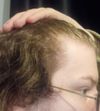
A user suspects Ritalin is causing hair loss due to vasoconstriction and is considering trying Ginkgo Biloba after already taking a multivitamin and hair supplement. Another user mentions experiencing hair shedding with Vyvanse and Dexedrine.
The conversation discusses whether finasteride or peppermint oil could cause dark circles under the eyes, with suggestions to improve sleep and hydration. The user applies peppermint oil mixed with jojoba oil to the scalp for hair health and uses finasteride for hair loss treatment.
People discussed their experiences with peppermint oil for hair loss, with mixed results. Some users reported no hair loss after stopping peppermint oil, while others experienced shedding; one user noted improved scalp health when mixing it with minoxidil.
User is experiencing a very dry scalp with thick white flakes from using liquid minoxidil twice daily for a year. They use Nizoral every 10 days and are seeking advice for a healthier scalp, with a suggestion to use finasteride instead.
The user is frustrated with hair loss despite using finasteride, dermastamping, oils, and a healthy lifestyle, but is hesitant to try minoxidil. Others suggest dropping ineffective methods and starting minoxidil, with some recommending switching to dutasteride for better results.
A new hair loss lotion by Dr. Brotzu, expected to regrow up to 5 years of lost hair, is set to be released by Fidia Farmaceutici. It claims to work like minoxidil and finasteride without side effects, but skepticism exists due to its classification as a cosmetic product.
A user humorously lamented spilling their minoxidil, describing it as a dramatic and personal loss. Others shared similar experiences and advised caution if pets are around.
The conversation is about finding a good shampoo to improve hair health and thickness, with recommendations including ketoconazole, pura’d’or, Head & Shoulders Dermaxpro, OGX Argan Extra, and OGX apple cider vinegar shampoo. Users discuss experiences with ketoconazole and suggest adding a scalp cleanser with glycolic acid to the routine.
Starting Minoxidil now won't affect future Finasteride gains; they work differently and can be used together. It's suggested to start Minoxidil to maintain hair health until Finasteride can be started, and consider additional treatments like Ketoconazole shampoo, derma rolling, and rosemary oil for support.
Extended-release oral minoxidil (VDPHL01) shows promising results for hair growth with improved safety, achieving significant hair count increases and minimal side effects compared to placebo. The treatment is designed to maintain effective concentrations while reducing side effects, making it a safer option for those who cannot tolerate standard minoxidil.
The conversation discusses the use of finasteride for hair loss treatment and addresses misconceptions about its use in hormone replacement therapy. It also touches on the safety and long-term effects of finasteride, with some users expressing skepticism and others defending its safety profile.
OP reports minimal shedding and improved hair thickness after nearly 3 months on a combination of dutasteride and minoxidil. Users discuss realistic expectations, hair density improvement, and the cost of branded versus generic medications.
A user reported that after experiencing hair thinning, they started using finasteride in 2024 and later began GHK-Cu peptide injections in March 2026, which they believe stopped their hair loss and made their hair feel thicker. The user shared their experience despite receiving criticism for not solely endorsing finasteride.
A user shared their experience of using finasteride for hair loss from ages 29 to 37, stopping due to side effects like low libido, and later starting testosterone therapy, which improved their well-being. The discussion includes various opinions on the effects of finasteride and testosterone on hair loss, libido, and overall health, with some users questioning the correlation between finasteride and low testosterone.
A user experimented with applying pure rosemary oil to a single hair strand twice daily, observing increased thickness and pigmentation, but questioned if the oil or the application method caused the change. Some users noted rosemary oil might be as effective as 2% minoxidil for hair growth, though others warned about potential harm from using undiluted oil.
A 19-year-old is unsure if their hair is receding or just maturing and is seeking opinions before starting treatments like Minoxidil, finasteride, or RU58841. They shared recent and past photos to compare changes over a few months.
The conversation discusses hair loss treatments, specifically the use of finasteride and dutasteride. Users share experiences of shedding and varying effectiveness, with some suggesting adding minoxidil or a topical anti-androgen for better results.
Hair loss treatments include topical and oral minoxidil, low-level laser light therapy, and peptide serums. Bryan Johnson avoids finasteride and dutasteride due to potential side effects, focusing instead on his own protocol with these treatments.
New hair loss treatments PP405 and VDPHL01 are discussed with skepticism and hope, alongside existing treatments like minoxidil and finasteride. Users express frustration over limited progress since the 1980s but remain cautiously optimistic.
Effective hair growth treatments include finasteride, minoxidil, dutasteride, and hair transplants, with additional options like microneedling, low-level laser therapy, and PRP showing some benefits. Newer treatments such as GHK-Cu peptides and ketoconazole shampoo are promising, while others like saw palmetto and biotin are less effective unless deficiencies exist.
Minoxidil alone is not effective for hair regrowth; adding a DHT blocker like finasteride or dutasteride is recommended. Dermastamping and micro-needling can enhance results, and some users suggest trying oral minoxidil or natural DHT blockers.
The user has been taking 0.5 mg of dutasteride daily and using ketoconazole shampoo twice a week for four months, but sees no significant hair loss improvement. Others in the conversation believe the user is not experiencing hair loss and suggest the user might be overly concerned about their hairline.
Follicium XR™ is a topical treatment for hair loss containing RU58841, AHK-Cu, GHK-Cu Peptide, caffeine, D-Biotin, methylene blue, keratin, and spermidine. RU58841 is considered the most effective ingredient, but concerns exist about its stability in water.
A new serum claims to enhance hair regrowth by amplifying oxygen delivery, improving the effectiveness of treatments like exosomes and peptides. Users are skeptical, questioning its efficacy compared to established treatments like Minoxidil and Finasteride.
A 33-year-old male with a receding hairline is advised to start with finasteride to block DHT and consider minoxidil for promoting hair growth. Other treatments like copper peptides and serums are deemed less effective, and ketoconazole shampoo is suggested for scalp health.
GHK-Cu injections led to unexpected temple hair growth for someone who had been using minoxidil and finasteride for over a decade. The user plans to continue using GHK-Cu and experiment with a DIY AHK-Cu serum.
Hair loss impacts mental health and should be covered by healthcare, with treatments like finasteride, dutasteride, and minoxidil being affordable and effective. Some argue hair loss is cosmetic and shouldn't be funded, while others highlight its broader health implications.
Minoxidil and finasteride might help with hair regrowth, but a hair transplant may be necessary for significant improvement. The conversation humorously discusses the severity of hair loss, comparing it to various exaggerated Norwood scale levels.
Hair regrowth from treatments like finasteride, dutasteride, and minoxidil can take several years, with most visible results appearing within 1-2 years and potential improvements continuing up to 10 years. Consistency and patience are crucial for achieving maximum hair thickness, as hair miniaturization and regrowth are gradual processes.