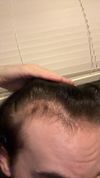
Combining tretinoin with minoxidil may enhance hair growth when minoxidil alone becomes less effective. Apply tretinoin, wait 40 minutes, then apply minoxidil, and avoid sun exposure.
The user experienced side effects from oral minoxidil and is seeking alternatives like Stemoxydine, Aminexil, and Redensyl + Procapil. They have been using finasteride for four years and are considering other treatments due to concerns about side effects.
A user who was part of an ongoing trial for a prolactin blocker and had regrowth, but the progress photos were not shared due to negative reactions from other users. Treatments mentioned include HMI-115, Minoxidil, Finasteride, and RU58841.
Using 0.025% tretinoin may enhance minoxidil's effects for hair loss. Users suggest starting with 0.025% and gradually increasing the concentration, and discuss combining treatments like microneedling.
A user is seeking recommendations for a minoxidil and tretinoin topical solution, including dosage and purchase locations in the US. They are looking for effective hair loss treatments.
The user experienced positive results with topical Minoxidil 6%, Finasteride 0.3%, and Tretinoin 0.025% over two months, with improved hair density and no significant side effects except for a dry, itchy scalp. The user uses a biotin shampoo and conditioner to manage scalp issues and applies the treatment once daily.
A user experienced significant hair growth using oral dutasteride and minoxidil but developed severe erectile dysfunction, likely exacerbated by obesity and diabetes. They plan to lose weight and possibly adjust medication to alleviate side effects.
The conversation discusses the comparison of Pyrilutamide Phase II US trial results with 1 mg finasteride for hair loss treatment. It mentions that the total hair count increase in the US trial was not as good as the China trial.
The user reported progress in hair growth after 4 months using 0.5 mg finasteride and 2.5 mg minoxidil daily, and is considering adding RU58841 to block DHT on the scalp. They experienced side effects like reduced libido and mild erectile dysfunction, and take supplements like zinc, iron, fish oil, vitamin D, magnesium, and vitamin E.
RU58841 should be applied directly to the scalp, ideally once a day, a few hours before bed. Some users experienced side effects like shedding and systemic issues when using RU58841 and Minoxidil together, while others reported no side effects when using RU58841 alone.
The conversation discusses hair loss treatments, specifically Minoxidil, finasteride, and RU58841. The user inquires if RENU Biogen is a DHT inhibitor.
The conversation discusses hair regrowth progress after 2.5 months using pyrilutamide and minoxidil. Participants note visible improvement in a short time.
The user shared progress pictures after three months of using RU58841, finasteride, and OM (oxidative stress modulators) for hair loss treatment. They haven't noticed much change but are seeking feedback on their results.
User on finasteride and redensyl serum sees progress, considers switching to minoxidil and topical finasteride mix. Another user claims topical mix is more effective than oral finasteride and has no side effects.
A 33-year-old male is documenting his hair regrowth progress using minoxidil, red light therapy, copper peptides, and micro-needling, with noticeable improvement in hair thickness and coverage. He plans to add a topical finasteride/minoxidil spray and aims for a shadow on his scalp rather than a full head of hair.
User shared 1.5-year progress using 1mg finasteride, 15% minoxidil daily, and derma rolling weekly. Experienced initial shedding but achieved significant hair regrowth and improvement.
Breezula's effectiveness is uncertain, with some users skeptical about its potential and others noting its recent availability on the grey market. A user reported success with a stack of Dutasteride (oral), Minoxidil (topical), and RU58841 (topical), achieving significant hair improvement after 18 months.
A male in his early 40s, who experienced side effects from finasteride, used 2.5% topical spironolactone for one year with no side effects but minimal regrowth. He plans to try a 5% spironolactone solution next.
The user is seeking oral Minoxidil in Europe due to issues with topical Minoxidil causing dandruff and dry scalp. They have started using oral Finasteride and are considering Ketoconazole shampoo.
The conversation discusses GT20029, a compound by Kintor Pharma that degrades androgen receptors and is in trials, with potential as a hair loss cure. Another promising treatment mentioned is an antibody that blocks prolactin and has shown positive results in macaques.
The conversation discusses using Pyrilutamide 1% as a potential treatment for hair loss, with some users combining it with minoxidil and finasteride. Experiences vary, with some reporting shedding and no progress, while others remain hopeful for future results.
A 22-year-old switched from finasteride to dutasteride for hair loss treatment, also using RU58841, and is managing hypothyroidism. Despite ongoing shedding, they report some improvement and plan to continue dutasteride for a year before considering minoxidil.
Oral ketoconazole is discussed as a potential hair loss treatment, but it poses significant health risks like liver damage and adrenal insufficiency. Users suggest safer alternatives like topical anti-androgens or spironolactone, emphasizing the importance of consulting a specialist.
A user is considering taking oral minoxidil 3mg every other day or thrice a week to minimize side effects and save money. They seek opinions on this dosing strategy.
The conversation discusses a prescription for hair loss treatment. Minoxidil is mentioned as a treatment that should be used daily, not just two days a week.
Using a low dose of topical Tamoxifen effectively reduces gynecomastia caused by finasteride, with minimal side effects. The solution involves mixing Tamoxifen with ethanol and propylene glycol, applied daily to the chest.
User doubts oral minoxidil's effectiveness after a month of use and shedding. Few people provide photo evidence of success, and some combine it with other treatments, making it hard to determine its effectiveness alone.