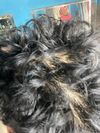
The user is experiencing hair thinning and visible scalp at 18, seeking advice on whether it's genetic or a scalp condition. Suggested treatments include Minoxidil, finasteride, ketoconazole shampoo, and CBD oil with MCT.
The conversation discusses a hair loss and scalp care routine involving ciclopirox shampoo, benzoyl peroxide, clindamycin gel, clobetasol propionate, and calcipotriol to manage seborrheic dermatitis, folliculitis, and inflammation. It also touches on the role of diet and other treatments like oral minoxidil and pioglitazone for scalp health.
The conversation discusses whether to get a blood test to check DHT levels while using Dutasteride for hair loss and concerns about Quercetin's potential interaction with Dutasteride. It concludes that testing DHT isn't necessary unless no effects are seen, and the small amount of Quercetin in a multivitamin likely doesn't interfere with treatment.
A user has been treating hair loss with finasteride for two years without success and is experiencing an itchy scalp with seborrhea. Despite low DHT levels, they are still losing hair, suggesting that DHT might not be the main cause of their hair loss, and they are considering other treatments or causes.
Hair loss may be caused by calcification of capillaries in the scalp, restricting blood flow to hair follicles. A daily treatment regimen including high doses of Vitamins D and K, Magnesium, and Nattokinase could potentially decalcify these capillaries, improving blood flow and hair growth. However, some users warn against excessive Vitamin D intake and emphasize the need for medical consultation.
The user is asking if using a 10% fluridil formulation would be effective for blocking scalp androgens in addition to their current treatment of oral dutasteride.
Matt-3422 shared his hair loss treatment journey, starting with great results from Minoxidil and oral Finasteride, then switching to RU58841 and topical Finasteride due to worsening hair loss. He's experiencing scalp irritation and is unsure if he should continue with his current regimen, while others suggest scalp care and alternative treatments.
User seeks advice for regrowing temples, currently using Fin, oral Min, and dermarolling. Suggestions include improving scalp environment and considering RU58841 or dutasteride.
Why androgenic alopecia affects the scalp rather than other body parts, potential explanations for this phenomenon, treatments available to combat hair loss, and the implications of male attractiveness in modern society.
Consider increasing dutasteride dosage to 2.5mg daily and continue using oral minoxidil. Check DHT levels, thyroid, vitamin D, and consider additional treatments like microneedling, RU58841, and improving diet and lifestyle.
The user is experiencing significant hair thinning and scalp discomfort after two years on finasteride and is considering switching to dutasteride. Another person suggests that scalp inflammation might be the cause and recommends a YouTube channel for more information.
Rob English, known for promoting scalp massages for hair regrowth, now sells his own brand of finasteride and minoxidil. Opinions are mixed, with some calling him a charlatan and others acknowledging his shift towards scientifically-backed treatments.
A 20-year-old woman with androgenetic alopecia feels depressed about her hair loss, despite using topical minoxidil, spironolactone, and saw palmetto. Suggestions include trying oral minoxidil, higher doses of finasteride or dutasteride, and checking for vitamin deficiencies and heavy metal exposure.
A person had three hair transplant surgeries using 7,600 grafts from scalp, beard, and chest, along with finasteride and minoxidil. Reactions are mixed, with suggestions for alternatives like hair systems or scalp micropigmentation.
The user is experiencing early hair thinning and is currently using finasteride and ketoconazole shampoo. They are considering adding minoxidil or switching to dutasteride for stronger DHT suppression, while also checking for iron deficiency.
Topical minoxidil with finasteride can help focus treatment on the scalp, with shedding being normal initially. Foam minoxidil is easier to apply, PRP's effectiveness varies, and anti-dandruff shampoos like ketoconazole are beneficial for scalp health.
An 18-year-old is experiencing hair thinning and considering treatments like scalp massages, vitamin D supplements, Minoxidil, and dermarolling to improve hair density while maintaining blonde hair. They are concerned about potential hair darkening from Minoxidil and seek advice on preserving their hair color and health.
A 25-year-old male experiencing hair shedding due to testosterone use is considering topical finasteride or RU58841 for scalp treatment while continuing minoxidil for beard growth. Topical finasteride is suggested to prevent scalp thinning without affecting beard growth.
A 17-year-old is considering starting finasteride and minoxidil for hair loss, despite concerns about potential side effects and the impact on development. The user is advised to check if puberty is complete and to consider using only minoxidil until adulthood.
Taking finasteride alone did not stop hair loss, but adding vitamin D3 and iron supplements improved hair coverage and quality. It's important to check and address deficiencies, but caution is advised with iron supplementation without medical guidance.
Switching from topical to oral minoxidil due to scalp irritation and unsatisfactory results, while also seeking cheaper options in the U.S. Oral minoxidil is generally favored for its effectiveness and fewer application downsides, with CostPlusDrugs and GoodRx offering affordable prices.
A user with medium length hair and thinning at the top is using an adenosine-based hair growth serum and seeking advice on whether to use a boar bristle or nylon bristle brush to stimulate hair growth. They are concerned about their sensitive scalp.
The conversation discusses hair loss treatments including oral minoxidil 5mg, dutasteride 1mg, and suggestions to use a derma stamp on the scalp. Some users believe these treatments can improve hair condition or at least stabilize loss, while one suggests considering a hair transplant after a year if desired.
The conversation discusses different methods of applying Minoxidil to the scalp to avoid making hair greasy and clumpy. Suggestions include using Rogaine Foam, keeping hair short, applying with a comb and fingers, using a spray, and a technique involving a brush and dropper.
The post discusses the difference in effects of Minoxidil (Min) on scalp and facial hair. The user questions why Min-induced hair growth on the scalp is temporary, while facial hair growth seems permanent, even after stopping Min. They propose theories, including different Min mechanisms on body and facial hair, the role of DHT, and the possibility of not achieving fully terminal hair. The responses include personal experiences and theories about Min's effects on hair growth.
The conclusion of the conversation is that the user "CheckHopeful" has seen significant improvement in their hair loss after using finasteride and minoxidil for 1.5 years. Some users discuss side effects and suggest adjusting the dosage or trying topical finasteride or RU58841.
The conversation discusses hair loss treatments without using Minoxidil, Finasteride, or Dutasteride, focusing on addressing hormonal issues and low ferritin levels. Suggestions include consulting a hematologist, checking for vitamin D deficiency, thyroid issues, anemia, and considering serums with copper peptides.
A 19-year-old male experiencing diffuse hair thinning has been using oral minoxidil and finasteride for 6 months with no improvement. Suggestions include continuing the treatment, checking for underlying conditions, and considering nutritional or hormonal causes.