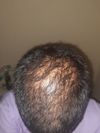
Female using Rogaine foam for hair loss had scalp punch biopsy, diagnosed with Androgenetic Alopecia (AGA). Doctor recommended starting Spironolactone 50mg.
The user experienced hair regrowth after 5 months using Minoxidil and PRP treatment. They also took various supplements and adjusted their diet to address deficiencies and support hair health.
A 30-year-old man shared his positive experience with hair regrowth using Regenera Activ, topical Dutasteride, Minoxidil, and PRP over 12 weeks. He plans to continue with injectable Dutasteride and emphasizes the importance of starting treatment early to combat hair loss.
The clinic diagnosed the user with NW3 and AGA, noting thinning hair despite using finasteride for 3 years, and suggested PRP and Mesotherapy before considering a transplant. The user questions the necessity of these treatments without confirming retrograde alopecia and its treatability.
The conversation discusses GT20029, a compound by Kintor Pharma that degrades androgen receptors and is in trials, with potential as a hair loss cure. Another promising treatment mentioned is an antibody that blocks prolactin and has shown positive results in macaques.
A user created a tracker for hair loss treatments in clinical development, including compounds like Dermaliq, RU58841, and Pyrilutamide. The tracker updates with new information and allows filtering by conditions like androgenetic alopecia (AGA) and alopecia areata (AA).
The conversation is about hair loss treatment using finasteride, ketoconazole, and sulfur soap, with consideration of starting dermastamp. The user prefers not to use minoxidil.
The user is using oral minoxidil for hair loss and is considering its effects on facial hair. They are advised that minoxidil can help with facial hair, but a DHT blocker like finasteride is needed for head hair.
The conversation discusses skepticism about the effectiveness and formulation of a $10 RU58841 gel from a Korean brand, questioning if ethanol is used to hold the active compounds. Concerns are raised about the feasibility of selling it at such a low price.
A trial of verteporfin for hair regeneration, with pictures comparing the original and current status, as well as links to other resources discussing the efficacy of this treatment in combination with Minoxidil, Finasteride, and RU58841.
The user switched from oral minoxidil to topical minoxidil and added JXL-069/PP405-3HP, along with topical dutasteride, melatonin, and tretinoin. They also use low-level laser therapy (LLLT) but doubt its effectiveness.
The conversation discusses Procapil, a treatment for hair loss containing Apigenin and Oleanolic acid. Users are sharing their experiences and asking if anyone has tried it.
Recruitment for a verteporfin trial and a separate hair cloning trial using verteporfin and other methods is underway, with locations in Jordan, NYC, Beverly Hills, and Memphis. Dr. Bloxham is conducting the hair cloning trial, and interested participants are encouraged to contact him directly.
Amino acids, particularly Cysteine, are important for hair growth and may be lacking in a normal diet. Using a protein powder that includes these amino acids can help improve hair growth and strength.
The conversation is about making topical finasteride using ethanol. The user is advised to use non-denatured or food-grade ethanol, as denatured ethanol may be harmful with prolonged skin exposure.
The post discusses a hair loss treatment regimen using saw palmetto, pumpkin seed oil extract, EGCG (green tea) extract, grape seed oil extract, rosemary oil extract, and Zix. The user plans to use these DHT-blockers and 5AR inhibitors for six months and report the results.
A sugar gel is claimed to spark hair regrowth, but users express skepticism, noting that minoxidil and finasteride remain the most effective treatments. Many users joke about frequent "breakthroughs" that work on rats but not humans, and some mention the potential of PP405 as a future treatment.
The conversation is about optimism for new hair loss treatments like Stemson's bioengineering, osteopotin, SCUBE3, GT20029, and Verteprofin, and inquires about other notable treatments.
The conversation discusses the potential for developing a biologic "DHT sponge" to neutralize DHT in the bloodstream as a treatment for hair loss, suggesting it could be more targeted and have fewer side effects than current treatments like finasteride and dutasteride. Concerns include the complexity, cost, and potential side effects of such a treatment, as well as skepticism about its feasibility and market interest.
Folligenz liposomal minoxidil sulfate is being discussed for its effectiveness and cost, with users comparing it to regular minoxidil and tretinoin. One user found no difference with the 10% version and noted that a lower tretinoin percentage reduced side effects like skin peeling.
OrganTech is working on regenerating hair and teeth, with positive results in mice, but skepticism remains about progress for humans. Users express frustration over the lack of advancements in human hair loss treatments, despite ongoing research and trials.
ET-02, a PAI-1 inhibitor, is not proven to be more effective than Minoxidil for hair loss. Other treatments like finasteride, dutasteride, PP405, and AMP-303 are also discussed, focusing on cellular senescence and oxidative stress.
Exosomes, cetirizine, melatonin, latanoprost, and caffeine are discussed as potential hair loss treatments. There is skepticism about the effectiveness of exosomes, especially in topical form, but some users report positive results.
The conversation discusses Shiseido's RepliCel Hair-01 technology for hair regeneration, which aims to stop hair loss with minimal regrowth. Treatments mentioned include Minoxidil, finasteride, and RU58841.
Setipiprant trial for hair loss failed, showing no difference between placebo and treatment. Discussion also noted placebo users reporting side effects.
Hair loss involves more than just DHT, with genetic factors like TRPS affecting hair follicles. Treatments such as Amplifica's AMP-601 and AMP-303 target stem cells for potential hair growth solutions.
A user is making their own dutasteride solution using MCT oil but is concerned about its effectiveness and bioavailability. They are considering using propylene glycol or adding ethanol for better results, while others suggest the current dosage might be excessive.
The conversation is about starting a hair loss treatment using a topical solution containing RU58841, Minoxidil, and Copper Peptides. The user plans to test the product and share updates on its effectiveness.
Finasteride, minoxidil, and derma rolling are currently the best treatments for hair loss. New treatments like TDM-105795, GT20029, PP405, HMI 115, Tsuji, Scube 3, RU, JW0061, Topilutamide, and verteporfin show promise but have uncertain timelines.
A Swiss product called Redensyl, which is supposed to target hair follicle stem cells and has recently been marketed in Europe. The post inquires if anyone has had any experience with the product.