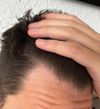
Bicalutamide blocks androgen receptors, preventing testosterone and DHT from binding, which can help with hair loss but may cause feminization. It is not recommended for those who do not want feminization effects.
The conversation discusses hair loss treatment progress using dutasteride 0.5 mg and oral minoxidil 5 mg. Users comment on the progress and inquire about side effects and additional photos.
Cutting a 5 mg finasteride tablet into five equal parts and taking one piece daily is recommended for consistent dosing. This approach provides more stable DHT suppression than taking a full 5 mg tablet every five days.
User 36 years old, receding hairline, tried minoxidil, Nizoral, dermarolling, alfatradiol, revivogen, and spiro cream with limited success. Two dermatologists refused to prescribe finasteride. Others shared experiences and suggested finding a different dermatologist.
The conversation discusses hair loss treatments, including finasteride, minoxidil, estradiol, and spironolactone, with a focus on their effects on hair regrowth and gender transition. The original poster shares their personal experience with these treatments, emphasizing that estradiol and spironolactone should not be used by those who want to maintain a masculine appearance.
The conversation is about a user considering reducing their dutasteride dose due to side effects like lower libido and watery semen. They plan to use dutasteride mesotherapy every three months to maintain hair while reducing systemic DHT suppression.
The conversation discusses using Tretinoin for treating androgenic alopecia. Specific treatments mentioned include Minoxidil, Finasteride, and RU58841.
The conversation discusses the use of TRT, dutasteride, minoxidil, and potentially RU58841 for hair loss. Concerns about the risk of developing Cutis verticis gyrata with minoxidil and TRT are raised.
The conversation discusses using S5 plus cream (Spironolactone, Alfatradiol, and Tempol) as an alternative to finasteride for hair loss, with concerns about its effectiveness and potential systemic absorption. The original poster already uses 5% minoxidil and is seeking alternatives due to fears of finasteride's side effects.
The user experienced no significant improvement in hair loss despite using Dutasteride, oral Minoxidil, and previously RU58841, and is uncertain if changes in medication or stopping RU58841 worsened the condition. Some users noted no change or slight improvement, while others suggested the possibility of Dutasteride causing issues.
Hair loss discussion includes treatments like Minoxidil, Finasteride, and RU58841. User asks about Redensyl's effectiveness, questioning if it's another ineffective remedy.
A user on .5 mg of dutasteride for hair loss saw no improvement and is considering increasing to 2.5 mg but is unsure of its effectiveness. Another user mentioned that 2.5 mg reduces scalp DHT more and increases hair count more than .5 mg, but the cost and side effects should be considered.
A 23-year-old male with slight hair thinning is using ketoconazole shampoo, biotin, zinc, magnesium, D3/K2, and has just started topical finasteride (0.0125%). He plans to add minoxidil (4.5%) with 17α-estradiol and is seeking advice on the effectiveness and side effects of these treatments, as well as the use of a dermaroller.
Treatments for hair loss, including topical dutasteride minoxidil, tretonin, dermarolling, serioxyl, and redensyl over a period of 3 months; switching from RU58841 to pyrilutamide was suggested with potentially less risk of systemic side effects; and encouragement to not give up hope.
The user has been using 5% minoxidil once daily and microneedling with a 1.5 mm dermaroller weekly for three months, considering increasing minoxidil usage but avoiding finasteride due to libido concerns. Another person suggests considering other treatments like RU58841, alfatradiol, topical finasteride, clascoterone, or saw palmetto since not using a DHT blocker could be less effective.
The user achieved significant hair regrowth using 0.5mg oral Dutasteride, 2.5mg oral Minoxidil, topical Minoxidil twice daily, Ketoconazole shampoo twice a week, and weekly dermastamping with no side effects. Results were noticeable after 2-3 months, with the best results at 9 months.
The conversation discusses a user's hesitation to start dutasteride for hair loss while already using finasteride, minoxidil (both oral and topical), RU58841, and ketoconazole shampoo. The user plans to gradually transition from finasteride to dutasteride to minimize shedding, seeking advice and reassurance from others.
OP experienced significant hair growth after switching from topical treatments to oral Dutasteride, alongside using CJC/Ipamorelin and Cialis. They stopped using topical Minoxidil and Finasteride, attributing the hair growth to the new regimen.
A 23-year-old male is using 0.5 mg dutasteride daily, 5% minoxidil twice daily, and ketoconazole with zinc pyrithione shampoo twice a week to address diffused thinning and hair loss. He is seeking advice on whether his hair will regrow and if additional treatments are needed.
The user experienced increased hair shedding after switching from finasteride to dutasteride, despite lifestyle improvements and additional treatments like oral minoxidil and PRP. They are concerned about persistent shedding, changes in hormone levels, and potential chronic telogen effluvium, and are considering a scalp biopsy for further investigation.
The user is considering increasing their dutasteride dose and trying clascoterone or RU58841 for hair loss stabilization. They have used finasteride, minoxidil, and dutasteride, with some success but recent setbacks.
Despite using treatments like Dutasteride, Minoxidil, RU58841, and GHK-Cu injections, the individual continues to experience aggressive hair thinning and is seeking a specialist for further help. Suggestions include trying finasteride, dermarolling, or another hair transplant.
Oral dutasteride and oral minoxidil are recommended for hair regrowth, with topical treatments being less effective. Stopping treatment results in losing any regrowth achieved.
MaximusDurkimus shares experience with 0.25mg Finasteride, Minoxidil-induced lupus, and less than 10mg RU58841 for hair loss. Plans to try 0.025% topical Finasteride with 5% Stemoxydine and possibly Tretinoin, Fluridil, or CB-03-01 in the future.
An 18-year-old with diffuse hair thinning is considering switching from a topical Minoxidil 10% + Finasteride 0.1% solution to Minoxidil 5% foam and oral Finasteride 0.5mg, while also addressing vitamin D deficiency and potential scalp inflammation. Users suggest using Nizoral shampoo for inflammation, considering dutasteride for better results, and maintaining vitamin D levels to protect hair follicles from DHT.
The conversation discusses the potential for high doses of dutasteride to completely inhibit scalp DHT and speculates whether this could cure baldness when combined with a topical antiandrogen. Specific dosages mentioned are 0.5 mg reducing scalp DHT by 55% and 2.5 mg by about 79%.
Reducing the dose of Pyrilutamide from 5mg to 2.5mg may still maintain hair loss results, but effectiveness can vary. Users discuss the cost and dosage implications, with some cautioning against reducing the dose due to its dose-dependent nature.
The user experienced severe hair shedding from RU58841 and recovered by stopping its use and starting treatments including Minoxidil, Rosemary Verbenone, Stemoxydine, Aminexil, copper peptide serum, and specific shampoos. They also consistently used oral Finasteride and plan to try Minoxidil 10%.