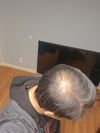
The user is considering dividing 1mg finasteride pills into quarters despite instructions not to. They currently divide 5mg pills into smaller doses and want to switch to 1mg pills.
The conversation discusses using magnesium oil and microneedling to promote hair growth, alongside finasteride, due to financial constraints preventing the use of minoxidil. Another suggestion includes using a certilizine solution for hair health.
The user recently started topical dutasteride and microneedling, and has been using RU58841 and Minoxidil for 16 months. They are curious if small black dots at their hairline indicate hair regrowth.
A user shared their six-month progress using oral finasteride (1mg) and topical minoxidil (5%) for hair loss, with additional inconsistent microneedling. The combination showed noticeable improvement, and the user microneedles twice a week.
A new topical Dutasteride with 20 times better scalp absorption being developed and tested for release in 2023; use of existing drugs, such as Minoxidil and finasteride; and mesotherapy as an alternative hair loss treatment.
The user added microneedling to their routine of minoxidil and finasteride, resulting in noticeable hair regrowth after three months. They shared photos showing significant improvement.
The user plans to use a "nuclear protocol" for hair improvement, including topical minoxidil 12.5%, topical finasteride 0.1%, and tretinoin 0.05%, with microneedling once a week. They have seen improvements with minoxidil and are seeking opinions on their approach to achieve thicker hair.
A 43-year-old man shares his slow progress using low-dose topical finasteride and 5% minoxidil for hair growth, along with scalp massages, microneedling, biotin supplements, and pumpkin seed oil. Another user suggests shaving and warns about potential infertility from finasteride, but the original poster remains optimistic, citing others' successful results.
Concerns about CosmeRNA safety mechanisms and potential side effects. Discussion includes comparisons to Fluridil and questions about nanoparticle specificity and siRNA stability.
A 30-year-old female with telogen effluvium and androgenetic alopecia is using spironolactone, oral minoxidil, vitamin D, iron sulfate, and a hairmax laser band. She seeks recommendations for a dermastamp or derma roller, advised to use no higher than 0.5 mm.
User discusses topical liposomal finasteride for hair loss, hoping to avoid breast growth side effect. Conversation includes using minoxidil, fluridil, and dermarolling, and mentions minimal systemic absorption of liposomal finasteride.
The user "Expliced" shared their progress pictures after using finasteride, minoxidil, and microneedling for 1 year and 3 months. Another user mentioned that using a high-definition camera with flash and sharpening the photo can show new hairs appearing sooner.
The discussion is about using ASCEplus HRLB exosomes for hair loss treatment, which combines 10 billion exosomes with growth factors, nutrients, biotin, and copper tripeptide. The treatment is expensive and typically administered via scalp injections, but in Europe, it's done with microneedling.
The conversation discusses a user's two-year hair regrowth progress using finasteride, minoxidil, and microneedling. One user asks for a timeline of progress, another comments on hair length, and the original poster mentions using microneedling sporadically.
A 24-year-old male doctor shares his 3-month progress using 0.5 mg oral finasteride and 5% topical minoxidil daily, noting some hair regrowth and incorporating microneedling. He prefers a "less is more" approach initially and discusses the potential benefits of oral minoxidil.
The post discusses a user's 6-month progress using topical finasteride (0.08%) and minoxidil (5%) once a day, combined with scalp micropigmentation (SMP). The user hopes for improved hair growth as they let their hair grow out.
The user experienced side effects from oral finasteride and tried mixing it with liquid minoxidil but faced application issues. They are seeking a 5% minoxidil foam with a maximum of 0.15% topical finasteride concentration.
Microneedling is considered an important addition to hair loss treatments like Finasteride, Minoxidil, and Nizoral, with evidence suggesting it enhances Minoxidil's effectiveness and can improve hair growth on its own. Users discuss various microneedling techniques, including heavy weekly sessions and lighter daily sessions, while expressing concerns about potential scalp damage and discomfort.
Using a combination of topical minoxidil and finasteride, plus microneedling, to treat hair loss; the progress made by the original poster over 6 months; the potential for further results with longer use; and the possibility of seeking alternatives such as a hair transplant or system.
A 36-year-old male has been using finasteride, 5% minoxidil foam, and microneedling with a 0.75mm dermastamp or Dr. pen for three months. He notices thicker hair and reduced hair loss, with high testosterone and normal DHT levels, while managing prolactin levels with vitamin B6.
A 42-year-old is using minoxidil for 1.5 years, recently started finasteride, and plans to use a microneedling pen on their scalp. They are seeking advice on regrowing hair.
A 25-year-old with AGA experienced hair thinning and dandruff, stabilized with topical finasteride and minoxidil but saw minimal regrowth. They seek advice on styling and consider oral minoxidil and microneedling for denser hair.
A user shared their positive experience with scalp micropigmentation (SMP) to cover hair thinning and a scar, choosing it over hair transplants due to its non-invasive nature and realistic results. They recommend SMP for those struggling with hair loss, emphasizing the importance of finding a trusted artist.
The conversation discusses hair loss treatment progress using Minoxidil, a 0.5mm derma stamp, and caffeine serum, with additional use of rosemary, peppermint, and olive oil. The user is avoiding DHT blockers like Finasteride due to potential interference with other medications.
Microneedling for hair loss is discussed, with users suggesting different frequencies and needle lengths, such as 1.5mm every 3 to 6 weeks or 1.0mm weekly. Some users recommend less frequent sessions to avoid scalp damage and soreness.
The conclusion of the conversation is that the user has experienced significant hair regrowth using a combination of medications, including dutasteride, RU58841, and minoxidil. They have not experienced any noticeable side effects and are considering a hair transplant in the future.
The user shared progress pictures showing improvement in hair growth after one year of using finasteride and minoxidil. They are considering microneedling to further improve their hairline and have chosen to use a derma stamp.