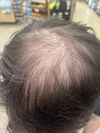
The conversation discusses the effectiveness of finasteride and dutasteride in treating hairloss, emphasizing that significant results often take 12-18 months or more. Dutasteride is generally considered superior, with similar or fewer side effects than finasteride, but patience is required for noticeable improvement.
A user is concerned about hairloss despite using finasteride and minoxidil, noting changes in hair under a microscope after one week. Others suggest patience, as hair treatments take months to show results, and recommend focusing less on microscopic changes.
Dutasteride is seen as more effective than finasteride for hairloss but may have more side effects and a longer half-life. Some start with finasteride for fewer side effects, while others switch to dutasteride for better results.
A 14-year-old experiencing hairloss is seeking advice after using minoxidil and derma stamping without noticeable results. They are advised to continue using minoxidil, as it may take time to show effects.
The conversation discusses hairloss treatments, specifically Stemoxydine from Vichy, and mentions alternatives like Minoxidil, finasteride, and RU58841. The user is seeking a more affordable option than L'oreal Serioxyl.
An 18-year-old is experiencing worsening hairloss, feeling isolated, and considering treatments like Minoxidil and finasteride. Others suggest seeing a dermatologist to determine the cause and potential treatments.
The post discusses how using finasteride and minoxidil for hairloss resulted in the user's hair changing from straight to wavy. The responses suggest this change indicates healthier, thicker hair and share similar experiences, while also expressing concerns about potential side effects of the treatments.
Hair regrowth treatment involving 3aHSD enzyme shows 6% improvement in 18 weeks. Sulforaphane, L-Menthol, and Dexpanthenol are potential ingredients for new hairloss solution.
The conversation discusses a hairloss treatment formulation containing cyclosporin, minoxidil, and tacrolimus, and mentions ongoing research on hair color reversal. The treatment showed high efficacy in restoring hair color in trials with 40 to 50 people.
Treating Black/ethnic hairloss with a combination of Minoxidil, finasteride, Nizoral shampoo and derma pen treatments, as well as occasional Jamaican Black Caster Oil use. The user documented their progress over the course of 3.5 months, showing improvement in hair growth.
The user's experience with hairloss, their doctor explaining that they were likely hyper aware of thin spots due to anxiety and an underlying whorl in one area, and providing encouragement for those feeling discouraged. Treatments mentioned include minoxidil and spironolactone.
John Cazale's hairline showed strong recession at the temples but maintained solid volume and density, sparking discussion on different hairloss patterns and the importance of overall hair density. Treatments like Minoxidil and Spironolactone were mentioned as potential factors in maintaining hair, though genetics and styling were also considered significant.
Switching from finasteride to dutasteride led to significant hairloss for the user, who is seeking advice on how long it takes for dutasteride to stabilize and show results. Many users suggest that dutasteride can take several months to a year to show improvements, and some recommend continuing finasteride alongside dutasteride during the transition.
A 21-year-old male is experiencing hairloss and plans to see a dermatologist and take hair growth pills to prevent further balding and possibly aid facial hair growth. Another user suggests using minoxidil, which has shown results for them after four months.
A user shared progress pictures showing hair regrowth after 7 weeks of using topical minoxidil, 1.25mg finasteride, dermastamping, and a hair thickening shampoo. The user had been shaving their head due to hairloss but can now grow it out.
NMN shows promise in promoting hair growth by reducing oxidative stress and weakening androgens. It may be a beneficial addition to hairloss treatments like Minoxidil and Finasteride.
A user shared a 2-month progress picture showing improvement in hairloss using minoxidil, a derma roller, ketoconazole shampoo, and oils. They also discussed the psychological aspect of believing in the treatment's effectiveness and mentioned not using finasteride.
Verteporfin shows promise in donor hair regeneration after 84 days. Combining Finasteride, Minoxidil, and Pyrilutamide with unlimited hair transplants is seen as a potential near-cure for hairloss.
Shampoos are unlikely to cause permanent hairloss; hairloss is more likely due to male pattern baldness (MPB). The user is advised that losing hair in the shower is normal, and to avoid shampoos with sodium sulfate.
The user compares using Minoxidil, finasteride, and RU58841 for hairloss to growing a Chia pet. They mention keeping their hairloss treatments private.
The user experienced noticeable hair regrowth after using finasteride for 2 years, oral minoxidil for 1 year, and recently starting dermarolling. The right temple shows significant improvement, while the left remains similar.
Bryan Johnson uses a custom hairloss treatment that includes topical finasteride, minoxidil, azelaic acid, diclofenac, tea tree oil, rosemary oil, ginkgo biloba, biotin, and melatonin, which have shown varying degrees of effectiveness with minimal side effects. He also undergoes PRP and laser therapy, and has tried dutasteride mesotherapy.
An 18-year-old experiencing rapid hairloss is advised to use Minoxidil and finasteride to regrow hair and prevent further loss. Patience is recommended as these treatments take time to show results.
A user shared their 1-year and 3-month hairloss treatment progress using 0.5mg Dutasteride daily, topical and then oral Minoxidil, and microneedling, noting hair darkening and some side effects like watery semen and testicular pain. Despite initial setbacks after switching to oral Minoxidil, they are seeing progress and plan to increase the dosage.
Using the "big three" hairloss treatments (Minoxidil, Finasteride, and Ketoconazole) can initially make hair look worse, often causing dryness and a "straw" texture. Adjusting the routine with gentler shampoos and conditioners can improve hair appearance while waiting for the treatments to show results.