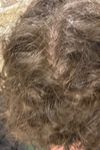
An 18-year-old with hair thinning is using minoxidil and considering stopping creatine due to concerns about increased DHT and hair loss. Opinions on creatine's impact are mixed, and the user plans to stop it until they can access topical finasteride.
A user is considering finasteride for hair loss and is concerned about its effects on DHT levels and potential side effects, including those from creatine. The user seeks advice on finasteride's impact on hair and body hair, given their high DHT and testosterone levels.
The conversation discusses using Tretinoin for treating androgenic alopecia. Specific treatments mentioned include Minoxidil, Finasteride, and RU58841.
ET-02 showed significant hair growth in five weeks, outperforming minoxidil, with a non-hormonal mechanism that avoids side effects of treatments like finasteride. A phase 2 trial is planned to further assess ET-02's efficacy and safety.
Clascoterone 5% solution is not yet commercially available, with only the 1% solution currently sold for acne. Users discuss the potential of Clascoterone as a hair loss treatment, comparing it to other anti-androgens like RU58841 and Eucapil.
Hair loss treatment should target dermal white adipose tissue (DWAT) to restore hair follicles. Potential remedies include tocopherol (vitamin E), botox, rosiglitazone, niacin, kojyl cinnamate esters, and ADP355.
Hair regrowth treatment involving 3aHSD enzyme shows 6% improvement in 18 weeks. Sulforaphane, L-Menthol, and Dexpanthenol are potential ingredients for new hair loss solution.
Hope Medicine received a $28M investment for HMI-115, a monoclonal antibody in phase II trials for treating androgenetic alopecia. Some users are skeptical about its effectiveness, while others find the investment and trial results encouraging.
A new alcohol-free, propylene glycol-free topical finasteride foam is available for prescription in Canada and the USA, offering a cleaner alternative for hair loss treatment. The product also offers a combination of 0.1% finasteride with 5% minoxidil and aims to be affordable and less irritating for sensitive scalps.
The conversation is about the struggles of dealing with diffuse thinning at a young age and the lack of significant improvement after using treatments like finasteride and minoxidil. Some suggest additional methods like derma rolling, microneedling, and hair fibers, while others share their own experiences and encourage persistence with treatment.
The conversation discusses the use of topical peptides ahk-cu and ghk-cu for hair loss. One user reported that while these peptides made their hair look thicker and improved scalp health, they did not notice significant hair growth.
The conversation discusses various treatments for hair loss, including finasteride, minoxidil, dutasteride, microneedling, and checking for nutrient deficiencies. Some users suggest adding hydrocortisone butyrate, low-dose progesterone, or tretinoin to treatment regimens, while others recommend cosmetic solutions like Toppik hair fibers or shaving the head.
Bicalutamide and spironolactone are being compared for their effectiveness and safety in treating female pattern hair loss. The conversation seeks advice on which is better to use.
Concerns about the potential high cost of new hair loss treatments, pp405 and gt20029, were discussed, with some users willing to pay a premium if they are effective. Alternatives like finasteride and minoxidil are mentioned as current, more affordable options, and there is speculation about future generic versions and black market availability.
The acne medication Winlevi, which contains Clascoterone, is available in the U.S. and may slow down hair loss until a higher concentration treatment, Breezula, is released.
The conversation is about someone seeking a doctor in the EU who prescribes spironolactone or bicalutamide for female pattern hair loss, as they are having difficulty finding treatment options beyond Minoxidil in Austria. They are asking for recommendations and are open to direct messages for assistance.
A 20-year-old feels defeated about hair loss and struggles with consistent minoxidil use due to ADHD. They plan to visit an endocrinologist for finasteride and consider shaving their head while continuing treatments.
A user is seeking advice on adding dutasteride to their finasteride regimen to stop DHT-related scalp itch. They have tried selenium sulfide and ketoconazole shampoos with temporary success.
The conversation is about testing the effectiveness of RU58841 for hair loss, with the user planning to increase their dose to 30 mg per day along with 20 mg of Minoxidil. The test results showed approximately 70 mg/ml, which the user considers a good result.
The user is using minoxidil and finasteride to treat hair loss and is concerned about shedding and potential aggressive hair loss. They noticed some regrowth in trichoscopy pictures but are unsure about real-life changes.
The conversation discusses the effects of B5 (Pantothenic acid), B7 (Biotin), and B12 on hair loss. Specific treatments mentioned include Minoxidil, finasteride, and RU58841.
A questionable paper which suggests that 5% topical spironolactone is more effective than 0.1% topical finasteride for treating hair loss. It should be taken with a grain of salt due to the journal it was published in.
An 18-year-old experiencing hair loss and seborrheic dermatitis has tried finasteride, dutasteride, and various shampoos without success. They are considering anti-androgens like RU58841 and KX-826 for oil control and dandruff reduction.
Kintor is testing Pyrilutamide with Minoxidil for hair loss. Users are skeptical about its effectiveness and concerned about limited treatment options if this fails.
The conversation is about a hair loss treatment regimen including finasteride, oral minoxidil, Stemoxydine, a multi-peptide serum, and ketoconazole. A suggestion was made to add dermastamping and tretinoin.
Using the "big three" hair loss treatments (Minoxidil, Finasteride, and Ketoconazole) can initially make hair look worse, often causing dryness and a "straw" texture. Adjusting the routine with gentler shampoos and conditioners can improve hair appearance while waiting for the treatments to show results.
Actifollic selling Pyrilutamide as a treatment for hair loss, with people debating its efficacy compared to Minoxidil and Finasteride in combination with RU58841.
The user is currently using Minoxidil foam and Dutasteride daily but still experiencing severe hair loss. They are considering adding topical Finasteride, Fluridil, Microneedling, and Tretinoin to their treatment despite the high cost and are seeking suggestions.