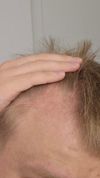
A user is concerned about hair loss and acne from a one-week course of 70 mg/day oral prednisolone for severe tinnitus. They are asking if these side effects are common.
A three-month progress report of using Dutasteride, oral Minoxidil, Ketoconazole shampoo, RU58841 and Dermarolling to combat hair loss. The results have been encouraging so far.
A user's 2-year experience with Minoxidil and Finasteride as a treatment for hair loss, including the costs involved and potential side effects. Other users shared their experiences and asked questions about their own use of these treatments.
The conversation discusses ongoing hair loss while using finasteride (Fin) and concerns about potential interactions with Hydrocortisone Butyrate. The consensus is that shedding is normal and it can take 1-1.5 years to see results from finasteride.
The user is experiencing a receding hairline and is considering treatments. They are seeking advice on whether to use finasteride, minoxidil, or both for hair preservation and potential regrowth.
A user shared their hair loss journey using oral finasteride for over six years and oral minoxidil for one year, noting some progress and considering switching to dutasteride. Others shared mixed results and side effects from using minoxidil, finasteride, and dutasteride.
A 28-year-old is experiencing hair loss despite using treatments like oral minoxidil, finasteride, and high-dose dutasteride (2.5 mg). They suspect lichen planus might be contributing to the issue and plan to continue treatment while monitoring progress.
RU58841 is discussed as a potential hair loss treatment, with comparisons to finasteride. There is interest in leaked trial data, but no official clinical validation or approval for RU58841.
The user experienced noticeable hair regrowth in three months using finasteride, minoxidil, and weekly dermastamping, while managing scalp inflammation with clobetasol. The user also uses a sea salt shampoo and rosemary conditioner to help maintain scalp health.
Some people claim Dutasteride worsened their hair loss, causing concern among users. Reasons suggested include initial shedding phases, incorrect attribution to Dutasteride when other factors are involved, genetic variations affecting drug response, and the possibility of non-authentic medication.
A user shared a 3.5-month hair regrowth progress using Minoxidil, ketoconazole, and dermarolling, and has started taking oral finasteride to maintain gains. There was a significant initial hair shed, which is normal for these treatments.
Fluridil may decrease the number of androgen receptors in hair follicles by up to 95%. This suggests a different action mechanism from other non-steroidal antiandrogens like RU58841, indicating they might be used together.
A user experienced significant hair loss after 6 months of using 0.5mg finasteride daily. Suggestions from others included trying Dutasteride and Minoxidil, getting professional help from a dermatologist, and addressing high iron levels that could be contributing to the hair loss.
A young female diagnosed with Lichen planopilaris (LPP) experienced years of misdiagnosis and ineffective treatments, including a hair transplant and other procedures. She is considering litigation due to the misdiagnosis and has learned that LPP is chronic, hair loss can be stopped with ongoing medication, but lost hair cannot regrow.
A user started using RU58841 before finasteride for hair loss and is now considering stopping RU58841 while continuing finasteride. They are asking if others have maintained hair gains from RU58841 after stopping it, but one response suggests it's risky to stop RU58841 if they want to keep their hair gains.
A user discusses starting nandrolone replacement therapy to stop hair loss and improve hair health, noting its benefits over finasteride. They report halted hair loss, improved skin, increased muscle, and a calm mood after three weeks.
The user is seeking advice on which treatment to add to their current regimen for male pattern baldness. They have previously tried Dutasteride, Nizoral, and oral Minoxidil, but experienced continued hair loss. They are specifically asking for experiences with RU58841, Stemoxydine, or Alfatradiol.
A user's experience with hair loss treatments, specifically Minoxidil and finasteride, which they have used without side effects for a year. Other users shared their experiences and advice about potential side effects and supplements to help.
The effectiveness of Dutasteride compared to Finasteride in treating hair loss, with evidence given such as studies and experiences, as well as discussion around whether one should switch from Finasteride to Dutasteride. There is also a discussion on post-Dutasteride syndrome.
Hair loss discussion includes treatments like Minoxidil, Finasteride, and RU58841. L'Oreal's study on Stemoxydine 5% claims a 4% increase in hair density after 3 months, but some users question potential bias.
A YouTuber named Kevin, also known as Rider_Of_Roach, who deleted his YouTube channel due to personal attacks and controversy surrounding his views on hair loss treatments. He advocated for FDA-approved treatments like finasteride and minoxidil but faced backlash from those who disagreed with him. The conversation also discusses his past trolling behavior and a lawsuit he filed against a website that published false information about him. Despite some disagreements, many viewers appreciated his research-based content and hope to see him return in the future.
Clascoterone (CB) shows an excellent safety profile with no serious side effects, but its effectiveness may decline after six months, making it more suitable as an adjunct treatment with finasteride and minoxidil rather than a standalone solution. Some argue it could be better than finasteride due to its protection against testosterone, but its long-term efficacy remains debated.
A 27-year-old male with diffuse hair loss, including the donor area, did not respond to finasteride, dutasteride, or minoxidil. He suspects his hair loss may be linked to a mild connective tissue disorder, possibly affecting the structural support of hair follicles, rather than being purely hormonal.
A user did not respond to finasteride, dutasteride, and oral minoxidil for hair loss after four years of treatment and is considering scalp micropigmentation (SMP). Other users suggest the hair loss pattern may indicate alopecia areata and recommend seeing a dermatologist.
User has itching, dandruff, and scalp issues, considering Nizoral 1% shampoo for treatment. Nizoral's effectiveness for hair loss is uncertain due to limited research, short contact time, and concentration differences.
A user shared their successful hair regrowth journey using oral minoxidil, dutasteride, and eucapil, with additional benefits from MTF hormone replacement therapy. They advised consulting specialists and considering individual responses to treatments.
Whey protein may slightly increase hair loss in men with androgenetic alopecia (AGA) due to elevated IGF-1 and testosterone levels, but the effect is minimal compared to treatments like finasteride and dutasteride. Many users argue that whey protein's impact on hair loss is negligible and that maintaining a healthy lifestyle is more important.
Clascoterone 5% solution is discussed as a potential new treatment for hair loss, offering an alternative for those who can't use finasteride or need additional options beyond minoxidil. Concerns about cost, effectiveness, and safety compared to existing treatments like RU58841 and finasteride are highlighted.
A 19-year-old is using finasteride, dutasteride, and minoxidil to combat hair loss, seeing improved hair density but minimal hairline regrowth. Users suggest patience, continued treatment, and possibly considering a hair transplant in the future.
A pharmacy student proposed a hair loss treatment using minoxidil, finasteride, clascoterone, and tretinoin, aiming for high effectiveness with minimal side effects. Reactions were mixed, with some questioning its feasibility and others showing interest.