Search
for
Sort by
Community Join
780-810 / 1000+ resultscommunity 24yo 3 month 2.5mg oral fin + 0.5mg dut + capilar mesotherapy
A 24-year-old shares progress on hair regrowth after 3 months using 2.5mg oral minoxidil, 0.5mg dutasteride, and scalp injections of dutasteride, minoxidil, and vitamins every two weeks. They are uncertain if the improvement is due to actual regrowth or just longer hair.
community 21F AGA - 4 month hair growth progress (Minoxidil 5%, finasteride 1mg, theradome LLLT, viviscal vitamins, PRP twice)
A 21-year-old female shared her 4-month hair growth progress using Minoxidil 5%, finasteride 1mg, Theradome LLLT, Viviscal vitamins, and PRP treatments twice. Commenters praised her progress and discussed other treatments like microneedling, but she noted her dermatologist advised against it due to potential scalp damage.
community Dr. Gary Linkov has just released a video talking about PP405.
PP405 shows promising results for hair density improvement, potentially outperforming Minoxidil in a shorter time. However, its public release is expected around 2029/2030, and its cost and availability remain uncertain.
community Breezula phase 3 results said to be released next month
Breezula's phase 3 results are expected soon, with discussions on the effectiveness of androgen receptor antagonists like spironolactone and the potential of GT20029. Users express skepticism about new treatments and discuss the complexities of male pattern baldness, often relying on finasteride despite its side effects.
community Vitamin D slight temple regrowth
Vitamin D supplementation may have led to slight hair regrowth and density improvement. Other treatments discussed include finasteride, minoxidil, and maintaining optimal vitamin D levels.
community 23M | Dut 0.5mg daily + Minoxidil/Tret | 136-day progress (pics)
A 23-year-old male shares his 136-day progress using a hair loss treatment regimen of daily Dutasteride 0.5mg, topical Minoxidil 5% with Tretinoin, and Nizoral every other day, reporting no side effects and significant hair regrowth. He notes high energy and libido, with no shedding, and attributes most progress to Dutasteride.
community Trialing the probiotics BB536, PTA 6475 so you don’t have to
Probiotics like L. reuteri ATCC PTA 6475 and B. longum BB536 may improve hair growth and density by reducing inflammation and reversing DHT damage. The user is trialing these probiotics personally, ordering them from the U.S. to Canada, and plans to continue if no adverse effects occur.
community 3yr Fin/Dut/Niz NW3+ —> NW1.5 Pictures with Writeup
A user improved their hair loss from NW3+ to NW1.5 over three years using a regimen of dutasteride, finasteride, Nizoral, biotin, and collagen. They experienced some side effects and adjusted dosages over time, and noted additional benefits like better skin and muscle gain.
community What’s next after DUT? Looking for solutions
community So why did the first pyrilutamide phase III fail?
community Are these new hair loss treatments ever gonna release?
Hair loss treatments like Breezula and PP405 are delayed, with approvals taking years, while existing treatments like minoxidil and finasteride remain popular. New treatments like Clascoterone and Veradermics are in trials, but high costs and lengthy approval processes slow their release.
community Kintor Pharmaceutical Announced U.S. FDA Has Greenlighted Phase II Clinical Trial for Pyrilutamide to Treat Androgenetic Alopecia
Chinese company gets green light for Pyrilutamide Phase II trial for androgenetic alopecia. Androgen receptors downregulate in androgen deficient environments.
community 26M, grade 3, 2.5 Oral Mg minoxidil 1MG finasteride , kLM d3 , Minoxidil 5%, ketocinazole shampoo.I will post the pics after every 6 weeks.
A 26-year-old male with grade 3 hair loss is using 2.5 mg oral minoxidil, 1 mg finasteride, 5% minoxidil, ketoconazole shampoo, and kLM d3. He plans to post progress pictures every 6 weeks and is seeking suggestions.
community Looking for suggestions on vitamins
A user is seeking affordable hair vitamins without biotin, already taking zinc and D3+K2, and has been dealing with chronic telogen effluvium since 2013. They previously used Nutrafol Vegan but found it too expensive.
community day 107 of kx826 .5% . 1+ years on topical minoxidil.
The user has been using topical minoxidil for over a year and added kx826/pyrilutamide to improve hair growth, avoiding finasteride due to side effects like lowered libido and panic attacks. They report positive results with reduced shedding and healthier hair, particularly in areas previously unresponsive to minoxidil.
community How come dutasteride doesn't lower allopregnanolone, but finasteride does?
Finasteride significantly lowers allopregnanolone levels, while dutasteride's effect is less clear and may vary. Some users speculate that dutasteride might be healthier for the brain due to its different inhibition pathways.
community Serum DHT levels variation on dutasteride
Serum DHT levels and their variations when using dutasteride for hair loss treatment.
community Using Fin and Alfatradiol in conjunction?
User considers adding Alfatradiol to their topical finasteride treatment for hair loss. Others discuss Alfatradiol as a weak estrogen and 5α-reductase inhibitor used for pattern hair loss in men and women.
community [34M] Diffuse Loss Progress: Dut/Oral & Topical Min/Keto/Microneedling
A 34-year-old man with diffuse hair loss experienced regrowth and hair thickening using daily Dutasteride, oral and topical Minoxidil, a specialized shampoo, and microneedling. He switched from Finasteride to Dutasteride after seeing significant improvement in a peer, reporting no side effects.
community Black market pp405? Title title
PP405 is likely fake, and JXL069 is an unrefined prototype with unknown side effects. It's advised to wait for the official PP405 release.
community (23) daily 0.5 Dut + 5mg Min for 2 years, hair thinned considerably. thoughts?
A 23-year-old has been using 0.5mg Dutasteride and 5mg oral Minoxidil daily for two years, but their hair has thinned considerably. Suggestions include increasing the Dutasteride dose, adding Finasteride, or considering a hair transplant.
community progress ? should i switch to dut?
A 23-year-old male has been using oral finasteride and topical minoxidil for 14 months, along with derma stamping and vitamins, but is considering switching to dutasteride due to dissatisfaction with progress. Users suggest cutting hair shorter to better track progress, and some recommend adding dutasteride and possibly a hair transplant in the future.
community 32M Considering Topical Xyon or RU58841 for ED from Oral Dutasteride
A 32-year-old male experienced erectile dysfunction and decreased libido after using oral dutasteride and minoxidil for hair loss. He is considering switching to topical alternatives like Xyon dutasteride or RU58841 to reduce side effects.
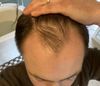
community 39yo long time receder - Dut/Min progress. Am I right to be excited!?
A 39-year-old user experienced hair regrowth using oral dutasteride, oral minoxidil, dermastamping, and Nizoral shampoo after switching from finasteride and topical minoxidil. They are hopeful for significant improvement in their receding hairline.
community losing this much hair everyday 6mo dutasteride (excluding shower)!
User experiencing hair loss on dutasteride; others suggest shedding is normal and to track progress with pictures. Some mention using RU58841 for improvement.
community Mechanism of action of alfatradiol (17 alpha estradiol)
The conversation discusses the mechanism of action of alfatradiol (17 alpha estradiol) in treating hair loss. It explores theories that it either inhibits 5 alpha reductase to prevent T->DHT conversion or aromatizes scalp T into 17-alpha-estradiol to save hair.
community Is this new hair growth? Former slick bald patches.
A user, 42 M, NW 5-6, used oral Dutasteride, Minoxidil, RU58841 topical, micro needling, Nizoral shampoo, saw palmetto gummies, vitamin D gummies, and scalp massages for 2 months. They noticed many small light hairs on previously bald areas and are questioning if these will darken or remain vellus hairs.

community Using fin/min/dut and getting HT in December of 2024
The user is using finasteride, minoxidil, and dutasteride for hair loss, but stopped dutasteride due to side effects. They plan to have a hair transplant in December 2024 at Vanity Hospital in Istanbul, aiming for at least 4500 grafts.
community Ru58841 20mg….making my own solution
The conversation is about making a 20mg/ml RU58841 solution for hair loss treatment using ethanol and propylene glycol. The user receives advice on calculating the correct amount of RU58841 powder needed.