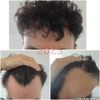
How androgens, including testosterone, can cause hair follicles to miniaturize in people with sensitivity to androgens, and treatments such as finasteride, dutasteride, minoxidil, RU58841, or fluridil may be used in combination for long-term treatment.
The conversation is about the availability of WINLEVI, a hair loss treatment, and the possibility of getting it compounded. The user is seeking information on when they can obtain the treatment.
The conversation discusses new hair loss treatments like stem cell therapy, exosome treatments, and DHI, with mentions of GT20029, Amp303, and Plated PRP Serum as promising options. It also notes the use of dutasteride, topical finasteride, and minoxidil, but the focus is on non-hormonal innovations.
A 28-year-old male with a family history of baldness is deciding whether to start finasteride now or wait for visible hair changes. He is considering starting finasteride immediately to proactively address potential hair loss.
A woman with androgenetic alopecia uses Dutasteride and Bicalutamide but feels devastated due to increased sensitivity to DHT. She considers wigs, Minoxidil, and seeks advice on options like spironolactone, hair transplants, and therapy.
The user discusses their experience with diffuse unpatterned alopecia and acquired progressive hair kinkering, noting improvements with treatments including biotin, pantothenic acid, finasteride, ketoconazole, and zinc pyrithione shampoo. They report thicker, healthier hair and improved scalp condition, attributing success mainly to biotin, pantothenic acid, and finasteride.
The post discusses how using finasteride and minoxidil for hair loss resulted in the user's hair changing from straight to wavy. The responses suggest this change indicates healthier, thicker hair and share similar experiences, while also expressing concerns about potential side effects of the treatments.
Hair loss treatments discussed include Minoxidil, Finasteride, and RU58841. HMI-115, a monoclonal antibody drug, is in phase 1 and 2 trials for different conditions, but its availability on the gray market is unlikely due to high production costs.
Rejuv-3X, a topical blend with GHK-Cu, AHK-Cu, and JXL-089, is used for hair loss, offering a targeted option without finasteride's side effects. The user plans to combine it with microneedling for enhanced results.
PP405 is being discussed as a potential new approach to hair loss by targeting follicle stem cells, suggesting a different mechanism from existing treatments like finasteride and minoxidil. However, there is skepticism about whether it will lead to meaningful long-term outcomes or follow the pattern of previous treatments that showed promise but lacked consistent results.
A 21-year-old male suffering from male pattern baldness is using topical finasteride and minoxidil, and oral minoxidil. His bloodwork shows normal DHT levels and slightly high testosterone, leading to discussions about the role of DHT sensitivity in hair loss, the potential impact of finasteride on his DHT levels, and the suggestion to proceed with oral finasteride due to his high testosterone.
The conversation discusses skepticism about the effectiveness of scalp tension theory and scalp massagers for hair regrowth, contrasting it with treatments like finasteride and minoxidil, which have more user-reported results. Participants question the belief in scalp tension theory, suggesting it may be a marketing tactic, while others argue for a multifactorial approach to hair loss.
The conversation discusses aggressive hair loss treatments, including finasteride, dutasteride, minoxidil, topical cetirizine, and experimental options like Estrogel, oh-flutamide, and RU58841. Users share experiences and suggest trying oral minoxidil and el cranell, noting the complexity and challenges of treating hair loss.
A human trial of verteporfin, a drug that can inhibit wound healing by scarring and promote regeneration of original tissue and hair follicles to provide an unlimited source for hair transplants; people discussed the potential of this drug and how it could be rolled out in mainstream with more doctors getting on board.
The conversation discusses an extensive hair loss treatment regimen including dutasteride, GT20029, RU58841, pyrilutamide, minoxidil, microneedling, ketoconazole shampoo, and experimental compounds. The user humorously describes their approach as a comprehensive strategy to combat hair loss while maintaining hair growth.
Inflammation plays a significant role in hair follicle miniaturization and androgenetic alopecia, with treatments like ketoconazole shampoo, minoxidil, and finasteride being used to address it. Users discuss the benefits of anti-inflammatory treatments and peptides like KPV, alongside traditional hair loss treatments, to improve scalp health and hair quality.
Some people see significant hair regrowth using treatments like finasteride and minoxidil, while others experience little to no improvement even with comprehensive treatment plans. Factors such as individual sensitivity to DHT may influence the effectiveness of these hair loss treatments.
The conversation discusses hair loss treatments, specifically Minoxidil, finasteride, and RU58841. It also inquires about the timeline for the GT20029 phase 3 trial by Kintor.
The user experienced hair shedding after starting testosterone replacement therapy (TRT) and is considering using DHT blockers like finasteride or dutasteride to address potential DHT-related hair loss. Low ferritin levels due to frequent blood donations may also contribute to hair issues, and the user is working on stabilizing iron levels.
Breezula shows promising hair growth results, with up to 539% increase in hair count compared to placebo, and regulatory submissions are planned in the US and EU. Users are cautiously optimistic, noting the potential for Breezula to replace finasteride by targeting DHT without systemic effects.
Discussing and researching different treatments for hair loss, including RU58841, Dutasteride, Spironolactone, Retin-A, Stemoxydine (Neogenic), Copper peptides, Superoxide Dismutase, NANO, and Eucapil.
The conversation discusses whether to use finasteride for hair loss, considering its role in inhibiting DHT and 5AR, which can affect brain function and mood. Some users report anxiety and depression from finasteride, while others do not experience these side effects and emphasize the importance of DHT for brain and prostate health.
The conversation is about a user trying a new hair loss treatment, Ruxolitinib, alongside their existing regimen of finasteride, minoxidil, ketoconazole shampoo, and microneedling. They plan to apply Ruxolitinib to their temples daily for 1-2 months.
The conversation discusses potential new treatments for androgenetic alopecia (AGA), including verteporfin, pyrilutamide, and hair cloning. There is optimism about scientific advancements providing alternatives to minoxidil and finasteride.
The conversation discusses hair loss treatments, specifically RU58841, with mentions of side effects from finasteride and dutasteride. Alternatives like Pyri, KX-826, and Breezula are also mentioned.
People discussed their intense hair loss treatments, including the use of dutasteride, RU58841, minoxidil, tretinoin, essential oils, microneedling, and various topical sprays. Some users reported success with these methods in preventing hair loss and stimulating hair growth.
Hair loss treatments like GT20029, pyrilutamide, and Follica show promise in 2022. Phase 1 and 2 trials are underway, and new hair growth studies have been published.
Pyrilutamide, a nonsteroidal antiandrogen drug under development for the potential treatment of androgenic alopecia. The conversation discusses its binding affinity to the androgen receptor and the timeline for possible availability after trials are completed in the United States and China.
A Swiss product called Redensyl, which is supposed to target hair follicle stem cells and has recently been marketed in Europe. The post inquires if anyone has had any experience with the product.