January 2025 in “International Journal of Molecular Sciences” Non-liganded Vitamin D Receptor is crucial for healthy skin and hair.
8 citations
,
April 1991 in “European journal of endocrinology” 3α-AdiolG is a good marker for androgen activity in women with excessive hair growth and decreases with anti-androgen treatment.
 9 citations
,
August 1952 in “The Journal of Clinical Endocrinology & Metabolism”
9 citations
,
August 1952 in “The Journal of Clinical Endocrinology & Metabolism” A 17-year-old female with adrenogenital syndrome produces very high levels of androgens, which prevent complete feminization despite high estrogen doses.
The document concludes that scientists created various steroids with different properties, including a more effective semi-synthetic vitamin D.
 27 citations
,
July 1982 in “British Journal of Dermatology”
27 citations
,
July 1982 in “British Journal of Dermatology” The antiandrogen 11α-hydroxyprogesterone effectively reduces skin oil and cholesterol when applied to the skin.
 55 citations
,
August 2008 in “Reviews in endocrine and metabolic disorders”
55 citations
,
August 2008 in “Reviews in endocrine and metabolic disorders” Nonclassic adrenal hyperplasia is a genetic condition that can cause early puberty and fertility problems, treated with specific steroids.
 1 citations
,
April 2022 in “AACE clinical case reports”
1 citations
,
April 2022 in “AACE clinical case reports” A 36-year-old person with a female appearance but male chromosomes was diagnosed with a rare enzyme deficiency affecting sexual development.
 49 citations
,
January 2010 in “International Journal of Pediatric Endocrinology”
49 citations
,
January 2010 in “International Journal of Pediatric Endocrinology” The document concludes that Nonclassic Congenital Adrenal Hyperplasia requires personalized treatment plans to manage symptoms and fertility, with glucocorticoids being a common therapy.
Vitamin D receptor actions without binding are crucial for healthy skin and hair.
2 citations
,
September 2024 in “Asian Journal of Andrology” New SRD5A2 variants may disrupt protein function, aiding diagnosis and treatment of related disorders.
 10 citations
,
February 2008 in “Photochemistry and photobiology”
10 citations
,
February 2008 in “Photochemistry and photobiology” Vitamin D receptor can control the hairless gene linked to hair loss even without vitamin D.
12 citations
,
September 2017 in “JDR Clinical & Translational Research” Early detection of specific VDR mutations is crucial for effective treatment and better dental outcomes in children with hereditary vitamin D–resistant rickets.
 November 2022 in “Journal of the Endocrine Society”
 A boy with a new NR5A1 gene mutation has a sex development disorder without affecting his adrenal glands.
 30 citations
,
October 2020 in “Nature Communications”
30 citations
,
October 2020 in “Nature Communications” Finasteride irreversibly affects human steroid 5α-reductase 2, providing insight into its catalytic mechanism and disease-related mutations.
18 citations
,
November 2009 in “Calcified tissue international” A genetic mutation caused severe rickets and alopecia in an Indian patient, but high-dose calcium and phosphate treatment improved their condition.
 February 2010 in “ePrints Soton (University of Southampton)”
 Male sexual differentiation is regulated independently, while female differentiation occurs in an androgenic environment, affecting conditions like congenital adrenal hyperplasia.
August 2024 in “Latin American Journal of Development” 5α-reductase enzymes are crucial in certain disorders, and while treatment advances exist, more research on SRD5A3 is needed.
 70 citations
,
November 1984 in “Cell & tissue research/Cell and tissue research”
70 citations
,
November 1984 in “Cell & tissue research/Cell and tissue research” Vitamin D3 affects cell differentiation in specific skin areas.
 14 citations
,
September 2007 in “Steroids”
14 citations
,
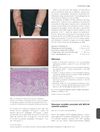
September 2007 in “Steroids” The study concluded that androstendione and DHEA are important for diagnosing high male hormone levels in women with excessive hair growth.
 28 citations
,
February 2010 in “British journal of dermatology/British journal of dermatology, Supplement”
28 citations
,
February 2010 in “British journal of dermatology/British journal of dermatology, Supplement” WNT10A mutations cause varied symptoms in patients with odonto-onycho-dermal dysplasia.
9 citations
,
April 2016 in “Clinical Endocrinology” Scalp hair 17-OHP and androstenedione levels can help monitor treatment in CAH patients.
 1 citations
,
November 2017 in “Expert opinion on orphan drugs”
1 citations
,
November 2017 in “Expert opinion on orphan drugs” Scientists now better understand the genetics of hypohidrotic ectodermal dysplasia, leading to more accurate diagnoses and potential new treatments.
January 2025 in “Case Reports in Genetics” A rare gene variant causes sexual development issues in siblings, needing personalized treatment.
The vitamin D receptor has many roles in the body beyond managing calcium, affecting the immune system, hair growth, muscles, fat, bone marrow, and cancer cells.
January 2011 in “Medical Recapitulate” 5α-reductase enzyme affects hormone levels, influencing conditions like acne and hair loss.
May 2026 in “ACS Catalysis” Efficient enzyme function relies on specific residue interactions and structural coordination.
 February 2025 in “Iraqi Journal of Science”
 PCOS patients have higher LDH and lower cortisol, dopamine, zinc, and vitamin D3, which may contribute to their symptoms and obesity.
 January 2024 in “Clinical, cosmetic and investigational dermatology”
 A child with a rare vitamin D-resistant condition improved with treatment.
 1 citations
,
January 2024 in “Pediatric Endocrinology Diabetes and Metabolism”
1 citations
,
January 2024 in “Pediatric Endocrinology Diabetes and Metabolism” Cinacalcet may help treat hereditary vitamin D resistant rickets safely.
227 citations
,
January 1998 in “Journal of biological chemistry/The Journal of biological chemistry” Mutations at Val-889 and Arg-752 disrupt key interactions in the androgen receptor, affecting its function.