TLDR Cinacalcet may help treat hereditary vitamin D resistant rickets safely.
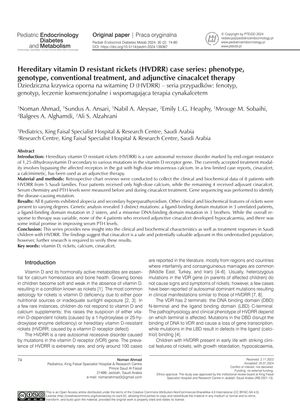
This study examined 8 patients with hereditary vitamin D resistant rickets (HVDRR) from 5 Saudi families, all of whom exhibited alopecia and secondary hyperparathyroidism. Genetic analysis identified 3 distinct mutations in the vitamin D receptor gene. Four patients were treated with high-dose calcium alone, while the other 4 received additional cinacalcet, a calcimimetic. The use of cinacalcet showed promise in improving serum PTH levels without causing hypocalcaemia, suggesting it may be a safe and valuable adjunctive therapy. However, the response to treatment varied, and further research is needed to confirm these findings.
 6 citations
,
June 2018 in “Journal of pediatric endocrinology & metabolism/Journal of pediatric endocrinology and metabolism”
6 citations
,
June 2018 in “Journal of pediatric endocrinology & metabolism/Journal of pediatric endocrinology and metabolism” Patients with the same genetic mutation for vitamin D-resistant rickets showed different symptoms but all improved with treatment except for hair loss.
5 citations
,
July 2017 in “International journal of endocrinology and metabolism/International journal of endocrinology and metabolism.” Two siblings with a genetic mutation had a form of rickets that doesn't respond to vitamin D.
8 citations
,
December 2016 in “Hormone Research in Paediatrics” Tunisian children with hereditary vitamin D-resistant rickets showed improvement with calcium treatment, and new genetic mutations were identified.
107 citations
,
March 2014 in “BoneKEy Reports” Mutations in the vitamin D receptor cause hereditary vitamin D-resistant rickets, leading to poor bone health and requiring high calcium doses for treatment.
 6 citations
,
January 2014 in “Journal of pediatric endocrinology & metabolism/Journal of pediatric endocrinology and metabolism”
6 citations
,
January 2014 in “Journal of pediatric endocrinology & metabolism/Journal of pediatric endocrinology and metabolism” Three siblings with a genetic form of rickets showed different symptoms of the disease.
37 citations
,
August 2011 in “Journal of Bone and Mineral Research” A girl had rickets due to a gene mutation affecting vitamin D response.