Search
for
Sort by
Research
390-420 / 1000+ results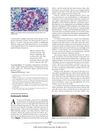
research Postherpetic Poliosis
A man's chest hair turned white after a shingles infection, possibly due to virus-damaged pigment cells.
research Cross-species amplification of human microsatellite markers in pig-tailed and stump-tailed macaques
Some human genetic markers work for genetic studies in pig-tailed and stump-tailed macaques, which can help in their conservation.

research A New Heterozygous Variant of c.1225_1227delTTC (p.Phe409del) in Insulin Receptor Gene Associated with Severe Insulin Resistance and Hyperandrogenemia in an Adolescent Female with Type A Severe Insulin Resistance Syndrome
A specific gene variant is linked to severe insulin resistance and hormone imbalance in a teenage girl.

research Genome wide association analysis of root hair traits in rice reveals novel genomic regions controlling epidermal cell differentiation
Scientists found new genetic areas that affect how rice root hairs grow and develop.
research Simultaneous Typing of Erythrocyte Acid Phosphatase, Adenylate Kinase and Adenosine Deaminase in Human Hair Root Sheaths
Hair root sheaths can be used to accurately analyze genetic markers.

research Candidate SNP markers of reproductive potential are predicted by a significant change in the affinity of TATA-binding protein for human gene promoters
Certain genetic markers linked to reproductive potential were identified by their impact on a protein's ability to bind to genes.

research Sequence and structure based assessment of non-synonymous SNPs in hypertrichosis universalis
Two specific SNPs in the TRPS1 gene cause excessive hair growth by altering the protein's structure.

research Expression of the RORα gene in Inner Mongolian cashmere goat hair follicles
The RORα gene is active in different parts of cashmere goat hair follicles and may be influenced by melatonin, especially in December when hair growth changes.
research A partially automated method for DNA extraction from marmoset hair follicles to avoid blood chimerism
The method effectively extracts high-quality DNA from marmoset hair, avoiding blood chimerism.

research Mapping Human Skin: One Sequenced Cell at a Time
The article concludes that creating a detailed map of normal human skin at the single-cell level is important.

research Investigating RNA-Seq-based differential gene expression during hair follicle development in Angora goat skin
Angora goat hair growth is influenced by gene expression, sex hormones, and breed differences.

research LB1671 Large-scale skin scRNA-seq profiling highlights distinct body site-specific ligand-receptor interactions and pathways in keratinocytes
Different body areas have unique skin cell communication patterns, explaining why certain skin diseases occur in specific regions.

research Comprehensive transcriptome profiling between balding and non-balding scalp of female pattern hair loss in Asian
SFRP2 and PTGDS may be key factors in female hair loss.
research Identification and profiling of microRNA between back and belly Skin in Rex rabbits (Oryctolagus cuniculus)
Different miRNAs in Rex rabbit skin affect cell processes and hair growth.

research Time-course RNA-seq analysis reveals stage-specific and melatonin-triggered gene expression patterns during the hair follicle growth cycle in Capra hircus
Melatonin affects gene expression in goat hair follicles, potentially increasing cashmere production.
research Exploring the possibility of predicting human head hair greying from DNA using whole-exome and targeted NGS data
Hair greying is mainly influenced by age, with genetics playing a smaller role.

research QuantAnts machines discover biomarkers for RAS signaling activation and design sgRNAs for CRISPR to target complex CD9, CD34, and CD74.
The QuantAnts machines can find cancer markers and create CRISPR targets for them.
research Gene expression profiling analysis reveals fur development in rex rabbits (Oryctolagus cuniculus)
Gene expression affects fur development in rex rabbits.

research 1452 Noncoding dsRNA stimulates exosome biosynthesis to regulate skin regeneration
Noncoding dsRNA helps produce exosomes that aid in skin regeneration.
research Human hair follicle transcriptome profiling: a minimally invasive tool to assess molecular adaptations upon low‐volume, high‐intensity interval training
Hair follicle analysis can track body changes from high-intensity interval training.

research Sulforaphane promotes murine hair growth by accelerating the degradation of dihydrotestosterone
Sulforaphane may help with hair growth by breaking down a hormone that causes hair loss.
research Genome Report: chromosome-scale genome assembly of the African spiny mouse (Acomys cahirinus)
The improved genome of the African spiny mouse will help understand its tissue regeneration abilities.

research ISID1394 - Long non-coding RNA AL136131.3 inhibits hair growth through mediating glycolysis in androgenetic alopecia
The RNA AL136131.3 slows down hair growth and speeds up hair loss by affecting sugar breakdown in hair follicles.
research Genome-wide detection and sequence conservation analysis of long non-coding RNA during hair follicle cycle of yak
Different long non-coding RNAs in yaks change during hair growth cycles and are involved in key growth pathways.
research The evaluation of IL-4 VNTR intron 3 and TNF-α (rs1799964) gene polymorphisms in Egyptian patients with alopecia areata: a case–control study
These gene variations are not linked to alopecia areata in Egyptians.
research Hair of the Dog: Identification of a Cis-Regulatory Module Predicted to Influence Canine Coat Composition
Researchers found a genetic region that influences the number of coat layers in dogs.
research Transcriptome profiling of whisker follicles in methamphetamine self-administered rats
Methamphetamine affects gene expression in rat whisker follicles, with key genes linked to addiction.
research Whole-genome bisulfite sequencing of goat skins identifies signatures associated with hair cycling
DNA methylation changes are linked to hair growth cycles in goats.