 20 citations
,
July 2011 in “PLoS ONE”
20 citations
,
July 2011 in “PLoS ONE” HPV-150 and HPV-151 are rare skin viruses linked to warts and some skin cancers.
 57 citations
,
May 2014 in “Molecular Phylogenetics and Evolution”
57 citations
,
May 2014 in “Molecular Phylogenetics and Evolution” The research found how GPCR Class A Rhodopsin receptors are related and suggested possible substances they interact with.
November 2023 in “Journal of Investigative Dermatology” Highly active but fewer CD14+CD16- monocytes are found in Alopecia Areata patients, regardless of severity.
January 2025 in “Repository of Digital Objects for Teaching Research and Culture (University of Valencia)” Non-coding RNAs may be key in diagnosing and treating rare skin disorders.
 December 2023 in “Research Square (Research Square)”
 These specific gene polymorphisms are not linked to Alopecia Areata in Egyptians.
 31 citations
,
March 2013 in “Gene”
31 citations
,
March 2013 in “Gene” Signaling pathways are crucial for hair growth in goats.
 November 2023 in “Journal of animal science/Journal of animal science ... and ASAS reference compendium”
 SLICK cattle have better heat tolerance due to specific gene expression and pathway differences.
 68 citations
,
March 2018 in “Biomaterials”
68 citations
,
March 2018 in “Biomaterials” Tiny needles with valproic acid can effectively regrow hair.
 65 citations
,
March 2016 in “Lasers in Medical Science”
65 citations
,
March 2016 in “Lasers in Medical Science” Most low-level light therapy studies did not accurately report how light was measured, affecting treatment reliability.
 20 citations
,
March 2020 in “International Journal of Biological Macromolecules”
20 citations
,
March 2020 in “International Journal of Biological Macromolecules” Lower acetylation makes chitin nanofibers thinner and more suitable for various uses.
 11 citations
,
July 2014 in “Gene”
11 citations
,
July 2014 in “Gene” The S250C variant in a gene may cause autoimmunity and immunodeficiency by impairing protein function.
 9 citations
,
February 2018 in “Forensic Science International”
9 citations
,
February 2018 in “Forensic Science International” The study could not confirm if Victor Vinnetou was Mbuyisa Makhubu and suggested more evidence, like DNA tests, is needed.
 3 citations
,
January 2016 in “Elsevier eBooks”
3 citations
,
January 2016 in “Elsevier eBooks” Steroid hormones are crucial for body functions and have various medical uses, but their misuse can lead to dependence.
 June 2025 in “Basrah Researches Sciences”
 Medicinal plants might help with post-COVID-19 issues, but more research is needed.
 January 2024 in “GeroScience”
 Using radiation to make mice's hair turn gray helps study and find ways to prevent or reverse hair graying.
32 citations
,
November 2020 in “UNC Libraries” A point mutation in the androgen receptor gene causes complete androgen insensitivity.
 4 citations
,
December 2012 in “Human Biology”
4 citations
,
December 2012 in “Human Biology” The most different genetic segment between Africans and East Asians is the EDA2R/AR region, with two main types influenced by population changes and natural selection, and linked to baldness.
 August 2024 in “Archives of Dermatological Research”
 Certain genetic variants and pathways are linked to hair loss.
 April 2026 in “Zenodo (CERN European Organization for Nuclear Research)”
 The study explores miRNA changes in female hair loss.
 April 2026 in “Zenodo (CERN European Organization for Nuclear Research)”
 The study explores miRNA changes in female hair loss.
50 citations
,
March 2018 in “BMC Genomics” Non-coding RNAs help control hair growth cycles in cashmere goats, suggesting ways to improve cashmere production.
153 citations
,
June 2015 in “GenomeBiology.com” The environment around the time of conception can change the VTRNA2-1 gene in a way that lasts for years and may affect disease risk.
1 citations
,
May 2025 in “BMC Genomics” lncRNAs may help control cashmere goat hair growth by responding to light changes.
June 2020 in “Journal of Investigative Dermatology” Atopic dermatitis shows a link between skin layers in inflammation, detectable with detailed gene analysis.
 April 2024 in “Pigment cell & melanoma research”
 Different types of resting melanocyte stem cells have unique characteristics and vary in their potential to become other cells.
September 2025 in “Animals” Key circRNAs play a role in wool follicle development, aiding in breeding better quality wool sheep.

The study found that different genes are active in cashmere goats' hair growth stages, which can help improve cashmere production.
 March 2011 in “Journal of Dermatology”
 The conclusion is that a certain test might help find cancer spread in lymph nodes for melanoma patients, but more research is needed due to false positives.
 7 citations
,
January 2015 in “Case reports in genetics”
7 citations
,
January 2015 in “Case reports in genetics” Using SNP array testing helped quickly find the gene causing Woodhouse-Sakati syndrome in two related individuals.
 3 citations
,
May 2010 in “Archives of dermatology”
3 citations
,
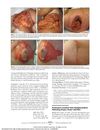
May 2010 in “Archives of dermatology” Herpes zoster infection can cause permanent hair color change in the affected area.