 September 2020 in “Current Enzyme Inhibition”
 Three compounds were found to inhibit a prostate disease-related enzyme and reduce prostate size more effectively than the current treatment, suggesting they could be used for treating benign prostatic hyperplasia.
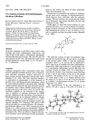 December 1998 in “Acta Crystallographica Section C-crystal Structure Communications”
 A new compound with strong antiandrogenic effects was found, potentially useful for treating conditions like acne and prostate cancer.
 165 citations
,
February 2014 in “Phytotherapy Research”
165 citations
,
February 2014 in “Phytotherapy Research” Myrtle has various health benefits and potential for medicine development.
 49 citations
,
October 2014 in “International Scholarly Research Notices”
49 citations
,
October 2014 in “International Scholarly Research Notices” Eclipta alba has many health benefits and contains compounds with potential for drug development.
 1 citations
,
July 2011 in “The Egyptian Journal of Anatomy”
1 citations
,
July 2011 in “The Egyptian Journal of Anatomy” Both TCA and GA peels effectively improved skin thickness and collagen without significant differences.
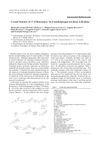 February 1999 in “Analytical Sciences”
 A new antiandrogen compound was made and its detailed three-dimensional shape was described.
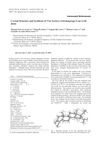 August 2002 in “Analytical Sciences”
 The document concludes that a compound with potential for treating prostate cancer and hair loss was successfully made and its detailed structure was confirmed.
 1 citations
,
January 2009 in “X-ray Structure Analysis Online”
1 citations
,
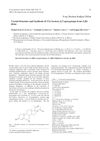
January 2009 in “X-ray Structure Analysis Online” A new compound was made that might help treat diseases related to male hormones.
 2 citations
,
October 2001 in “Analytical Sciences”
2 citations
,
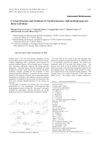
October 2001 in “Analytical Sciences” A new compound that could treat various androgen-related conditions was created and analyzed.
 4 citations
,
January 1998 in “Heterocycles”
4 citations
,
January 1998 in “Heterocycles” Researchers made two new compounds that could be used for medicine.
 November 2021 in “Pharmaceutical Sciences”
 New compounds were made and tested, with compound 6 showing potential for treating prostate-related diseases.
 June 2010 in “Journal of Chemical Crystallography”
 The compound was successfully made and shows potential for treating prostate cancer.
18 citations
,
December 2005 in “Journal of Medicinal Chemistry” A brominated phenoxy compound effectively inhibits a human enzyme and shows potential for clinical use.
January 2002 in “Chinese Journal of Pharmaceuticals” A new method was developed to make a compound used in finasteride and epristeride with a 69% yield.
14 citations
,
May 2005 in “Steroids” A new method was developed to make finasteride for treating hair loss.
11 citations
,
June 2016 in “European Journal of Medicinal Chemistry” Compounds 6f and 6g effectively stop prostate cancer cell growth without harming healthy cells.
87 citations
,
April 1973 in “Endocrinology” The chemicals 17βC and its methyl ester can block the effects of testosterone on hamster skin but not the effects of DHT.
 20 citations
,
June 1995 in “Tetrahedron Letters”
20 citations
,
June 1995 in “Tetrahedron Letters” New chemicals were made that can block an enzyme linked to hair loss, prostate growth, and acne.
 97 citations
,
November 1986 in “Journal of Steroid Biochemistry”
97 citations
,
November 1986 in “Journal of Steroid Biochemistry” Antiandrogens affect androgen-dependent body functions and are used for various medical conditions, with some risks like fetus feminization, but new forms like 17α-propylmesterolone show promise for acne without systemic effects.
 13 citations
,
August 2007 in “Bioorganic & medicinal chemistry letters”
13 citations
,
August 2007 in “Bioorganic & medicinal chemistry letters” A new compound effectively inhibits human 5α-reductase 1.
3 citations
,
May 2007 in “Journal of Heterocyclic Chemistry” A new method to make finasteride for hair loss treatment was developed.

A rigid compound with a common structural motif was successfully synthesized.
8 citations
,
June 2017 in “Steroids” New chemical compounds were made that effectively block an enzyme linked to prostate growth.
1 citations
,
December 2011 in “Arzneimittelforschung” CB-03-04 shows promise as a treatment for prostate issues due to its strong anti-androgen effects.
 5 citations
,
December 2011 in “Drug Research”
5 citations
,
December 2011 in “Drug Research” CB-03-01 is a promising skin cream for treating hormone-related skin problems without causing harmful body-wide effects.
 14 citations
,
February 1994 in “Tetrahedron Letters”
14 citations
,
February 1994 in “Tetrahedron Letters” Adding cerium(III) chloride to Grignard reagents improves the making of compounds that could treat prostate issues and hair loss.
May 2022 in “Current Enzyme Inhibition” Compound 7b is a promising candidate for treating benign prostatic hyperplasia and prostate cancer.
 22 citations
,
January 2001 in “Chemical & Pharmaceutical Bulletin”
22 citations
,
January 2001 in “Chemical & Pharmaceutical Bulletin” Some new progesterone derivatives are better at blocking testosterone conversion than a common drug.
2 citations
,
September 1992 in “Steroids” New A-homo-B, 19-dinor steroids showed strong antiandrogenic activity without affecting the enzyme 5α-reductase or androgen receptor binding.
![Synthesis, Biological Evaluation, and Molecular Docking of 4-Amino-2H-benzo[h]chromen-2-one Analogs Containing the Piperazine Moiety](/images/assets/2ecf4eed-7dbe-4f1a-83db-739625546cdd/small/31808.jpg) 7 citations
,
August 2019 in “Bioorganic & medicinal chemistry”
7 citations
,
August 2019 in “Bioorganic & medicinal chemistry” Analog 23 is a promising compound for prostate cancer treatment.