2 citations
,
December 1994 in “International Journal of Cosmetic Science” Polymer complexation makes hyaluronic acid stick to hair better, enhancing its moisturizing effects.
Natural α-hydroxyl acids cause skin exfoliation by activating TRPV3 channels.
1 citations
,
January 2007 in “Heterocyclic Communications” A simple and eco-friendly method was developed to make finasteride Form-I using water.
1 citations
,
August 1999 in “ACS symposium series” Polymer JR400 sticks to hair but washes off with detergent.
 6 citations
,
February 2023 in “Journal of nanobiotechnology”
6 citations
,
February 2023 in “Journal of nanobiotechnology” The new anti-acne treatment HA-P5 effectively reduces acne by targeting two key receptors and avoids an enzyme that can hinder treatment.
 5 citations
,
January 2018
5 citations
,
January 2018 The conclusion is that a new test was created to find substances that affect specific ion channels, and it works well for drug discovery.
Herbal hair dyes using plants like henna and beetroot are safer and can produce varied colors, with two-stage applications giving darker shades.
January 2009 in “Chemical Reagents” The method produces finasteride with a 92% yield.
November 1968 in “Journal of the American Pharmaceutical Association” January 2004 in “Linchuang pifuke zazhi” All-trans retinoic acid helps amelanotic melanocytes in hair follicles develop and produce pigment while reducing their growth.
66 citations
,
February 1985 in “Archives of dermatological research” Hair dyes penetrate the scalp very minimally, less than 1%.
January 2013 in “Chinese Journal of Hospital Pharmacy” A reliable method was developed to measure perospirone levels in human plasma for clinical use.
 29 citations
,
August 2005 in “Biopolymers”
29 citations
,
August 2005 in “Biopolymers” L-cysteine slows down the breaking of bonds in hair due to electrostatic interactions.
March 2019 in “Reactions Weekly” June 1996 in “Journal of Dermatological Science” 3 citations
,
August 2010 in “Letters in Drug Design & Discovery”  August 2023 in “Journal of Chromatographic Science”
 A new method accurately measures three compounds in rat plasma from pine needle extracts, aiding future research on its use for hair loss.
 18 citations
,
April 2001 in “Bioorganic & Medicinal Chemistry Letters”
18 citations
,
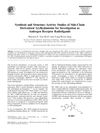
April 2001 in “Bioorganic & Medicinal Chemistry Letters” The nature of the side chain in RU 58841 derivatives greatly affects its AR affinity, with the N-(iodopropenyl) derivative 13 showing the highest AR binding affinity, suggesting its potential for developing high-affinity radioiodinated AR radioligands.
 5 citations
,
September 2014 in “Journal of Pharmaceutical Sciences” 6 citations
,
August 1937 in “Journal of the Society of Chemical Industry” 7 citations
,
January 1971 in “Archives of Dermatological Research”
5 citations
,
September 2014 in “Journal of Pharmaceutical Sciences” 6 citations
,
August 1937 in “Journal of the Society of Chemical Industry” 7 citations
,
January 1971 in “Archives of Dermatological Research”  1 citations
,
January 2017 in “Asian Journal of Chemistry”
1 citations
,
January 2017 in “Asian Journal of Chemistry” New method effectively analyzes finasteride and its stability.
August 2023 in “Fermentation” Scientists can use engineered microbes to make L-aspartate and related chemicals, but there's still room to improve their efficiency.
 9 citations
,
June 1947 in “Analytical Chemistry”
9 citations
,
June 1947 in “Analytical Chemistry” Cold waving solutions quickly reduce cystine to cysteine in hair.
5 citations
,
August 2016 in “International Journal of Cosmetic Science” Shampoo coacervates can cause scalp irritation due to released surfactants.
Trichohyalin, a protein from pig tongue, was purified and found to have a filamentous structure.
 August 2008 in “European Neuropsychopharmacology”
 RY-023, a specific drug, can improve early stage memory learning without affecting general activity in rats, but it's less effective for later learning stages and doesn't impact memory recall.
8 citations
,
January 2018 in “Journal of Analytical Methods in Chemistry” A new method accurately measures a drug in skin for cancer therapy research.
 July 2026 in “International Journal of Applied Pharmaceutics”
 Hair dyes, especially with PPD, can cause skin and rare systemic reactions, and safer alternatives are needed.