2 citations
,
September 2024 in “Journal of the American Academy of Dermatology” Deuruxolitinib significantly helps regrow scalp hair in adults with moderate to severe alopecia areata.
1 citations
,
February 2023 in “Plants” BB4CMU rice bran oil may help treat hair loss and gray hair.
 1 citations
,
August 2018 in “Journal of The American Academy of Dermatology”
1 citations
,
August 2018 in “Journal of The American Academy of Dermatology” Combination of minoxidil and finasteride is more effective in increasing hair diameter than minoxidil alone for female-pattern hair loss.
 1 citations
,
January 2009 in “X-ray Structure Analysis Online”
1 citations
,
January 2009 in “X-ray Structure Analysis Online” A new compound was made that might help treat diseases related to male hormones.
 1 citations
,
May 1999 in “Journal of Oral and Maxillofacial Surgery”
1 citations
,
May 1999 in “Journal of Oral and Maxillofacial Surgery” Patients with mandible reconstruction had better quality of life and function than those with soft-tissue reconstruction.
March 2026 in “SKIN The Journal of Cutaneous Medicine” Ritlecitinib is being tested for safety and effectiveness in young children with severe alopecia areata.
January 2026 in “Therapeutics” SCUBE3 is a potential target for cancer and alopecia treatment but is challenging to target due to its varied roles.
September 2025 in “JCEM Case Reports” Consider rare forms of CAH for accurate diagnosis and treatment.
July 2025 in “Journal of Investigative Dermatology” January 2024 in “Veterinary Science and Medicine Journal” Ivermectin and pyrantel pamoate effectively treated the cat's conditions, and restricting activity prevents reinfection.
 November 2023 in “Journal of Cosmetic Dermatology”
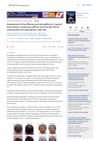
 The topical treatment with caffeine and Procapil 3% improved male pattern hair loss and was well tolerated after 12 weeks.
September 2023 in “Journal of the American Academy of Dermatology” CTP-543 is generally safe for treating alopecia areata.
March 2023 in “SKIN The Journal of Cutaneous Medicine” Ritlecitinib helped most alopecia areata patients regrow hair by Week 48.
December 2022 in “Ecological Chemistry and Engineering S” A new compound was made to detect copper ions effectively.
 July 2022 in “Research Square (Research Square)”
 A new gel helps grow mature eggs in a lab that can be fertilized and develop further.
 September 2020 in “Current Enzyme Inhibition”
 Three compounds were found to inhibit a prostate disease-related enzyme and reduce prostate size more effectively than the current treatment, suggesting they could be used for treating benign prostatic hyperplasia.
 June 2020 in “The journal of investigative dermatology/Journal of investigative dermatology”
 The enzymes Tet1, Tet2, and Tet3 are important for the development of hair follicles and determining hair shape by controlling hair keratin genes.
January 2019 in “프로그램북(구 초록집)” Silibinin may help hair growth and treat hair loss.
 June 2010 in “Journal of Chemical Crystallography”
 The compound was successfully made and shows potential for treating prostate cancer.
January 2005 in “Digest of the World Core Medical Journals” Oral zinc gluconate and topical steroids significantly improved a rare scalp condition in three elderly patients.
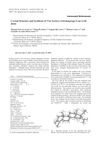 August 2002 in “Analytical Sciences”
 The document concludes that a compound with potential for treating prostate cancer and hair loss was successfully made and its detailed structure was confirmed.
 January 2002 in “Dermatology + psychosomatics” August 1989 in “Proceedings ... annual meeting, Electron Microscopy Society of America/Proceedings, annual meeting, Electron Microscopy Society of America”
 The research provided a detailed view of the non-keratinous parts of human hair fibers.
January 1988 in “Toxicological Sciences” 4PeCDF is highly toxic to male rats, causing weight loss, organ damage, and death.
January 2022 in “Skin Pharmacology and Physiology” Higher STAT3 levels are found in hair loss areas, but not linked to hair loss severity.
January 2006 in “Fudan University Journal of Medical Sciences” Finasteride is more effective than 3% minoxidil for treating hair loss in Chinese men.
 59 citations
,
August 2018 in “The oncologist”
59 citations
,
August 2018 in “The oncologist” Some breast cancer patients still experience hair loss three years after chemotherapy, especially with taxane-based treatments.
42 citations
,
July 2013 in “Gene” IL-4 gene variation may increase the risk of alopecia areata in Turkish people.
34 citations
,
June 2020 in “British journal of dermatology/British journal of dermatology, Supplement” Frontal fibrosing alopecia is linked to increased immune system activity and reduced stem cells, suggesting early treatment targeting this pathway might prevent hair follicle damage.
 32 citations
,
January 2014 in “Indian Journal of Dermatology, Venereology and Leprology”
32 citations
,
January 2014 in “Indian Journal of Dermatology, Venereology and Leprology” Finasteride and dutasteride effectively stop or reverse hair loss in women with androgenetic alopecia, with dutasteride being more effective for women under 50.