 8 citations
,
May 2017 in “Singapore Medical Journal”
8 citations
,
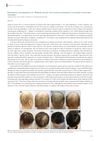
May 2017 in “Singapore Medical Journal” A Korean woman with complete hair loss regrew her hair after taking tofacitinib, with no side effects.
 8 citations
,
January 2015 in “Genetics and molecular research”
8 citations
,
January 2015 in “Genetics and molecular research” Researchers found four key proteins that affect the development of a specific hair type in Yangtze River Delta white goats.
8 citations
,
January 2012 in “General and Comparative Endocrinology” 5α-Reductase helps regulate hormone action in toad testes, especially during breeding season.
8 citations
,
April 1991 in “European journal of endocrinology” 3α-AdiolG is a good marker for androgen activity in women with excessive hair growth and decreases with anti-androgen treatment.
 7 citations
,
December 2015 in “International Journal of Dermatology”
7 citations
,
December 2015 in “International Journal of Dermatology” New and known mutations in the hairless gene cause a hair loss condition called Atrichia with papular lesions.
 7 citations
,
September 2014 in “Beni-Suef University Journal of Basic and Applied Sciences”
7 citations
,
September 2014 in “Beni-Suef University Journal of Basic and Applied Sciences” Cuscuta reflexa extracts and an isolate promoted hair growth and could be natural treatments for hair loss.
7 citations
,
January 2005 in “Dermatology” A new method for studying hair follicles is easier and more precise, useful for hair loss and cancer treatment research.
 6 citations
,
November 2023 in “Clinical Pharmacokinetics”
6 citations
,
November 2023 in “Clinical Pharmacokinetics” Ritlecitinib shows promise as a versatile treatment for various autoimmune and inflammatory diseases.
 6 citations
,
February 2019 in “Scientific reports”
6 citations
,
February 2019 in “Scientific reports” A brain-produced steroid causes increased scratching in mice with a skin condition similar to eczema.
 6 citations
,
November 2018 in “Histochemistry and Cell Biology”
6 citations
,
November 2018 in “Histochemistry and Cell Biology” Mongolian gerbils heal wounds differently than mice, with unique protein levels and gene expression that affect skin repair.