4 citations
,
July 2025 in “Frontiers in Pharmacology” Cooling with antioxidants helps protect hair during chemotherapy.
 50 citations
,
February 2018 in “Biomedicine & pharmacotherapy”
50 citations
,
February 2018 in “Biomedicine & pharmacotherapy” Ginseng may help treat cancer and reduce treatment side effects, but more research is needed.
 32 citations
,
August 2019 in “Nature Communications”
32 citations
,
August 2019 in “Nature Communications” Chemotherapy causes permanent hair follicle damage by triggering stem cell loss.
 52 citations
,
September 2018 in “International Journal of Molecular Sciences”
52 citations
,
September 2018 in “International Journal of Molecular Sciences” Ginseng and its compounds may help hair growth and prevent hair loss, but more human trials are needed to confirm this.
2 citations
,
February 2025 in “Free Radical Biology and Medicine” Blocking S100A8 can reduce chemotherapy-induced hair loss.
 September 2024 in “International Journal of Applied Pharmaceutics”
 A reliable method was developed to measure Finasteride and Tadalafil in rat blood.
 April 2024 in “Histochemistry and cell biology”
 N-acetylcysteine may prevent hair loss caused by chemotherapy.
 January 2017 in “Journal of Investigative Dermatology Symposium Proceedings”
 The 2015 Hair Research Congress concluded that stem cells, maraviroc, and simvastatin could potentially treat Alopecia Areata, topical minoxidil, finasteride, and steroids could treat Frontal Fibrosing Alopecia, and PTGDR2 antagonists could also treat alopecia. They also found that low-level light therapy could help with hair loss, a robotic device could assist in hair extraction, and nutrition could aid hair growth. They suggested that Alopecia Areata is an inflammatory disorder, not a single disease, indicating a need for personalized treatments.
186 citations
,
December 2011 in “Molecules” Three specific 4-azasteroid-2-oximes showed strong enzyme inhibition, but less than finasteride.
87 citations
,
April 1973 in “Endocrinology” The chemicals 17βC and its methyl ester can block the effects of testosterone on hamster skin but not the effects of DHT.
 50 citations
,
May 2019 in “BioFactors”
50 citations
,
May 2019 in “BioFactors” Pollution increases a compound in the skin that can lead to faster aging and more inflammation.
![[4-t-Butylphenyl]-N-(4-imidazol-1-yl phenyl)sulfonamide (ISCK03) Inhibits SCF/c-kit Signaling in 501mel Human Melanoma Cells and Abolishes Melanin Production in Mice and Brownish Guinea Pigs](/images/assets/4eb017dc-711d-4926-bcd0-c3b8f48e3a99/small/19974.jpg) 26 citations
,
July 2007 in “Biochemical Pharmacology”
26 citations
,
July 2007 in “Biochemical Pharmacology” ISCK03 stops melanin production in human melanoma cells and lightens skin color in mice and guinea pigs.
25 citations
,
June 2002 in “Steroids” 4-azasteroids, including finasteride, can inhibit 5α-reductase, helping treat conditions like enlarged prostate and hair loss.
14 citations
,
May 2005 in “Steroids” A new method was developed to make finasteride for treating hair loss.
13 citations
,
April 1994 in “Baillière's clinical endocrinology and metabolism” Some people have genetic mutations that make them resistant to vitamin D, leading to rickets even with enough vitamin D intake.
11 citations
,
October 2024 in “Cell Death Discovery” 4-aminopyridine helps heal burn wounds faster by reducing inflammation and promoting new blood vessel growth.
 11 citations
,
March 2009 in “Bioorganic & Medicinal Chemistry Letters”
11 citations
,
March 2009 in “Bioorganic & Medicinal Chemistry Letters” Chemicals called 4-(alkylthio)- and 4-(arylthio)-benzonitrile derivatives can potentially reduce oil production on skin, which could help treat conditions like acne and hair loss.
 11 citations
,
August 2007 in “Bioorganic & Medicinal Chemistry Letters”
11 citations
,
August 2007 in “Bioorganic & Medicinal Chemistry Letters” Scientists made a chemical (compound 4e) that can be applied on skin to reduce oil production, which can help with acne, but it might cause skin sensitivity to light.
 8 citations
,
March 2002 in “Archiv Der Pharmazie”
8 citations
,
March 2002 in “Archiv Der Pharmazie” The compound 4c effectively inhibits the enzyme linked to hair loss.
7 citations
,
September 1991 in “Journal of Andrology” 4‐MAPC reduces rat prostate weight and prostatein levels.
7 citations
,
September 1988 in “Baillière's clinical obstetrics and gynaecology” Cyproterone acetate is effective for treating hirsutism and acne in women by blocking androgens in the skin and also works as a contraceptive.
 5 citations
,
February 2017 in “Biomolecules & Therapeutics”
5 citations
,
February 2017 in “Biomolecules & Therapeutics” 4-O-Methylhonokiol helps protect skin cells from growth-stopping effects of a protein by regulating growth-related pathways.
 3 citations
,
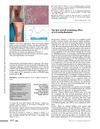
November 2011 in “European Journal of Dermatology”
3 citations
,
November 2011 in “European Journal of Dermatology” 4-O-methylhonokiol from Magnolia officinalis significantly promotes hair growth.
 2 citations
,
December 2022 in “PNAS nexus”
2 citations
,
December 2022 in “PNAS nexus” SCD-153 shows promise as an effective topical treatment for alopecia areata.
 2 citations
,
June 2022 in “Journal of Applied Pharmaceutical Science”
2 citations
,
June 2022 in “Journal of Applied Pharmaceutical Science” 4-O-Methylhonokiol from Magnolia shows promise for hair growth, cancer, diabetes, and more, but needs better absorption.
 2 citations
,
February 2004 in “Biopolymers”
2 citations
,
February 2004 in “Biopolymers” 4-(4-Phenoxybenzoyl)benzoic acid derivatives can both increase and decrease certain types of reactive oxygen species, and may be relevant to hair loss.
 1 citations
,
March 2024 in “Journal of Cellular and Molecular Medicine”
1 citations
,
March 2024 in “Journal of Cellular and Molecular Medicine” 4-octyl itaconate may prevent hearing loss caused by the drug cisplatin by activating certain cell protection pathways.
![Integrating Multi-Omics Analyses of Nonomuraea Dietziae to Reveal the Role of Soybean Oil in [(4′-OH)MeLeu]4-CsA Overproduction](/images/assets/0eba9759-3aa4-4a06-a70a-2d9c46be53f3/small/23018.jpg) 1 citations
,
July 2017 in “Microbial Cell Factories”
1 citations
,
July 2017 in “Microbial Cell Factories” Adding soybean oil to Nonomuraea dietziae increases production of a beneficial compound by improving metabolism and enzyme systems.
January 2026 in “Journal of Cosmetic Dermatology” Topical 4-aminopyridine 5% does not improve hair growth in male pattern baldness.
4-Aminopyridine gel speeds up burn wound healing and improves skin regeneration.