 3 citations
,
November 2011 in “European Journal of Dermatology”
3 citations
,
November 2011 in “European Journal of Dermatology” 4-O-methylhonokiol from Magnolia officinalis significantly promotes hair growth.
 2 citations
,
June 2022 in “Journal of Applied Pharmaceutical Science”
2 citations
,
June 2022 in “Journal of Applied Pharmaceutical Science” 4-O-Methylhonokiol from Magnolia shows promise for hair growth, cancer, diabetes, and more, but needs better absorption.
 August 2011 in “Planta Medica”
 4-O-methylhonokiol from Magnolia Officinalis may promote hair growth by interfering with TGF-β1 effects in skin cells.
 5 citations
,
February 2017 in “Biomolecules & Therapeutics”
5 citations
,
February 2017 in “Biomolecules & Therapeutics” 4-O-Methylhonokiol helps protect skin cells from growth-stopping effects of a protein by regulating growth-related pathways.
 112 citations
,
May 2019 in “Pharmacological Research”
112 citations
,
May 2019 in “Pharmacological Research” Lignans and neolignans from plants may help protect against various health issues, including cancer and heart disease.
 1 citations
,
December 2019 in “Journal of medicine and life science”
1 citations
,
December 2019 in “Journal of medicine and life science” Docosahexaenoic acid (DHA) may help hair growth by promoting dermal papilla cell proliferation.
 1 citations
,
September 2013 in “Elsevier eBooks”
1 citations
,
September 2013 in “Elsevier eBooks” Hair ages and thins due to factors like inflammation and stress, and treatments like antioxidants and hormones might improve hair health.
January 2021 in “Annals of translational medicine” YH0618 helped reduce skin and nail problems and fatigue in chemotherapy patients.
 6 citations
,
June 2022 in “Dermatologic Therapy”
6 citations
,
June 2022 in “Dermatologic Therapy” Honokiol from Magnolia plants may be beneficial for treating various skin conditions and promoting hair growth.
November 2024 in “International Journal of Molecular Sciences” Hair helps prevent scalp skin cancer by supporting immune protection.
October 2024 in “Preprints.org” Hair helps prevent scalp skin cancer by supporting immune protection.
September 2024 in “Preprints.org” Hair protects the scalp from skin cancer by aiding immune defense.
42 citations
,
June 2019 in “Aging” 3,4,5-tri-O-caffeoylquinic acid promotes hair growth by activating the β-catenin pathway.
 13 citations
,
March 2020 in “Frontiers in cell and developmental biology”
13 citations
,
March 2020 in “Frontiers in cell and developmental biology” A substance called TCQA could potentially darken hair by activating certain genes and increasing melanin.
July 2022 in “Institutional Repositories DataBase (IRDB)” 3D spheroid cells effectively test hair growth compounds like Minoxidil.
 November 2021 in “Research Square (Research Square)”
 3D spheroid cultures of human hair follicle cells are better for hair growth research than 2D cultures, and they provide new insights into how hair growth treatments like minoxidil and TCQA work.
43 citations
,
January 2016 in “Oxidative medicine and cellular longevity” THSG from a Chinese plant helps with aging and related diseases.
3 citations
,
April 2025 in “International Journal of Molecular Sciences” TSG from Polygonum multiflorum may help with anti-aging by protecting the brain, heart, bones, and hair.
 2 citations
,
December 2008 in “Journal of Chemical Crystallography”
2 citations
,
December 2008 in “Journal of Chemical Crystallography” The research shows that hydrogen bonds greatly affect the crystal structure of a Finasteride derivative.
March 2026 in “Journal of Evidence-Based Medicine” AI chatbots can be reliable learning tools for plastic surgery students.
January 2016 in “한국공업화학회 연구논문 초록집” The nanoparticles show promise for cancer treatment and diagnosis with fewer side effects.
 37 citations
,
September 2003 in “Journal of Medicinal Chemistry”
37 citations
,
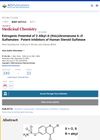
September 2003 in “Journal of Medicinal Chemistry” A substance called Compound 2g can strongly block STS (a hormone-related enzyme) without affecting estrogen levels, making it potentially good for treating breast cancer.
 February 1999 in “Analytical Sciences”
 A new antiandrogen compound was made and its detailed three-dimensional shape was described.
 1 citations
,
January 2009 in “X-ray Structure Analysis Online”
1 citations
,
January 2009 in “X-ray Structure Analysis Online” A new compound was made that might help treat diseases related to male hormones.
 June 2010 in “Journal of Chemical Crystallography”
 The compound was successfully made and shows potential for treating prostate cancer.
 111 citations
,
August 2002 in “Journal of Medicinal Chemistry”
111 citations
,
August 2002 in “Journal of Medicinal Chemistry” New compounds were made that block an enzyme linked to breast cancer better than existing treatments.
 3 citations
,
April 2018 in “Holzforschung”
3 citations
,
April 2018 in “Holzforschung” Scientists found a new natural compound and other known compounds in Cercidiphyllum japonicum twigs, which might be useful for medicine.
 21 citations
,
October 2011 in “PloS one”
21 citations
,
October 2011 in “PloS one” Certain molecules in hair change with age and could be used for cosmetic treatments.
March 2026 in “Pediatric Dermatology” Generative AI tools can accurately score alopecia areata, reducing subjectivity in evaluations.
March 2026 in “Journal of Investigative Dermatology” Generative AI tools like GPT-4o can effectively automate SALT scoring for alopecia areata, matching clinician accuracy.