 6 citations
,
March 2015 in “Journal of Endocrinological Investigation”
6 citations
,
March 2015 in “Journal of Endocrinological Investigation” Taking both finasteride and dutasteride for prostate issues may raise the risk of heart problems.
 2 citations
,
November 2017 in “Food Additives & Contaminants: Part A”
2 citations
,
November 2017 in “Food Additives & Contaminants: Part A” The new method accurately detects illegal hair-growth drugs in dietary supplements.
 1 citations
,
July 2018 in “Elsevier eBooks”
1 citations
,
July 2018 in “Elsevier eBooks” Many treatments for hair loss show potential, but more testing is needed to confirm their effectiveness. Only minoxidil for women and minoxidil and finasteride for men are FDA approved.
 January 2026 in “RIGGS Journal of Artificial Intelligence and Digital Business”
 A pomade with peppermint oil and minoxidil can effectively promote hair growth, with the best formulation having a balanced texture and stability.
 November 2025 in “Discover Pharmaceutical Sciences”
 The essential oils nanoemulsion promotes hair growth better than 2% minoxidil in mice.
 October 2024 in “International Journal of Pharmaceutical Sciences Review and Research”
 A 5% minoxidil spray could effectively treat male baldness with fewer side effects and better patient comfort.
 August 2024 in “Research Square (Research Square)”
 Using 5-alpha reductase inhibitors may lower the risk of breast cancer in females.
 December 2023 in “Annals of phytomedicine”
 Dutasteride is more effective than finasteride for hair loss treatment.
 March 2023 in “Translational Andrology and Urology”
 5-alpha reductase inhibitors, like finasteride and dutasteride, are used for prostate issues, hair loss, and excessive hair growth, may help with COVID-19, but can cause sexual and mental health side effects, and their use in preventing prostate cancer needs more examination.
 December 2022 in “Scholars journal of applied medical sciences”
 Dutasteride 0.5mg improves hair growth in 78% of people with hair loss, but may cause sexual problems in some.
 June 2001 in “International Journal of Cosmetic Surgery and Aesthetic Dermatology”
 Finasteride improves hair growth in men with androgenetic alopecia.
Low-dose oral minoxidil is generally safe for treating hair loss, with mostly mild side effects.
The document concludes that current hair loss treatments have limitations and suggests researching new treatments targeting different factors of hair loss.
 6 citations
,
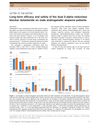
December 2016 in “Journal of Dermatology”
6 citations
,
December 2016 in “Journal of Dermatology” Dutasteride effectively and safely treats male hair loss for over a year.
 6 citations
,
January 2015 in “Journal of The European Academy of Dermatology and Venereology”
6 citations
,
January 2015 in “Journal of The European Academy of Dermatology and Venereology” Different hair loss types need accurate diagnosis for proper treatment.
 1 citations
,
March 2021 in “Skin health and disease”
1 citations
,
March 2021 in “Skin health and disease” Better hair loss models needed for research.
February 2026 in “Advanced Science” Targeting the p300/AR axis may help treat polycystic ovary syndrome.
The combination of oral minoxidil, oral dutasteride, and mesotherapy is the most effective and safe for hair growth in AGA.
 August 2024 in “Journal of Cosmetic Dermatology”
 CGF injections may safely and effectively promote hair growth in androgenetic alopecia patients.
 33 citations
,
August 2016 in “Indian Journal of Dermatology, Venereology and Leprology”
33 citations
,
August 2016 in “Indian Journal of Dermatology, Venereology and Leprology” Dutasteride is more effective than finasteride at increasing hair count and reversing hair thinning in men with hair loss, but both have similar side effects.
 May 2024 in “Deleted Journal”
 Dutasteride effectively treats hair loss in men who don't respond to finasteride.
 November 2023 in “Expert Opinion on Pharmacotherapy”
 Finasteride and dutasteride are effective in treating male hair loss but can cause sexual side effects and birth defects.
 January 2018 in “Surgical and Cosmetic Dermatology”
 Finasteride and dutasteride are effective for male hair loss and enlarged prostate but may cause reversible sexual side effects.
Treatments for hair loss vary, but cell-based options may be the future.
20 citations
,
January 2004 in “PubMed” Dutasteride reduces DHT more than finasteride, but both drugs improve BPH symptoms similarly.
 4 citations
,
April 2021 in “Journal of Cosmetic Dermatology”
4 citations
,
April 2021 in “Journal of Cosmetic Dermatology” Intradermal injections improve hair density and thickness better, while derma roller is more convenient.
 2 citations
,
March 2023 in “Experimental neurology”
2 citations
,
March 2023 in “Experimental neurology” Pregnenolone might help manage movement issues caused by Parkinson's disease treatment without reducing the medicine's effectiveness.
 1 citations
,
July 2023 in “Cureus”
1 citations
,
July 2023 in “Cureus” Some treatments for hereditary hair loss are effective but vary in results and side effects; new therapies show promise but need more research.
 12 citations
,
October 2004 in “Experimental Gerontology”
12 citations
,
October 2004 in “Experimental Gerontology” Changes in testosterone and estrogen receptor genes can affect how men age, influencing body fat, hair patterns, and possibly leading to skin disorders.
 1 citations
,
March 2021 in “Current Dermatology Reports”
1 citations
,
March 2021 in “Current Dermatology Reports” Various treatments help hair growth, but more research needed for safety and effectiveness.