 January 2024 in “Wiadomości Lekarskie”
 Robotic surgery and artificial hearts are revolutionizing cardiac surgery.
75 citations
,
January 2004 in “Molecular and Cellular Biology” XEDAR deficiency prevents muscle degeneration in EDA-A2 transgenic mice.
7 citations
,
April 2000 in “Mammalian Genome” A new mutation in mice causes crooked whiskers and messy hair.
 December 2025 in “Nature Communications”
 Club-like receptors detect light touch but not whisking.
70 citations
,
December 1968 in “Journal of Investigative Dermatology” 101 citations
,
August 2008 in “Mayo Clinic Proceedings” PAD is common but often missed, needing lifestyle changes and medication for better outcomes.
 August 2023 in “Eureka: Health Sciences”
 Older adults commonly experience skin diseases.
 June 2020 in “The journal of investigative dermatology/Journal of investigative dermatology”
 Platelet-rich Plasma Gel may help treat en coup de sabre scleroderma, improving symptoms and skin quality with minimal side effects.
1 citations
,
May 2022 in “International journal of molecular sciences” Faulty LEF1 activation causes faster skin cell differentiation in premature aging syndrome.
December 2010 in “TSpace” Activating androgen receptors in muscle can increase muscle mass and reduce fat.
 2 citations
,
July 2005 in “International Joint Conference on Artificial Intelligence”
2 citations
,
July 2005 in “International Joint Conference on Artificial Intelligence” EREG therapy may help treat hair loss by promoting hair growth.
16 citations
,
April 2021 in “Biomedicines” Ferulic acid helps wounds heal faster by reducing inflammation and promoting skin cell movement.
12 citations
,
March 2004 in “Journal of Investigative Dermatology”  December 2000 in “British Journal of Dermatology”
 The document corrected previous errors and announced future dermatology events.
 April 2026 in “Communications Biology”
 The development of breeding tubercles in male zebrafish relies on a specific enzyme that processes hormones.
 March 2020 in “Journal of lasers in medical sciences”
 Laser therapy on human skin affects the HERC6 gene and related genes, influencing many cell processes and requiring careful safety measures.
January 2024 in “Animals” Circular RNA ERCC6 helps activate stem cells important for cashmere goat hair growth by interacting with specific molecules in an m6A modification-dependent way.
December 2020 in “Research Square (Research Square)” A genetic change in the FGF5 gene affects hair growth in cashmere goats.
 104 citations
,
October 2016 in “PLoS ONE”
104 citations
,
October 2016 in “PLoS ONE” CRISPR/Cas9 gene editing in cashmere goats increases hair follicles and fiber length, boosting cashmere yield.
A runner developed tangled armpit hairs from shirt friction, preventable by shaving or wearing smooth shirts.
22 citations
,
January 1999 in “Dermatology” The condition might be caused by genetic changes after birth.
December 2021 in “OPAL (Open@LaTrobe) (La Trobe University)” Disrupting the Hars2 gene in mice causes hearing loss due to mitochondrial problems and hair cell damage.
13 citations
,
June 2017 in “Biochimie open” All five human steroid 5α-reductase enzymes are found in the endoplasmic reticulum.
 31 citations
,
November 2013 in “Dermatologic Clinics”
31 citations
,
November 2013 in “Dermatologic Clinics” The ARTAS robotic system for hair restoration is efficient with fewer cuts than manual methods, but it's limited to certain hair types and can still leave scars.
1 citations
,
July 2019 in “Small ruminant research” Nerve growth factor helps cashmere goat hair cells grow by activating a specific protein.
 1 citations
,
November 2008 in “Acta crystallographica”
1 citations
,
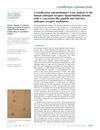
November 2008 in “Acta crystallographica” Scientists successfully created and analyzed the structure of a part of the human androgen receptor with specific modulators and a peptide to understand how it binds differently in various tissues.
 January 2024 in “Wiadomości Lekarskie”
 New devices may treat heart failure more effectively than drugs.
 December 2012 in “Regenerative Medicine”
 Latest articles show advancements in regenerative medicine.
210 citations
,
February 2008 in “Nature genetics” Mutations in the P2RY5 gene cause autosomal recessive woolly hair.
51 citations
,
December 2006 in “Mammalian Genome”