 August 2016 in “Journal of Investigative Dermatology”
 Human hair follicles have a scent receptor that can influence hair growth.
 1 citations
,
October 2020 in “Current Drug Discovery Technologies”
1 citations
,
October 2020 in “Current Drug Discovery Technologies” The research found that compound 6, a newly created steroid, is more effective at inhibiting 5α-reductase (an enzyme) than current treatments, suggesting it could be a better option for treating urinary tract symptoms in men.
215 citations
,
November 2000 in “Journal of Investigative Dermatology” The system allows precise control of gene expression in mouse skin, useful for studying skin biology.

VCFO effectively treats fungal infections in cats and promotes hair regrowth.

A new syndrome, Teelwani Syndrome, combines features of two rare genetic disorders.
July 2024 in “Journal of Investigative Dermatology” Reactive lipids from aging cells change the extracellular matrix, affecting cell function and inflammation.
 April 2026 in “Biomedical Research and Therapy”
 CYB5R1 and IL1A genes may be linked to different types of acne scars.
24 citations
,
October 2019 in “Genes” A new sheep gene, KRTAP36-1, may help breed sheep with better wool by reducing prickle factor.
 4 citations
,
May 2021 in “Biomedicines”
4 citations
,
May 2021 in “Biomedicines” Targeting the protein Caveolin-1 might help treat a type of scarring hair loss called Frontal Fibrosing Alopecia.
January 1995 in “Seoul National University Open Repository (Seoul National University)” SSO helps in skin protection and keratinization.
 June 2026 in “Acta Pharmacologica Sinica”
 Improving PROTAC delivery systems can enhance their effectiveness and speed up their use in medicine.
 1 citations
,
April 2018 in “Journal of Investigative Dermatology”
1 citations
,
April 2018 in “Journal of Investigative Dermatology” Fzd2 is important for skin and hair development through various signaling ways.
 87 citations
,
March 2000 in “American Journal of Clinical Dermatology”
87 citations
,
March 2000 in “American Journal of Clinical Dermatology” Alpha-hydroxy acids, like glycolic acid, safely improve skin issues and work on all skin types.
169 citations
,
June 1998 in “Journal of Investigative Dermatology” Male pattern baldness is likely caused by multiple genes, not just 5α-reductase genes.
 March 2025 in “International Journal of Trichology”
 FAPD in children may not depend on androgens and should be treated with anti-inflammatory measures and minoxidil.
1 citations
,
January 2025 in “Medicine” Targeting SOX proteins may improve cancer treatment by restoring immune function.
91 citations
,
June 2011 in “The EMBO Journal” TCF/Lef1 activity is essential for proper skin cell development and renewal.
 6 citations
,
January 2015 in “Biochemical Society Transactions”
6 citations
,
January 2015 in “Biochemical Society Transactions” The Ysc84/SH3yl1 protein family is important for cell movement and the process of taking in materials by interacting with actin and cell membranes.
 November 2023 in “The journal of investigative dermatology/Journal of investigative dermatology”
 Early treatment and multidisciplinary care are key to managing Frontal Fibrosing Alopecia and preventing further hair loss.
 January 2024 in “Oxford medical case reports”
 Standard treatment for congenital erythropoietic porphyria was ineffective over five years.
 32 citations
,
July 2018 in “Scientific Reports”
32 citations
,
July 2018 in “Scientific Reports” Essential-oils-cobalt improves goat growth and product quality.
3 citations
,
October 2024 in “Animals” An allele of the KRTAP13-2 gene may improve wool quality in sheep.
 36 citations
,
November 2020 in “Journal of The European Academy of Dermatology and Venereology”
36 citations
,
November 2020 in “Journal of The European Academy of Dermatology and Venereology” 5-alpha-reductase inhibitors may reduce COVID-19 symptoms in bald males.
 16 citations
,
August 2022 in “Nature Communications”
16 citations
,
August 2022 in “Nature Communications” ROR2 is essential for hair follicle stem cell renewal and maintenance.
51 citations
,
January 2007 in “The journal of investigative dermatology/Journal of investigative dermatology” Scientists discovered a unique hair protein, KAP24.1, with a special structure, found only in the upper part of hair cuticles.
232 citations
,
January 2002 in “Mechanisms of development” Different enzymes are active in different parts of developing mouse organs.
 2 citations
,
June 2018 in “Journal of Aesthetic Nursing”
2 citations
,
June 2018 in “Journal of Aesthetic Nursing” Some improvements in the aesthetics sector have been made, but patient protection is still lacking due to no compulsory register for practitioners and non-prescription dermal fillers.
 14 citations
,
July 2012 in “Journal of the American Academy of Dermatology”
14 citations
,
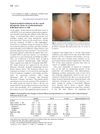
July 2012 in “Journal of the American Academy of Dermatology” Topical tacalcitol ointment can help improve symptoms of EFFC.
 21 citations
,
October 2017 in “Journal of the European Academy of Dermatology and Venereology”
21 citations
,
October 2017 in “Journal of the European Academy of Dermatology and Venereology” Various potential triggers may be causing the rise in frontal fibrosing alopecia, and avoiding these could help stop the disease's increase.
 7 citations
,
October 2015 in “Actas Dermo-Sifiliográficas”
7 citations
,
October 2015 in “Actas Dermo-Sifiliográficas” New treatments for Frontal Fibrosing Alopecia show promise, especially finasteride and dutasteride, with most patients seeing improvement or stabilization.