November 2025 in “The Journal of Immunology” Different γδ T cell types have unique roles in causing alopecia areata.
23 citations
,
March 1958 in “JNCI Journal of the National Cancer Institute” Male-to-female skin grafts in mice are rejected due to sex-linked antigens.
April 2021 in “Institutional Repositories DataBase (IRDB)” High-intensity red LED light boosts bone cell growth and mineralization.
 14 citations
,
January 2012 in “International Journal of Trichology”
14 citations
,
January 2012 in “International Journal of Trichology” Hodgkin's lymphoma can show up as hair loss.
 87 citations
,
December 2016 in “British journal of dermatology/British journal of dermatology, Supplement”
87 citations
,
December 2016 in “British journal of dermatology/British journal of dermatology, Supplement” Cancer patients treated with immune checkpoint inhibitors may develop alopecia, but some hair regrowth is possible with treatment.
March 2014 in “The Journal of Urology” Finasteride increases CD8+ T cells in BPH tissues.
September 2021 in “Journal of the American Academy of Dermatology” CTCL patients can safely continue treatment during COVID-19 with proper safety measures.
121 citations
,
December 2001 in “American Journal of Dermatopathology” TB and BCC tumors show similar follicular differentiation patterns.
 106 citations
,
October 2016 in “Cell Stem Cell”
106 citations
,
October 2016 in “Cell Stem Cell” PDGFA/AKT signaling is important for the growth and maintenance of certain skin fat cells.
 1 citations
,
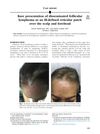
April 2019 in “JAAD case reports”
1 citations
,
April 2019 in “JAAD case reports” A woman with lymphoma had a rare skin rash on her scalp and forehead, which was hard to diagnose but responded well to treatment.
 5 citations
,
June 2022 in “Frontiers in immunology”
5 citations
,
June 2022 in “Frontiers in immunology” Increasing Treg cells in the skin does not cure hair loss from alopecia areata in mice.
 9 citations
,
January 2017 in “Elsevier eBooks”
9 citations
,
January 2017 in “Elsevier eBooks” Skin's epithelial stem cells are crucial for repair and maintenance, and understanding them could improve treatments for skin problems.
 May 2026 in “Organoid Research”
 Hydrogel-based methods improve skin organoid development for medical and research applications.
 6 citations
,
September 2019 in “Skin pharmacology and physiology”
6 citations
,
September 2019 in “Skin pharmacology and physiology” RCS-01 therapy is safe and may improve skin structure by affecting gene expression.
November 2025 in “The Journal of Immunology” The S1PR 1&4 modulator may effectively treat alopecia areata by reducing hair loss and immune cell activity.
 November 2022 in “Journal of Investigative Dermatology”
 Skin aging and cancer development are influenced by the competition between stem cells.
 22 citations
,
February 2013 in “Wound Repair and Regeneration”
22 citations
,
February 2013 in “Wound Repair and Regeneration” Mice genetically modified to produce more CD109 in their skin had less inflammation and better healing with less scarring.
March 2022 in “Oncology Times” Tebentafusp-tebn improves survival rates in uveal melanoma patients but has common side effects like rash and fatigue.
 10 citations
,
August 2016 in “Oxford Medical Case Reports”
10 citations
,
August 2016 in “Oxford Medical Case Reports” Tocilizumab therapy may cause skin and hair conditions like halo naevi, vitiligo, and alopecia areata.
 4 citations
,
May 2021 in “The American Journal of Surgical Pathology”
4 citations
,
May 2021 in “The American Journal of Surgical Pathology” Cutaneous Lymphadenoma is a unique skin tumor with specific protein markers and common gene mutations that may cause continuous cell growth.
3 citations
,
January 2023 in “JEADV Clinical Practice” IL-17 is more important than IFN-γ in causing severe hair loss in chronic alopecia areata.
7 citations
,
October 2008 in “Arthritis Care & Research” Aggressive immunosuppressive treatment improved a woman's severe heart condition linked to autoimmune disease.
 3 citations
,
September 2022 in “Journal of the American Academy of Dermatology”
3 citations
,
September 2022 in “Journal of the American Academy of Dermatology” Baricitinib is effective and safe for severe alopecia areata, working similarly with or without an atopic background.
 August 2025 in “Journal of IMAB - Annual Proceeding (Scientific Papers)”
 The A-T advancement flap is a safe and effective method for scalp reconstruction after basal cell carcinoma removal.
September 2025 in “Blood Advances” Targeting androgen receptor signaling may improve acute myeloid leukemia treatment.
1 citations
,
May 2022 in “European Journal of Dermatology” Longer treatment with vismodegib lowers relapse risk in basal cell carcinoma.
April 2017 in “Leukemia research” Tofacitinib helped most teenagers in the study regrow hair with mild side effects.
68 citations
,
December 1983 in “British Journal of Dermatology” Major histocompatibility antigens are found in specific skin cells and structures, but not in sweat glands.
 April 2023 in “The journal of investigative dermatology/Journal of investigative dermatology”
 Too much IKZF1 and Ikaros protein may cause alopecia areata.
2 citations
,
August 2017 in “Experimental Dermatology” A human serum-enriched medium effectively supports melanocyte growth and activity without using animal-derived supplements.