2 citations
,
June 2024 in “Medical Journal of Babylon” Higher CD8+ T cell levels are linked to Alopecia areata in Iraqi patients.
 1 citations
,
January 2021
1 citations
,
January 2021 CD4+ skin cells may be precursors to basal cell carcinoma.
6 citations
,
March 2018 in “The American journal of dermatopathology/American journal of dermatopathology” BerEP4 and CD34 staining can help tell apart tricholemmoma from basal cell carcinoma.
Alopecia areata involves immune system changes, especially in severe cases, with potential new treatment targets identified.
 June 2024 in “Journal of Clinical Oncology”
 Dalpiciclib is the safest and most satisfying CDK4/6 inhibitor for advanced breast cancer patients in China.
 4 citations
,
September 2019 in “Biomedical Papers/Biomedical Papers of the Faculty of Medicine of Palacký University, Olomouc Czech Republic”
4 citations
,
September 2019 in “Biomedical Papers/Biomedical Papers of the Faculty of Medicine of Palacký University, Olomouc Czech Republic” CD2 might be a new treatment target for patchy alopecia areata.
October 2022 in “Journal of pharmaceutical negative results” People with Alopecia areata have higher levels of certain T regulatory cells in their blood.
 February 2025 in “PubMed”
 CS12192 effectively treats alopecia areata with better safety than current options.
77 citations
,
June 2002 in “Journal of Investigative Dermatology” CD44 variant changes start alopecia areata, but don't maintain it.
48 citations
,
June 2000 in “Japanese Journal of Cancer Research” Dimethylarsinic acid speeds up skin tumor growth in certain mice.
 April 2017 in “Journal of Dermatological Science”
 B cells can both help and hinder the body's defense against melanoma.
May 2023 in “The Journal of Immunology” Alopecia areata involves unique activation of certain immune cells.
 23 citations
,
June 2015 in “Oncology Letters”
23 citations
,
June 2015 in “Oncology Letters” Adipose-derived stem cell-conditioned medium can reduce melanoma cell growth and spread.
2 citations
,
June 2025 in “Journal of Investigative Dermatology” CD8+ T cells re-expressing CD45RA may predict treatment resistance in severe alopecia areata.
 32 citations
,
January 2012 in “Clinical & Developmental Immunology”
32 citations
,
January 2012 in “Clinical & Developmental Immunology” Targeting CD200 could be a new treatment for rheumatoid arthritis.
233 citations
,
October 2004 in “Differentiation” Stem cells are in deep skin layers, while differentiating cells are in shallow layers.
November 2023 in “Journal of Investigative Dermatology” The study identified key immune cell differences between mild and severe alopecia areata.
The CD4 protein may play a role in the behavior of certain skin cells, affecting their growth, movement, and differentiation.
 10 citations
,
July 2013 in “British Journal of Dermatology”
10 citations
,
July 2013 in “British Journal of Dermatology” High MUC-18/MCAM levels in blood indicate a worse outlook for melanoma patients.
 November 2023 in “The journal of investigative dermatology/Journal of investigative dermatology”
 The study developed a mouse model for Alopecia Areata that responds to treatment, useful for future research.
December 2023 in “Journal of Investigative Dermatology” A specific type of immune cell plays a key role in causing alopecia areata and could be a target for treatment.
6 citations
,
September 2013 in “Journal of Evolution of Medical and Dental Sciences” Low CD4 counts in HIV patients are linked to more skin disorders.
 February 2025 in “Infectious Diseases & Immunity”
 HHV-6 reactivation may be linked to psychiatric disorders and can improve with antiviral treatment.
 December 2021 in “Research Square (Research Square)”
 M-CSF-stimulated myeloid cells can cause alopecia areata in mice.
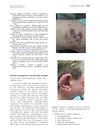
A 72-year-old man was diagnosed with a rare skin form of Rosai-Dorfman disease after years of misdiagnosis.
 1 citations
,
April 2019 in “The journal of investigative dermatology/Journal of investigative dermatology”
1 citations
,
April 2019 in “The journal of investigative dermatology/Journal of investigative dermatology” Melanocyte-associated antigens may play a key role in alopecia areata and could be targets for new treatments.
23 citations
,
July 2023 in “Proceedings of the National Academy of Sciences” CD8+ T cells drive alopecia areata, while regulatory T cells are protective.
16 citations
,
July 2008 in “BMC Genomics” Alpha 6 + /MHCI - cells have stem cell traits and are similar to mouse hair follicle stem cells.
 20 citations
,
December 2010 in “JEADV. Journal of the European Academy of Dermatology and Venereology/Journal of the European Academy of Dermatology and Venereology”
20 citations
,
December 2010 in “JEADV. Journal of the European Academy of Dermatology and Venereology/Journal of the European Academy of Dermatology and Venereology” Decreased CD200 in hair follicles may cause immune issues in some alopecia areata cases.
April 2023 in “Journal of Investigative Dermatology” CD206+ macrophages are crucial for hair growth in alopecia areata treatment.