 July 2021 in “International Journal of Research in Ayurveda and Pharmacy”
 Natural plant compounds may offer safer COVID-19 treatments with fewer side effects.
 June 2021 in “Experimental and Therapeutic Medicine”
 MEF/KSF-conditioned medium effectively grows mouse hair follicle stem cells with bone-forming potential.
 April 2019 in “International research journal of pharmacy”
 Adiantum capillus extract reduces pain and swelling in animals.
 February 2019 in “Institutional Repositories DataBase (IRDB)”
  June 2018 in “International journal of trend in scientific research and development”
 The review explains how hair products work and the science of different hair types to help improve hair care research.
 January 2017 in “Korean Journal of Pharmacognosy”
 Modified red ginseng extract promotes hair growth and has antioxidant and anti-inflammatory effects.
 April 2016 in “The journal of investigative dermatology/Journal of investigative dermatology”
 Applying the anti-cancer drug Bortezomib to skin can promote hair growth and increase hair proteins through the GATA-3 factor.
 April 2016 in “The journal of investigative dermatology/Journal of investigative dermatology”
 RPGRIP1L helps skin cells stick together by blocking PKCβII, which can prevent skin blistering like in pemphigus.
The document discusses how traditional Chinese medicine extracts may affect hair growth in animals but lacks detailed results.
Avicennia Marina extract and avicequinone C can reduce hair loss hormone production and increase hair growth factors, suggesting they could be used to treat androgenic alopecia.
 June 2015 in “Biomedical and biopharmaceutical research”
 The congress showed advancements in skin hydration, barrier function, and safe, effective new cosmetic formulations.
 September 2013 in “Daehan hwajangpum hakoeji/Daehan hwa'jangpum haghoeji”
 Shampoo with ginseng helped improve hair thickness, density, growth, and reduced hair loss.
 January 2012 in “Human health handbooks”
 Traditional Indian remedies are used for hair health, but more scientific evidence is needed to prove their safety and effectiveness.

Avicennia marina extract and avicequinone C can potentially promote hair growth and treat hair loss by interfering with hair loss mechanisms and boosting growth factors.
 March 2023 in “International Journal of Advanced Research in Science, Communication and Technology”
 Various medicinal plants like Polygonum multiflorum, Red ginseng extract, and Zizyphus jujuba can potentially treat hair loss, offering benefits like low cost and multiple ways of working. Other effective natural substances include Pygeum africanum, Seneroa, Urtica dioica, and more.
103 citations
,
February 1972 in “Proceedings of the National Academy of Sciences” A unique enzyme in guinea pig hair follicles helps form protein cross-links in hair.
63 citations
,
May 2015 in “PloS one” GALT5 and GALT2 are important for plant growth and development because they help with protein glycosylation.
 October 2004 in “Australian Prescriber”
 Agalsidase alfa helps treat Fabry's disease but needs more research for long-term benefits.
January 1980 in “Lluc: revista de cultura i d'idees” Agaricus bisporus β-Glucan particles could effectively treat cervical cancer and offer antimicrobial and antioxidant benefits.
 2 citations
,
September 2022 in “Cellular and molecular biology”
2 citations
,
September 2022 in “Cellular and molecular biology” Agaricus bisporus derived β-Glucan could be an effective cervical cancer treatment with antimicrobial and antioxidant properties.
69 citations
,
December 2015 in “BMC plant biology” Three genes in Arabidopsis are important for plant growth and development by affecting sugar attachment to proteins.
91 citations
,
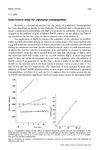
May 1972 in “Journal of Biological Chemistry” Transglutaminases work through a ping-pong mechanism, and human plasma and platelet transglutaminases have similar catalytic subunits.
 19 citations
,
November 1971 in “Clinica Chimica Acta”
19 citations
,
November 1971 in “Clinica Chimica Acta” The document concludes that measuring γ-glutamyl transpeptidase activity is more accurate with a higher substrate concentration and using diluted acetic acid to stop the reaction.
January 1995 in “Journal of the Society of Cosmetic Chemists” Transglutaminase does not modify human hair.
35 citations
,
July 2010 in “The FEBS journal” The study found a specific peptide that helps detect TGase 3 activity in skin and hair follicles.
44 citations
,
January 1984 in “Molecular and Cellular Biochemistry”  32 citations
,
December 2014 in “Journal of experimental botany”
32 citations
,
December 2014 in “Journal of experimental botany” Certain proteins are essential for the growth of root hairs in barley.
54 citations
,
January 1984 in “Molecular and Cellular Biochemistry” 24 citations
,
February 1986 in “Cancer” A pancreatic tumor caused high glucagon levels and symptoms, but treatment reduced glucagon and shrank liver tumors.
48 citations
,
February 2025 in “Advanced Materials” The hydrogel speeds up diabetic wound healing by adapting to glucose levels and releasing insulin.