 September 2023 in “Acta dermato-venereologica”
 Tofacitinib is a safe and effective treatment for hair loss in children with Alopecia Areata.
14 citations
,
July 1977 in “PubMed” Applying linoleic acid to the skin fixed essential fatty acid deficiency symptoms.
 April 2017 in “Journal of Investigative Dermatology”
 The document concludes that various topical treatments show promise for skin conditions like atopic dermatitis, psoriasis, and hair loss.
37 citations
,
January 1986 in “Carcinogenesis” ODC expression in mouse skin and tumors is varied and can be inhibited by retinoic acid or cycloheximide.
55 citations
,
January 2000 in “Cell biochemistry and function” Alopecia patients have lower antioxidants and higher lipid damage in their blood.
 70 citations
,
April 2016 in “Experimental Dermatology”
70 citations
,
April 2016 in “Experimental Dermatology” A patient with alopecia areata regrew hair after taking tofacitinib and showed changes in certain blood and skin markers.
 1 citations
,
October 2021 in “Benha Journal of Applied Sciences”
1 citations
,
October 2021 in “Benha Journal of Applied Sciences” People with acne have a different balance of certain antioxidants in their blood compared to healthy individuals.
 222 citations
,
September 2016 in “JCI insight”
222 citations
,
September 2016 in “JCI insight” Tofacitinib is safe and effective for severe alopecia areata, but hair loss may return 2 months after stopping treatment.
 17 citations
,
January 2019 in “Dermatologic Therapy”
17 citations
,
January 2019 in “Dermatologic Therapy” Tofacitinib is effective and safe for long-term treatment of severe alopecia areata, with many patients achieving complete hair regrowth.
 15 citations
,
May 2011 in “Veterinary Dermatology”
15 citations
,
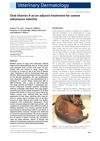
May 2011 in “Veterinary Dermatology” Vitamin A might be a safe extra treatment for dogs with sebaceous adenitis, but more research is needed to prove its effectiveness.
 1 citations
,
January 2023 in “Research Square (Research Square)”
1 citations
,
January 2023 in “Research Square (Research Square)” A woman's vitiligo improved with tofacitinib treatment, and her skin color remained even after stopping the medication, but there are concerns about cancer risk.
18 citations
,
January 1988 in “Acta oncologica” Retinol palmitate may reduce cancer relapses in early-stage lung cancer patients.
November 2024 in “Advances in Pharmacology and Pharmacy” A reliable method was developed to measure Minoxidil and Tofacitinib in gel for hair loss treatment.
5 citations
,
May 2017 in “Journal of dermatological science” The combined treatment effectively managed severe skin issues in Olmsted syndrome.
RXR and RAR proteins in skin may help with cell growth, hair growth, and gland function.
45 citations
,
August 1954 in “Experimental Biology and Medicine” Vitamin A penetrates guinea pig skin quickly in alcohol, affects skin thickness, but doesn't impact hair growth.
February 2016 in “PubMed” Properly administered testosterone therapy is safe and effective but often not covered by insurance.
2 citations
,
April 2002 in “The journal of investigative dermatology/Journal of investigative dermatology” Vitamin D3 is important for hair growth and protecting skin from damage caused by long-term sun exposure.
31 citations
,
February 1982 in “Archives of dermatology” Etretinate was effective for certain skin conditions, but caused side effects like chapped lips, dry mucous membranes, and hair loss.
Newer retinoid drugs are effective for skin conditions but have significant side effects.
July 2024 in “Journal of Controlled Release” Nanostructured lipid carriers effectively deliver tofacitinib to hair follicles, reversing hair loss in alopecia areata.
44 citations
,
September 1948 in “Radiology” Too much vitamin A can cause serious health problems.
 9 citations
,
May 2021 in “International Journal of Dermatology”
9 citations
,
May 2021 in “International Journal of Dermatology” The trial showed that a new under-the-tongue treatment for severe hair loss was somewhat effective in a small group of people.
52 citations
,
May 1982 in “The American journal of the medical sciences” Vitamin A toxicity likely caused the patient's high calcium levels.
July 2014 in “Americanae (AECID Library)” Tridax procumbens and Ouratea spectabilis can affect other plants' growth and have antioxidant benefits.
1 citations
,
December 2025 in “Journal of the American Academy of Dermatology” 
Vitamin D3 helps treat mild to moderate alopecia areata, especially when combined with other treatments.
13 citations
,
January 1997 in “Biochemical Pharmacology” Human liver enzyme DHEA ST helps process minoxidil.
7 citations
,
July 2021 in “PubMed” Vitamins A, B, C, and D are important for skin health and are being explored for new uses, but more research is needed to confirm their effectiveness.
1 citations
,
July 2021 in “Current nanomedicine” The new gel formulation for Acitretin improves topical delivery and reduces oral toxicity.