 25 citations
,
June 2015 in “Scientific Reports”
25 citations
,
June 2015 in “Scientific Reports” People with alopecia areata have a higher risk of stroke.
 8 citations
,
January 2015 in “International journal of trichology”
8 citations
,
January 2015 in “International journal of trichology” A woman's total hair loss was linked to a Borrelia infection and was reversed with appropriate treatment.
 2 citations
,
July 2018 in “Elsevier eBooks”
2 citations
,
July 2018 in “Elsevier eBooks” Trichoscopy is a useful tool for diagnosing and managing hair and scalp conditions, often better than traditional methods.
 1 citations
,
October 2013 in “Expert Review of Dermatology”
1 citations
,
October 2013 in “Expert Review of Dermatology” Diagnosing alopecia areata is challenging and requires careful examination and various tests to distinguish it from other hair loss types.
 July 2025 in “International Journal of Dermatology Venereology and Leprosy Sciences”
 Higher stress levels may worsen alopecia areata, suggesting stress management is important for treatment.
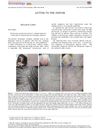 July 2021 in “Australasian Journal of Dermatology”
 The trichoscopy-assisted hair pull test is useful for diagnosing different types of hair loss.
 May 2017 in “InTech eBooks”
 Trichoscopy and trichogram are useful for diagnosing hair and scalp conditions.
 7 citations
,
August 2013 in “Journal of the European Academy of Dermatology and Venereology”
7 citations
,
August 2013 in “Journal of the European Academy of Dermatology and Venereology” Less than a quarter of alopecia areata cases were unusual forms or had paradoxical regrowth.
 391 citations
,
January 2010 in “Journal of The American Academy of Dermatology”
391 citations
,
January 2010 in “Journal of The American Academy of Dermatology” Half of people with Alopecia Areata may see hair regrowth within a year without treatment, but recovery is unpredictable.
 290 citations
,
December 2017 in “Journal of The American Academy of Dermatology”
290 citations
,
December 2017 in “Journal of The American Academy of Dermatology” Alopecia areata is an autoimmune condition causing hair loss, influenced by genetics, stress, and diet, and may be prevented by a high soy oil diet.
 185 citations
,
August 2005 in “Autoimmunity Reviews”
185 citations
,
August 2005 in “Autoimmunity Reviews” Alopecia areata is an autoimmune condition causing hair loss due to the immune system attacking hair follicles, often influenced by genetics and stress.
 143 citations
,
October 2008 in “Journal of The American Academy of Dermatology”
143 citations
,
October 2008 in “Journal of The American Academy of Dermatology” Comma hairs are a specific sign of tinea capitis when viewed with videodermatoscopy.
 102 citations
,
December 2017 in “The journal of investigative dermatology. Symposium proceedings/The Journal of investigative dermatology symposium proceedings”
102 citations
,
December 2017 in “The journal of investigative dermatology. Symposium proceedings/The Journal of investigative dermatology symposium proceedings” Restoring hair bulb immune privilege is crucial for managing alopecia areata.
 99 citations
,
July 2017 in “Clinical Reviews in Allergy & Immunology”
99 citations
,
July 2017 in “Clinical Reviews in Allergy & Immunology” New treatments for Alopecia Areata show promise but need to be more effective and affordable.
 81 citations
,
July 2011 in “Lasers in Medical Science”
81 citations
,
July 2011 in “Lasers in Medical Science” The Lexington LaserComb helped regrow hair in mice with a condition similar to human hair loss.
 73 citations
,
January 2013 in “Annals of Dermatology”
73 citations
,
January 2013 in “Annals of Dermatology” People with hair loss, especially those with certain types, have lower zinc levels, and zinc supplements might help.
 47 citations
,
December 2020 in “Journal of the European Academy of Dermatology and Venereology”
47 citations
,
December 2020 in “Journal of the European Academy of Dermatology and Venereology” The document concludes that understanding and treating hair loss requires recognizing its various types and using appropriate diagnostic tools and treatments.
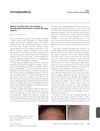 33 citations
,
August 2013 in “British Journal of Dermatology”
33 citations
,
August 2013 in “British Journal of Dermatology” Lack of small, fine hair on the front hairline is a key sign of frontal fibrosing alopecia.
 27 citations
,
January 2020 in “Experimental Dermatology”
27 citations
,
January 2020 in “Experimental Dermatology” Immune cells affect hair growth and could lead to new hair loss treatments.
 23 citations
,
September 2019 in “Dermatology practical & conceptual”
23 citations
,
September 2019 in “Dermatology practical & conceptual” The study concluded that AAI and DAA are forms of the same disease, with different symptoms in men and women, and that corticosteroid treatment is effective.
 18 citations
,
January 2017 in “Annals of dermatology/Annals of Dermatology”
18 citations
,
January 2017 in “Annals of dermatology/Annals of Dermatology” Certain immune cells contribute to severe hair loss in chronic alopecia areata, with Th17 cells possibly having a bigger impact than cytotoxic T cells.
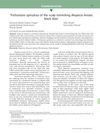 8 citations
,
July 2014 in “Anais Brasileiros de Dermatologia”
8 citations
,
July 2014 in “Anais Brasileiros de Dermatologia” A man's scalp condition was misidentified as hair loss dots but was actually a common follicular disorder.
5 citations
,
February 2025 in “Journal of Clinical Medicine” A new method improves alopecia diagnosis using non-invasive steps.
 4 citations
,
October 2013 in “Clinics in Dermatology”
4 citations
,
October 2013 in “Clinics in Dermatology” Experts don't fully agree on how to diagnose certain hair growth disorders and more research is needed to understand them better.
 3 citations
,
January 2018 in “Dermatology”
3 citations
,
January 2018 in “Dermatology” Scalp biopsies help tell apart androgenetic alopecia and alopecia areata.
 1 citations
,
October 2014 in “Skin Pharmacology and Physiology”
1 citations
,
October 2014 in “Skin Pharmacology and Physiology” People with alopecia areata have higher levels of osteopontin, which might be important in the disease's development, but this doesn't relate to how severe the disease is.
 January 2025 in “Universidad de Córdoba Insitutional Repository (Universidad de Córdoba)”
 An imbalanced scalp microbiome may worsen alopecia areata severity and inflammation, but treatment can partially restore balance.
 October 2024 in “Journal of Education Health and Sport”
 Alopecia areata treatment should be personalized, using topical or systemic therapies based on severity, with promising options like JAK inhibitors needing more research.
 December 2023 in “EPRA international journal of multidisciplinary research”
 Alopecia areata causes sudden hair loss, has genetic links, and can be managed but not cured.
 April 2023 in “Medizinische Genetik”
 New research has found 14 genes linked to the risk of developing alopecia areata, improving understanding and treatment options.