June 2024 in “Journal of the European Academy of Dermatology and Venereology” Allergens might contribute to CCCA, so avoiding them could help manage the condition.
September 2023 in “Journal of the American Academy of Dermatology” CCC1 is essential for pH balance and normal cell function in plants.
August 2020 in “Benha Journal of Applied Sciences” Higher FABP4 levels may help diagnose androgenetic alopecia early.
 August 2024 in “Current Protocols”
 The C3H/HeJ mouse model is useful for studying and testing treatments for alopecia areata.
2 citations
,
September 2024 in “Internal Medicine Journal” Upadacitinib helped regrow hair and maintain ulcerative colitis remission.
September 2025 in “Journal of the American Academy of Dermatology” January 2000 in “The Journal of Trace Elements in Experimental Medicine” Zinc supplementation effectively treats acrodermatitis enteropathica symptoms.
September 2025 in “International Journal of Molecular Sciences” Unmodified fullerene C60 promotes hair growth and may help treat hair loss.
 February 2020 in “Definitions”
 Mutations in the KRT16 gene can cause skin and nail disorders.
Zinc supplements and genetic analysis help treat acrodermatitis enteropathica in children.
 1 citations
,
January 2024 in “Wiadomości Lekarskie”
1 citations
,
January 2024 in “Wiadomości Lekarskie” Detecting early breast arterial calcifications can help assess cardiovascular disease risk.
 November 1993 in “Hair transplant forum international”
 The document's conclusion cannot be provided because the document is not readable or understandable.
August 2025 in “Journal of Polymer Science” AcD scaffolds improve tissue repair and regeneration by combining stem cells with a supportive matrix.
 April 2021 in “MEDICINUS”
 Acrodermatitis enteropathica can occur even with normal zinc levels, and zinc supplements can improve symptoms.
80 citations
,
June 1997 in “The American Journal of Human Genetics” November 2025 in “Journal of Investigative Dermatology” A new genetic mutation causing Xeroderma Pigmentosum was found in an 8-year-old girl, affecting her DNA repair.
November 2025 in “Biomedicines” JAK1 inhibitors can help reduce itchiness in atopic dermatitis.
 86 citations
,
August 2011 in “Toxicological sciences”
86 citations
,
August 2011 in “Toxicological sciences” TCDD speeds up skin barrier formation by increasing certain gene expressions.
 October 2023 in “The American Journal of Gastroenterology”
 Cronkhite-Canada syndrome is rare, with high mortality and cancer risk, needing more research for treatment guidelines.
 January 2025 in “Clinical and Translational Medicine”
 A specific RNA can help hair growth in baldness by boosting stem cell activity.
February 2020 in “Oxford University Press eBooks” The alpha-helix was confirmed as a key structure in proteins.
 4 citations
,
February 1988 in “Journal of the American Academy of Dermatology”
4 citations
,
February 1988 in “Journal of the American Academy of Dermatology” Congenital triangular alopecia is more common than thought and some treatments can be beneficial for appearance concerns.
April 2019 in “Journal of Investigative Dermatology” Gut microbiota influences the development of alopecia areata.

A rare genetic mutation causes Woodhouse-Sakati syndrome symptoms.
45 citations
,
February 2002 in “International Journal of Cosmetic Science” Ceramide helps protect African–American hair from breakage.
 43 citations
,
September 2014 in “Molecular Plant”
43 citations
,
September 2014 in “Molecular Plant” CLE40 and CRN/CLV2 pathways have opposite effects on root growth in Arabidopsis.
 September 2019 in “Journal of Investigative Dermatology”
 BMPs are important for hair growth and can counteract the negative effects of androgens on hair follicle stem cells.
 March 2026 in “International Journal of Dermatology and Venereology”
 Abrocitinib significantly improved hair regrowth in adolescents with alopecia areata without serious safety issues.
 4 citations
,
December 2013 in “The Journal of Dermatology”
4 citations
,
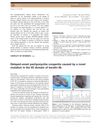
December 2013 in “The Journal of Dermatology” A new mutation in the K6b gene caused a girl's late-appearing nail condition.