 12 citations
,
September 2021 in “PLoS ONE”
12 citations
,
September 2021 in “PLoS ONE” WNT10A and EBF1 interaction affects hair growth in male-pattern baldness.
January 2026 in “Therapeutics” SCUBE3 is a potential target for cancer and alopecia treatment but is challenging to target due to its varied roles.
6 citations
,
March 1996 in “Journal of Investigative Dermatology” 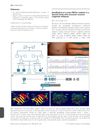 23 citations
,
December 2013 in “British Journal of Dermatology”
23 citations
,
December 2013 in “British Journal of Dermatology” A new gene mutation linked to a skin condition was found in a Spanish family.
 December 2013 in “Appetite”
 A defective gene causes hair loss and taste insensitivity in BTBR mice.
9 citations
,
May 2019 in “Medicine” The C-allele and CC-genotype in the PTPN22 gene lower the risk of alopecia areata.
 5 citations
,
September 2013 in “The Journal of Dermatology”
5 citations
,
September 2013 in “The Journal of Dermatology” Researchers found a new mutation in the HR gene causing hair loss and skin bumps in a Pakistani family.
31 citations
,
October 2019 in “Genes & Diseases” Basal cell carcinomas and squamous cell carcinomas have different gene activity patterns, suggesting unique treatment approaches.
 20 citations
,
February 2019 in “Genes”
20 citations
,
February 2019 in “Genes” The study concludes that mutations in the AEBP1 gene can cause a form of Ehlers-Danlos syndrome and should be considered in diagnosis.
21 citations
,
December 1994 in “Journal of Investigative Dermatology”  January 2024 in “Archives of Endocrinology and Metabolism”
 A new gene mutation causes insulin resistance in a girl and her mother.
CCC1 is essential for ion balance and proper plant cell function.
 2 citations
,
June 2023 in “Journal of cell science”
2 citations
,
June 2023 in “Journal of cell science” Mutations in iRhom2 affect hair and skin in mice and are linked to esophageal cancer, with ADAM17 playing a crucial role.
7 citations
,
August 2017 in “European journal of endocrinology” Mutations in the POC1A gene can cause a unique form of extreme insulin resistance and short stature.
 June 2026 in “Archives of Dermatological Research”
 The rs4541843 variant is linked to higher risk and severity of alopecia areata.
 245 citations
,
January 1998 in “Genes & Development”
245 citations
,
January 1998 in “Genes & Development” Hoxc13 gene is essential for hair, nail, and papilla development.
 March 2011 in “European Urology Supplements”
 Gene variation affects prostate issues and hair loss.
March 2026 in “JID Innovations” Aire mutation reduces alopecia areata, while Notch4 mutation prevents it in mice.
 May 2026 in “Research Square”
 The polyG fragment in Hoxc13 protein helps evolve mammalian skin and hair by enhancing gene interactions.
146 citations
,
February 2012 in “Journal of Clinical Investigation” Blocking Hedgehog signaling offers new treatment options for advanced basal cell carcinoma.
26 citations
,
September 2009 in “Clinical genetics” Arab APS1 patients have unique and recurrent AIRE gene mutations.
 April 2026 in “Frontiers in Immunology”
 Certain genes may be linked to autoimmune conditions in people with alopecia areata.
39 citations
,
July 1997 in “American Journal of Medical Genetics” The gene for Clouston syndrome in a large Indian family is located in the 13q11-q12.1 region.
November 2025 in “Journal of Investigative Dermatology” A new genetic mutation causing Xeroderma Pigmentosum was found in an 8-year-old girl, affecting her DNA repair.
 15 citations
,
December 2014 in “PLoS ONE”
15 citations
,
December 2014 in “PLoS ONE” A mutation in the iRhom2 gene causes hairless mice due to abnormal hair follicle development.
2 citations
,
April 2023 in “American Journal of Dermatopathology” CCCA may involve the PD1/PDL1 pathway and increased caspase 3, leading to permanent hair loss.
3 citations
,
March 2017 in “Pediatric Dermatology” FOXN1 duplication can cause excessive hair growth.
16 citations
,
December 2020 in “PloS one” Researchers found WNT10A to be a key gene in developing goat hair follicles.
CD28 is a promising target for treating alopecia areata with belatacept.
CD28 is a promising target for treating alopecia areata with belatacept.