 13 citations
,
March 2019 in “Pharmacology Research & Perspectives”
13 citations
,
March 2019 in “Pharmacology Research & Perspectives” In Singapore, most skin reactions to drugs were in females and Chinese, often caused by painkillers, antibiotics, and some other drugs, with serious cases linked to genetics.
 11 citations
,
June 2011 in “Expert Review of Dermatology”
11 citations
,
June 2011 in “Expert Review of Dermatology” Skin reactions to drugs are common and can be deadly, usually requiring stopping the drug and may be better prevented with genetic testing in the future.
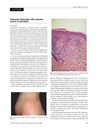 9 citations
,
July 2002 in “Journal of the European Academy of Dermatology and Venereology”
9 citations
,
July 2002 in “Journal of the European Academy of Dermatology and Venereology” The document concludes that fexofenadine reduces inflammation in chronic hives, cholestyramine helps half of pregnant women with itchy rashes, and relaxing incisions are a good alternative in facial surgery for the elderly.
 7 citations
,
January 2015 in “Current problems in dermatology”
7 citations
,
January 2015 in “Current problems in dermatology” Hair loss can be caused by stress, infections, drugs, and various diseases, with treatment depending on accurate diagnosis.
 3 citations
,
January 2010 in “Elsevier eBooks”
3 citations
,
January 2010 in “Elsevier eBooks” The document describes various skin conditions, their features, and treatments but lacks detailed study size information.
 2 citations
,
July 2018 in “Elsevier eBooks”
2 citations
,
July 2018 in “Elsevier eBooks” Trichoscopy is a useful tool for diagnosing and managing hair and scalp conditions, often better than traditional methods.
 1 citations
,
January 2021 in “Wiadomości Lekarskie”
1 citations
,
January 2021 in “Wiadomości Lekarskie” The gel with hops extract effectively treats severe acne wounds by healing and reducing infection.
 January 2026 in “Forum Dermatologicum”
 Hair loss can be caused by cancer, treatments, or skin conditions, and trichoscopy helps diagnose it.
 October 2019 in “Asian Journal of Research in Animal and Veterinary Sciences”
 Young horses are more prone to a fungal infection causing hair loss and skin redness.
 March 2019 in “Nasza Dermatologia Online”
 A rare scalp condition with hair loss was correctly diagnosed and treated, leading to hair regrowth.
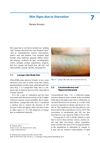 June 2012 in “Springer eBooks”
 Skin changes can indicate starvation and nutritional deficiencies in anorexia nervosa.
 July 2011 in “British Journal of Dermatology”
 Dermatologists give better information on pathology forms, hypersensitivity vasculitis is a common skin issue, misdiagnoses can occur, and various skin conditions are linked to loss of elastin or genetic factors.
 87 citations
,
March 2000 in “American Journal of Clinical Dermatology”
87 citations
,
March 2000 in “American Journal of Clinical Dermatology” Alpha-hydroxy acids, like glycolic acid, safely improve skin issues and work on all skin types.
 48 citations
,
May 2008 in “Drug Discovery Today: Disease Mechanisms”
48 citations
,
May 2008 in “Drug Discovery Today: Disease Mechanisms” Hair follicles offer promising targets for delivering drugs to treat hair and skin conditions.
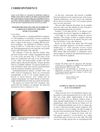 25 citations
,
January 2005 in “Pediatric Dermatology”
25 citations
,
January 2005 in “Pediatric Dermatology” Methotrexate effectively treated a 2-year-old's generalized pustular psoriasis without side effects.
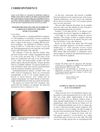 21 citations
,
January 2005 in “Pediatric Dermatology”
21 citations
,
January 2005 in “Pediatric Dermatology” An 8-year-old girl with vitiligo developed extra hair growth on her knee after using tacrolimus ointment.
 17 citations
,
December 2003 in “Veterinary dermatology”
17 citations
,
December 2003 in “Veterinary dermatology” Some masked palm civets in Japan have a skin disease caused by mites.
 16 citations
,
January 2005 in “Pediatric Dermatology”
16 citations
,
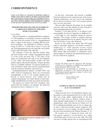
January 2005 in “Pediatric Dermatology” A 10-year-old girl with Fox Fordyce disease improved with treatment, suggesting the disease can occur before puberty and might be underdiagnosed in young girls.
 14 citations
,
January 2005 in “Pediatric Dermatology”
14 citations
,
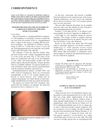
January 2005 in “Pediatric Dermatology” UVA1-light therapy successfully treated a child's skin condition, mycosis fungoides.
 12 citations
,
January 2005 in “Pediatric Dermatology”
12 citations
,
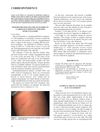
January 2005 in “Pediatric Dermatology” Fox Fordyce disease might be more common in prepubertal girls than thought and can be managed with treatment.
 9 citations
,
January 2005 in “Pediatric Dermatology”
9 citations
,
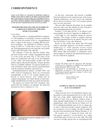
January 2005 in “Pediatric Dermatology” Fox Fordyce disease can occur in prepubertal girls and may be underdiagnosed.
 6 citations
,
July 2009 in “Veterinary dermatology”
6 citations
,
July 2009 in “Veterinary dermatology” Vesiculobullous lesions should be considered part of canine cutaneous epitheliotropic T-cell lymphoma.
 138 citations
,
February 2007 in “European journal of cancer”
138 citations
,
February 2007 in “European journal of cancer” EGFR inhibitors often cause skin problems and other side effects, but these are usually reversible and can be managed to keep patients comfortable.
 120 citations
,
February 2009 in “Apoptosis”
120 citations
,
February 2009 in “Apoptosis” Understanding how cells die in the skin is important for treating skin diseases and preventing hair loss.
 108 citations
,
July 2002 in “Molecular and cellular biology”
108 citations
,
July 2002 in “Molecular and cellular biology” Overexpressing Dsg3 in mice skin causes excessive cell growth and abnormal skin development.
 106 citations
,
December 2015 in “Journal of The American Academy of Dermatology”
106 citations
,
December 2015 in “Journal of The American Academy of Dermatology” Correct skin biopsy techniques are crucial to avoid misdiagnosis of skin diseases.
 94 citations
,
January 2007 in “Cutaneous and Ocular Toxicology”
94 citations
,
January 2007 in “Cutaneous and Ocular Toxicology” Iranian veterans exposed to sulfur mustard suffer from long-term skin itching and eye damage, with some risk of skin cancer and ongoing management challenges.
70 citations
,
January 2014 in “International review of cell and molecular biology” Keratin proteins are crucial for healthy skin, but mutations can cause skin disorders with no effective treatments yet.
 56 citations
,
March 2015 in “Cell death and differentiation”
56 citations
,
March 2015 in “Cell death and differentiation” Older skin has higher cancer risk due to inflammation and stem cell issues.
 52 citations
,
October 2012 in “Journal of Dermatological Science”
52 citations
,
October 2012 in “Journal of Dermatological Science” The document concludes that mouse models are crucial for studying hair biology and that all mutant mice may have hair growth abnormalities that require detailed analysis to identify.