68 citations
,
December 1983 in “British Journal of Dermatology” Major histocompatibility antigens are found in specific skin cells and structures, but not in sweat glands.
 6 citations
,
January 1985 in “ACTA HISTOCHEMICA ET CYTOCHEMICA”
6 citations
,
January 1985 in “ACTA HISTOCHEMICA ET CYTOCHEMICA” Tumor cells in calcifying epithelioma of Malherbe resemble hair follicle cells.
19 citations
,
November 1985 in “Archives of Dermatology” The newborn's skin blisters healed without scarring, leaving some light spots, and stopped forming after four months.
March 2026 in “Experimental Dermatology” The new model helps understand and develop treatments for genetic skin disorders like AEC.
 12 citations
,
June 2010 in “Journal of dermatology”
12 citations
,
June 2010 in “Journal of dermatology” Some patients with severe alopecia areata developed skin darkening from their treatment, which may indicate a less effective response to the therapy.
July 2025 in “Cell & Bioscience” Specific immune cells and pathways contribute to hair follicle inflammation and hair loss, suggesting potential treatments for lichen planopilaris.
2 citations
,
August 1987 in “Archives of Dermatology” Langerhans' cells are not responsible for depigmentation in this mouse model.
 January 1995 in “Skin Cancer”
 The outer root sheath in hair follicles changes during growth, with different keratinization processes in its layers.
 4 citations
,
February 2011 in “Dermatology reports”
4 citations
,
February 2011 in “Dermatology reports” Acitretin can cause excess tissue growth and hair loss.
22 citations
,
February 2012 in “Journal of Investigative Dermatology” A specific gene mutation causes severe skin and nail issues and hair loss.
11 citations
,
January 2013 in “Veterinary dermatology” Keratinocytes from dog hair follicles can create a functional skin layer in a lab model, useful for dog skin therapy.

The CD4 protein may play a role in the behavior of certain skin cells, affecting their growth, movement, and differentiation.
2 citations
,
January 1990 in “PubMed” Perforating folliculitis is a skin condition with small bumps that may be linked to other diseases and is hard to treat.
23 citations
,
July 2023 in “Proceedings of the National Academy of Sciences” CD8+ T cells drive alopecia areata, while regulatory T cells are protective.
 October 2025 in “Clinical Cosmetic and Investigational Dermatology”
 Targeting specific cell interactions may help treat skin fibrosis.
1 citations
,
April 2018 in “Journal of Investigative Dermatology” Lower proximal cup cells, not bulge stem cells, regenerate hair follicles after chemotherapy.
July 2025 in “Journal of Investigative Dermatology” Scarring alopecia involves increased immune cells and specific gene changes near damaged hair follicles.
 January 2018 in “The Kaohsiung journal of medical sciences”
 A young man had a rare case of hair cysts on his elbows, which was hard to diagnose and treat.
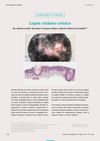 January 2024 in “Revista Dermatológica Centro Uraga”
 The patient has Chronic Cutaneous Lupus, a skin condition causing plaques and hair loss.
 6 citations
,
January 2016 in “Dermatology Review”
6 citations
,
January 2016 in “Dermatology Review” Stem cells show promise for treating skin conditions and aiding healing.
 December 2010 in “Faculty Opinions – Post-Publication Peer Review of the Biomedical Literature”
 New cells join the hair's dermal papilla during the growth phase, possibly affecting hair thickness.
 2 citations
,
June 2021 in “PubMed”
2 citations
,
June 2021 in “PubMed” Chronic scalp lesions with crusts and pus indicate Erosive Pustular Dermatosis, which is confirmed by biopsy and effectively treated with strong topical steroids.
August 2021 in “Journal of Investigative Dermatology” ILC1-like cells can cause alopecia areata by disrupting hair follicle immunity, suggesting a new treatment approach.
January 2007 in “Zhonghua shiyan waike zazhi” Basal layer skin cells help form the epidermis and hair follicles.
January 2026 in “Experimental Dermatology” Keratinocytes contribute to hidradenitis suppurativa by causing inflammation and worsening the condition.
4 citations
,
April 2019 in “JAAD Case Reports” DPR can cause skin, hair, and nail issues, sometimes appearing later in life.
 27 citations
,
April 2018 in “Journal of autoimmunity”
27 citations
,
April 2018 in “Journal of autoimmunity” iNKT cells can help prevent and treat alopecia areata by promoting hair regrowth.

Skin stem cells in hair follicles are important for touch sensation.
July 2025 in “Journal of Investigative Dermatology” Monocyte-derived dendritic cells play a key role in UVB-induced skin sensitivity and inflammation.
13 citations
,
September 1997 in “Archives of Dermatology” The boy likely has a fungal infection causing hair loss.