 June 2022 in “Journal of Education, Health and Sport”
 The paper reviews acne treatments for women with PCOS but doesn't give specific advice.
 March 2022 in “Osmangazi tıp dergisi”
 Acne patients have higher levels of oxidative stress, but it's not clear if it causes or results from acne; antioxidants might help treat acne.
 August 2021 in “Research Square (Research Square)”
 Borneol Essential Oil could be a natural and safe acne treatment.
 July 2021 in “Journal of dermatology research and therapy”
 Using combined treatments can help manage acne by targeting the bacteria and skin changes that cause it.
 July 2021 in “Journal of emerging technologies and innovative research”
 Ayurvedic methods successfully treated severe acne in a patient.
 June 2021 in “International Journal of Research in Dermatology”
 Women with acne and PCOS should be checked for insulin resistance and related symptoms.
 April 2021 in “International Journal of Research in Dermatology”
 Most adult females with acne do not have hormonal imbalances, but some show signs of excess male hormones.
 January 2021 in “Revista Dermatológica Centro Uraga”
 Endocrinological evaluation is crucial for properly diagnosing and treating acne.
 December 2020 in “Benha Journal of Applied Sciences”
 People with severe acne tend to have higher levels of betatrophin.
30% supramolecular salicylic acid is safe and effective for treating mild to moderate facial acne.
Spironolactone may be a better acne treatment for adult women than antibiotics.
 April 2020 in “Journal of the Endocrine Society”
 Non-classic congenital adrenal hyperplasia (NCCAH) can mimic PCOS and requires genetic testing for proper diagnosis and treatment.
 February 2020 in “International Journal of Medical and Biomedical Studies”
 Adult acne is often mild and common on the cheek, with a low prevalence of PCOS in female patients, but more severe acne and skin damage in those with PCOS.
December 2019 in “RIUnB Institutional Repository (University of Brasília)” NP-AH-CDM-4 nanoparticles show promise for effective topical acne treatment.
 July 2019 in “Journal of case reports and scientific images”
 A 23-year-old woman has Acne Vulgaris, which causes different types of skin bumps and possible scarring.
May 2019 in “Eurasian Journal of Biosciences” Fenugreek aqueous extract is more effective against acne bacteria than the alcoholic extract.
 January 2019 in “Obstetrics & Gynecology International Journal”
 Hormonal changes and conditions like polycystic ovarian syndrome are major causes of adult acne in women, with varying prevalence among different ethnicities.
 January 2019 in “ARC journal of pharmaceutical sciences”
 Acne can be managed with various treatments and requires psychological support due to its emotional impact.
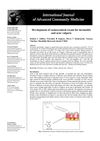 September 2018 in “International Journal of Advanced Community Medicine”
 The cream effectively treats acne and dermatitis without causing irritation.
April 2018 in “The journal of investigative dermatology/Journal of investigative dermatology” Interest in acne is rising, but research funding has significantly decreased.
 January 2018 in “Springer eBooks”
 The document says that early treatment of Acne Vulgaris is important to prevent scarring and that adult onset acne is common in women, often due to hormonal imbalances.
 April 2017 in “Journal of Investigative Dermatology”
 10% carbamide peroxide is safe and effectively reduces mild to moderate acne.
 September 2016 in “Gynecology Obstetrics and Reproductive Medicine”
 Effective treatment for skin issues in women with PCOS includes oral contraceptives, antiandrogens, and other medications and procedures.
 August 2016 in “Journal of evolution of medical and dental sciences”
 Most acne patients were young males with face acne, with many experiencing worsening in summer and diet-related aggravation.
 January 2016 in “Springer eBooks”
 Hyperandrogenism, often causing excessive hair growth and acne, can be treated with methods like weight reduction, hair removal, various medications, and in the case of acne, topical treatments.
 November 2014 in “John Wiley & Sons, Ltd eBooks”
 Eating high-glycemic and dairy foods can increase hormones that may cause acne and other health issues.
 January 2014 in “Journal of the Egyptian Women's Dermatologic Society (Print)”
 Women with acne after adolescence are more likely to have PCOS and should be checked for it.
January 2014 in “Journal of Guangdong Pharmaceutical University” The new rabbit model better mimics human acne symptoms.
 June 2013 in “Expert Review of Dermatology”
 The article concludes that hormonal therapy is an effective long-term acne treatment, even for those without hormonal imbalances.
January 2013 in “China Medical Abstract of Dermatology” Finasteride effectively reduces acne with minimal side effects.