 July 2019 in “Journal of case reports and scientific images”
 A 23-year-old woman has Acne Vulgaris, which causes different types of skin bumps and possible scarring.
May 2019 in “Eurasian Journal of Biosciences” Fenugreek aqueous extract is more effective against acne bacteria than the alcoholic extract.
 January 2019 in “Obstetrics & Gynecology International Journal”
 Hormonal changes and conditions like polycystic ovarian syndrome are major causes of adult acne in women, with varying prevalence among different ethnicities.
 January 2019 in “Springer eBooks”
 Acne is linked to inflammation and insulin resistance, and is associated with various syndromes that require different treatments.
 September 2018 in “International Journal of Advanced Community Medicine”
 The cream effectively treats acne and dermatitis without causing irritation.
April 2018 in “The journal of investigative dermatology/Journal of investigative dermatology” Interest in acne is rising, but research funding has significantly decreased.
 April 2017 in “Journal of Investigative Dermatology”
 10% carbamide peroxide is safe and effectively reduces mild to moderate acne.
 September 2016 in “Gynecology Obstetrics and Reproductive Medicine”
 Effective treatment for skin issues in women with PCOS includes oral contraceptives, antiandrogens, and other medications and procedures.
 August 2016 in “Journal of evolution of medical and dental sciences”
 Most acne patients were young males with face acne, with many experiencing worsening in summer and diet-related aggravation.
 January 2016 in “Springer eBooks”
 Hyperandrogenism, often causing excessive hair growth and acne, can be treated with methods like weight reduction, hair removal, various medications, and in the case of acne, topical treatments.
 November 2014 in “John Wiley & Sons, Ltd eBooks”
 Eating high-glycemic and dairy foods can increase hormones that may cause acne and other health issues.
 January 2014 in “Journal of the Egyptian Women's Dermatologic Society (Print)”
 Women with acne after adolescence are more likely to have PCOS and should be checked for it.
January 2014 in “Journal of Guangdong Pharmaceutical University” The new rabbit model better mimics human acne symptoms.
 June 2013 in “Expert Review of Dermatology”
 The article concludes that hormonal therapy is an effective long-term acne treatment, even for those without hormonal imbalances.
January 2013 in “China Medical Abstract of Dermatology” Finasteride effectively reduces acne with minimal side effects.
January 2013 in “Xiandai shengwu yixue jinzhan” Finasteride effectively treats acne, especially severe cases, with low recurrence rates.
Women with acne may have a higher chance of having PCOS, which can lead to other health problems.
January 2012 in “Journal of Islamic International Medical College” Using topical steroids for acne is a bad idea and causes many skin problems.
November 2011 in “DOAJ (DOAJ: Directory of Open Access Journals)” Oral contraceptives can help manage acne by reducing androgen levels.
 January 2011 in “Yearbook of Dermatology and Dermatologic Surgery”
 The adapalene-benzoyl peroxide gel works better and faster for acne treatment than using either ingredient alone, with manageable side effects.
 December 2010 in “Zanco Journal of Medical Sciences”
 Acne is more common and severe in females, often with pre-menstrual flare-ups and associated with seborrhea.
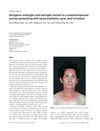 August 2009 in “International Journal of Dermatology”
 A postmenopausal woman's facial redness, acne, and excess hair were caused by too much hormone therapy for insomnia, but improved after stopping the treatment.
CDPDFM can improve acne symptoms in rabbit ears.
January 2008 in “Padua Research Archive (University of Padua)” Hereditary factors affect acne duration, not severity, and late-onset acne in females has different causes.
February 2006 in “Expert review of dermatology” Acne is caused by hormones, genetics, skin cell buildup, oil production, bacteria, and inflammation.
 July 2002 in “JOGC/Journal of obstetrics and gynaecology Canada”
 Birth control pills help treat acne, especially when caused by excess male hormones, and are safe to use with antibiotics.
 September 1997 in “Journal of the European Academy of Dermatology and Venereology”
 People with acne have more CD4+ immune cells in their skin than healthy people.
January 1990 in “Journal of dermatological treatment” Clinical features of hyperandrogenism do not predict the success of conventional acne treatment in women.
 July 1989 in “British Journal of Dermatology”
 Women's acne improvement with antibiotics is not linked to signs of high male hormones.
Cyproterone acetate is an effective treatment for women with acne, hair loss, and excessive hair growth.